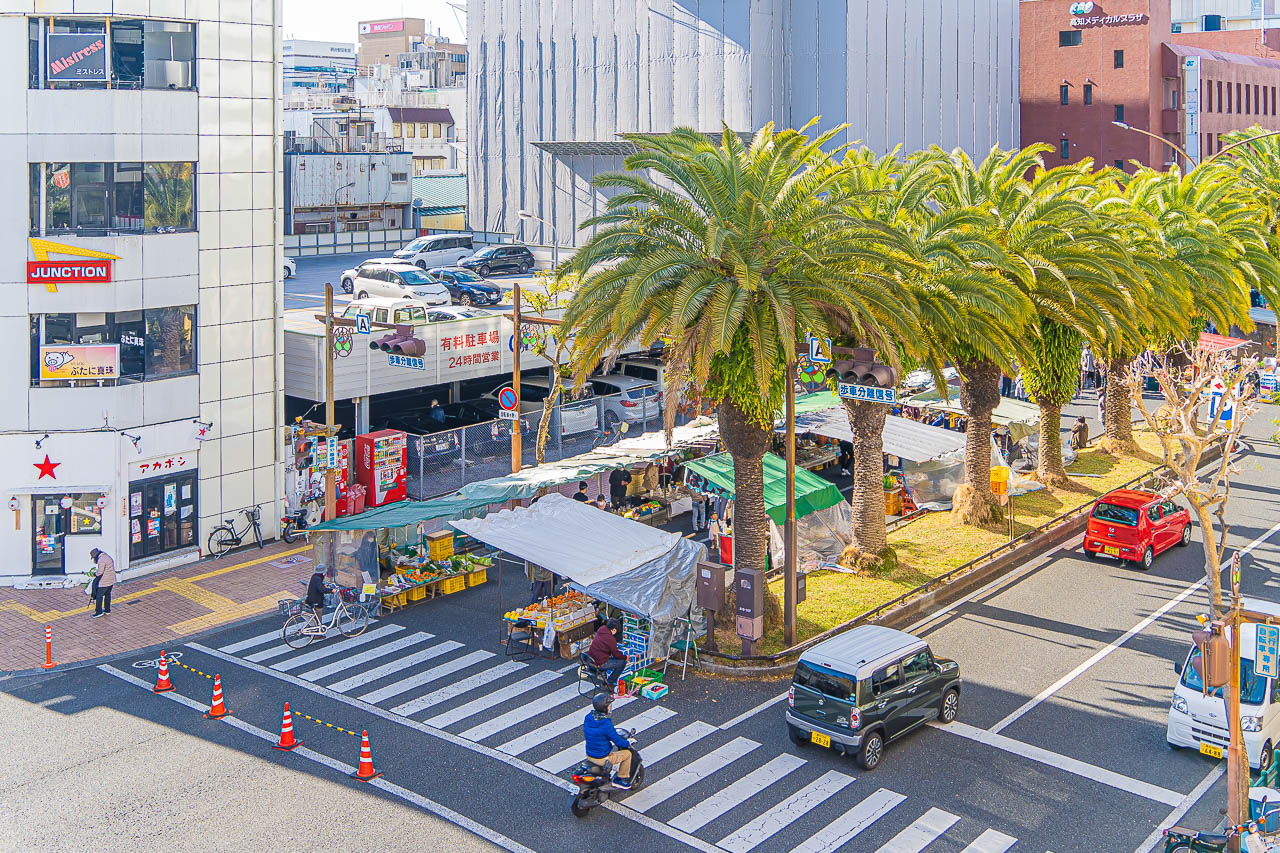
Tosa’s Sunday Market (日曜市) in Kochi Prefecture has a history stretching back more than 300 years to 1690.
The source describes it as taking place every Sunday except January 1–2 and the Yosakoi Festival period, August 10–12.
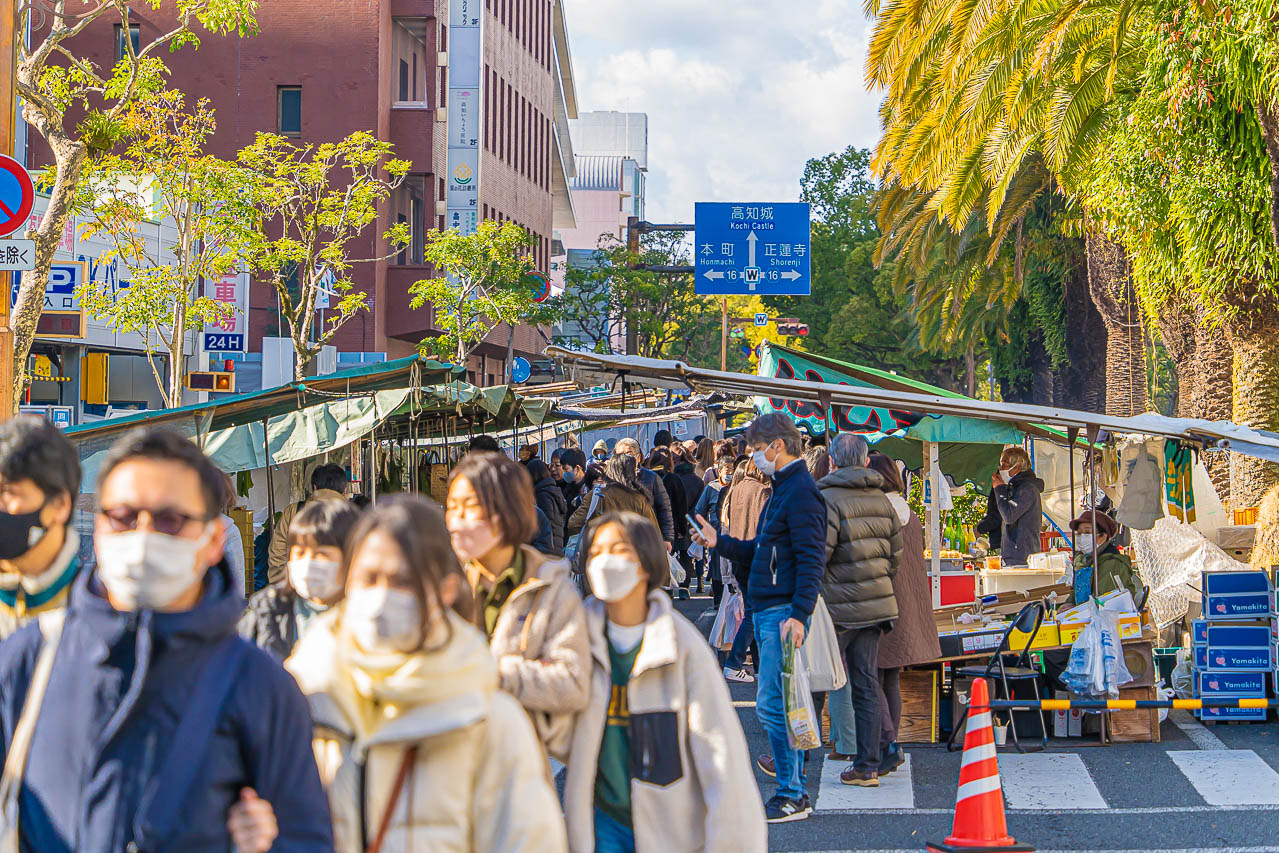
About 300 stalls stretched for roughly 1 km from Kochi Castle, opening around 6 a.m. and closing around 3 p.m.
Alongside fresh vegetables and fruit, this traditional market sold hardware, knives, and plants. The original account cites about 17,000 local and visiting shoppers a day.

Two lanes of a road that normally carries four lanes of traffic were closed to create the market.
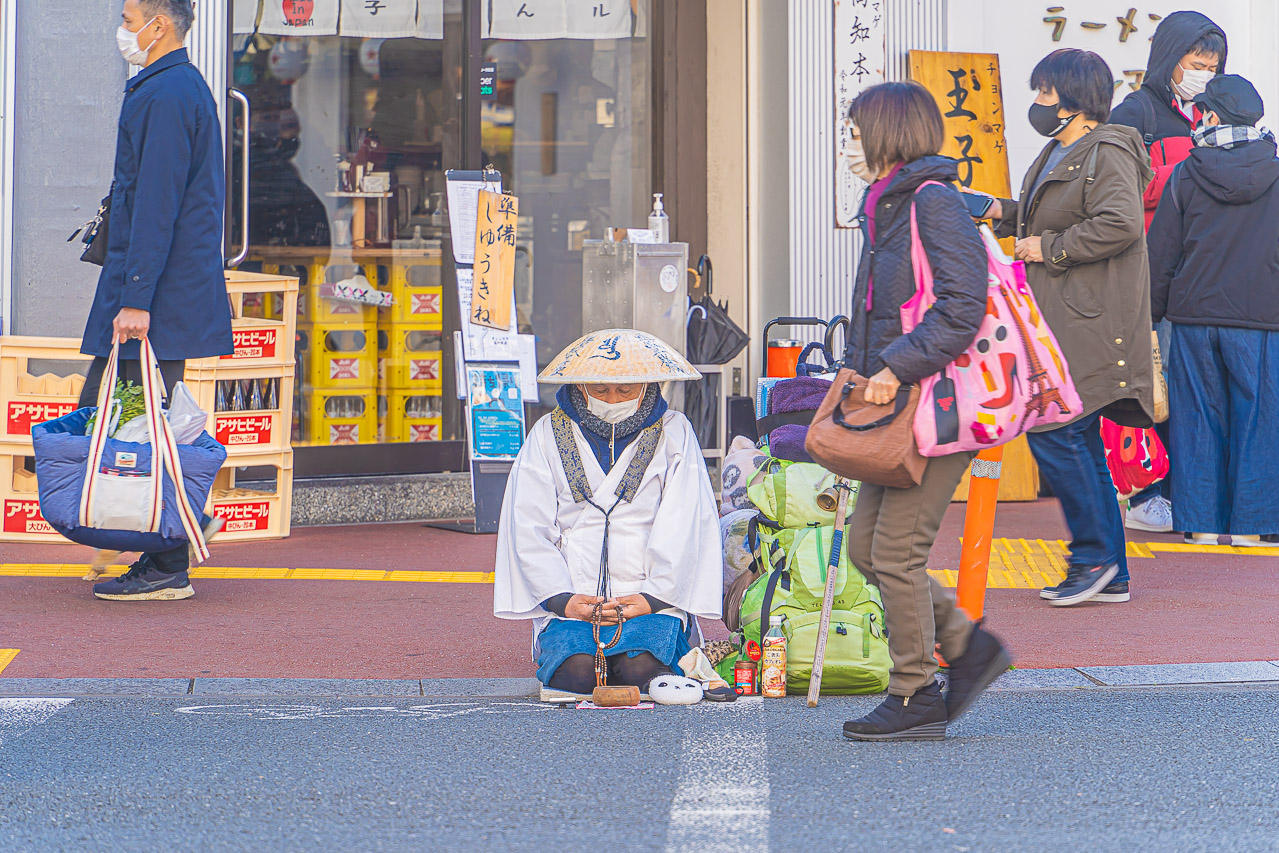
The Shikoku pilgrimage follows the footsteps of the Buddhist master Kukai from about 1,200 years ago.
We occasionally saw pilgrims here too; perhaps they hoped to draw on the energy of the crowds.
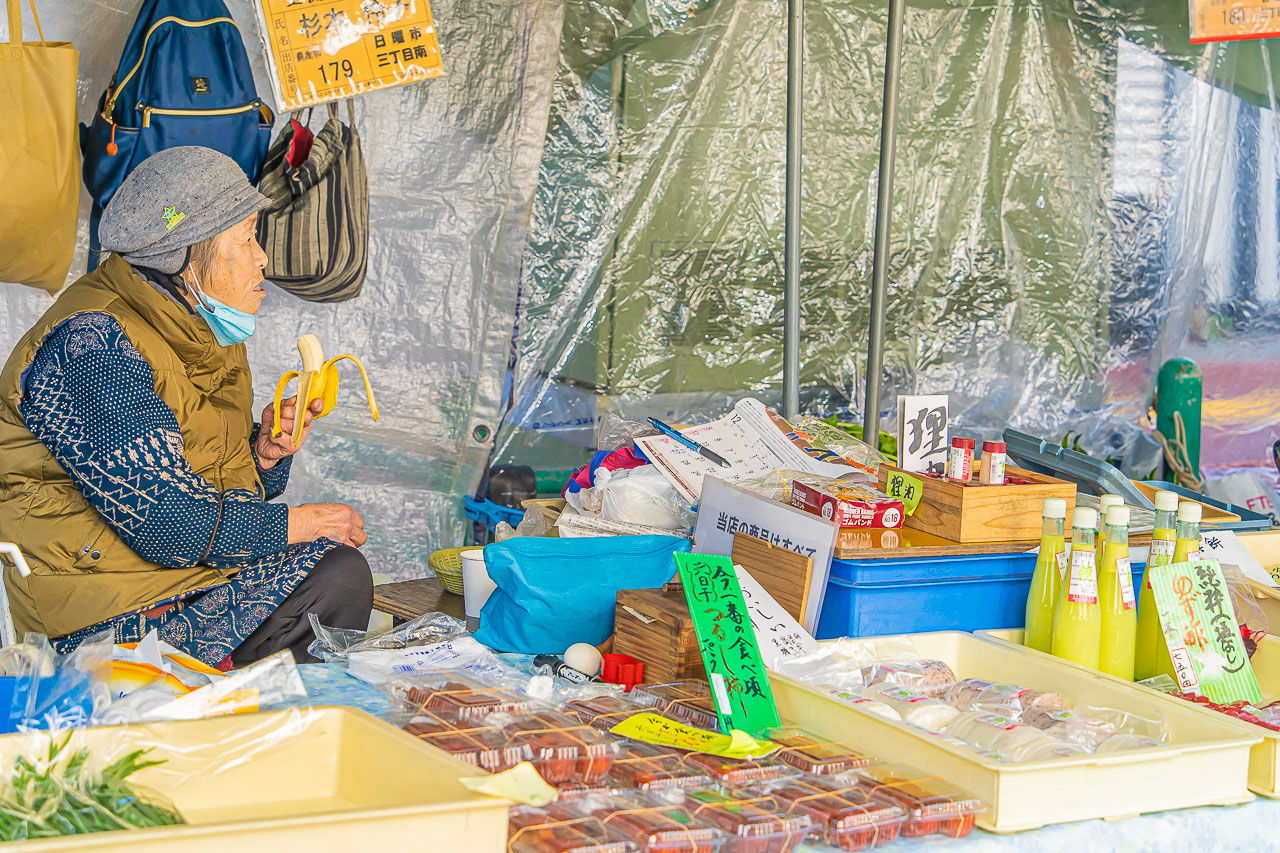
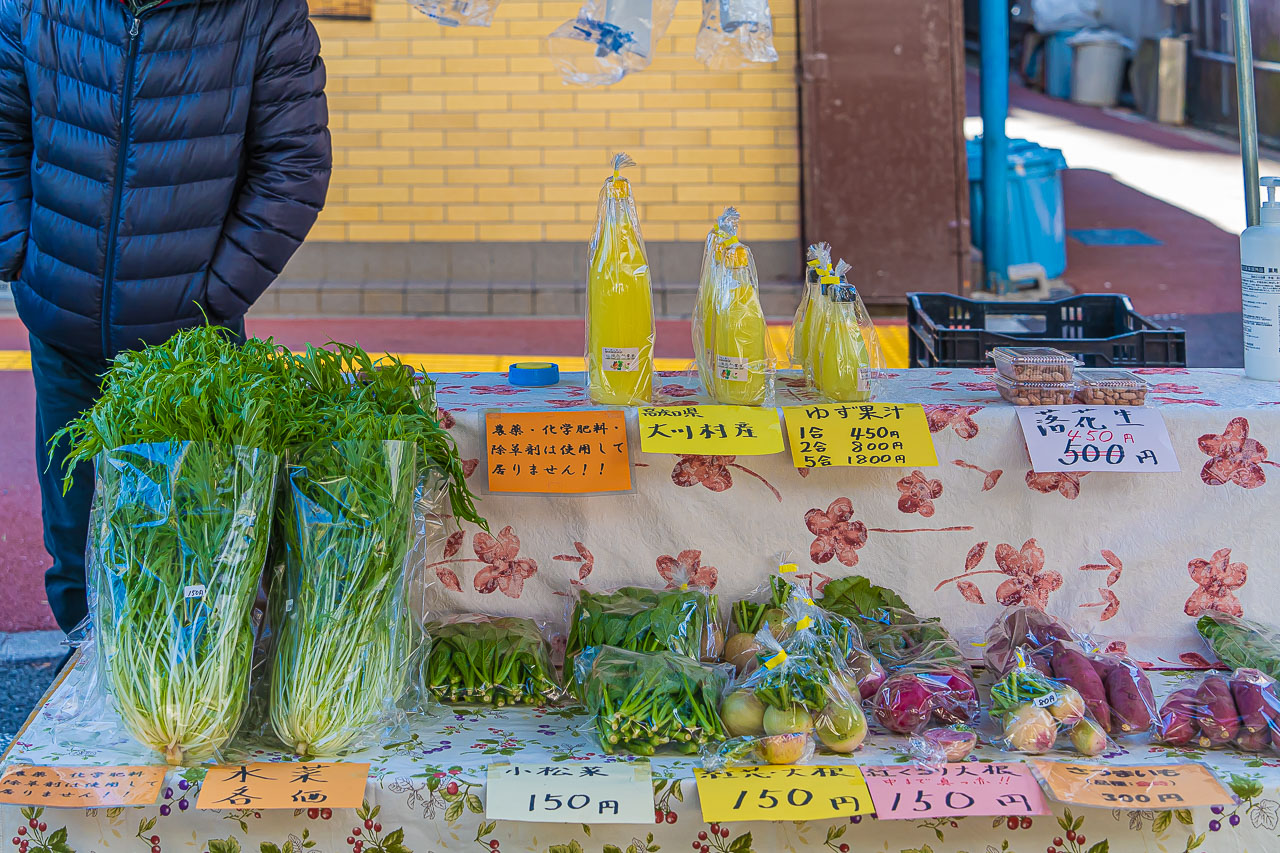
There were plenty of inexpensive, fresh vegetables,
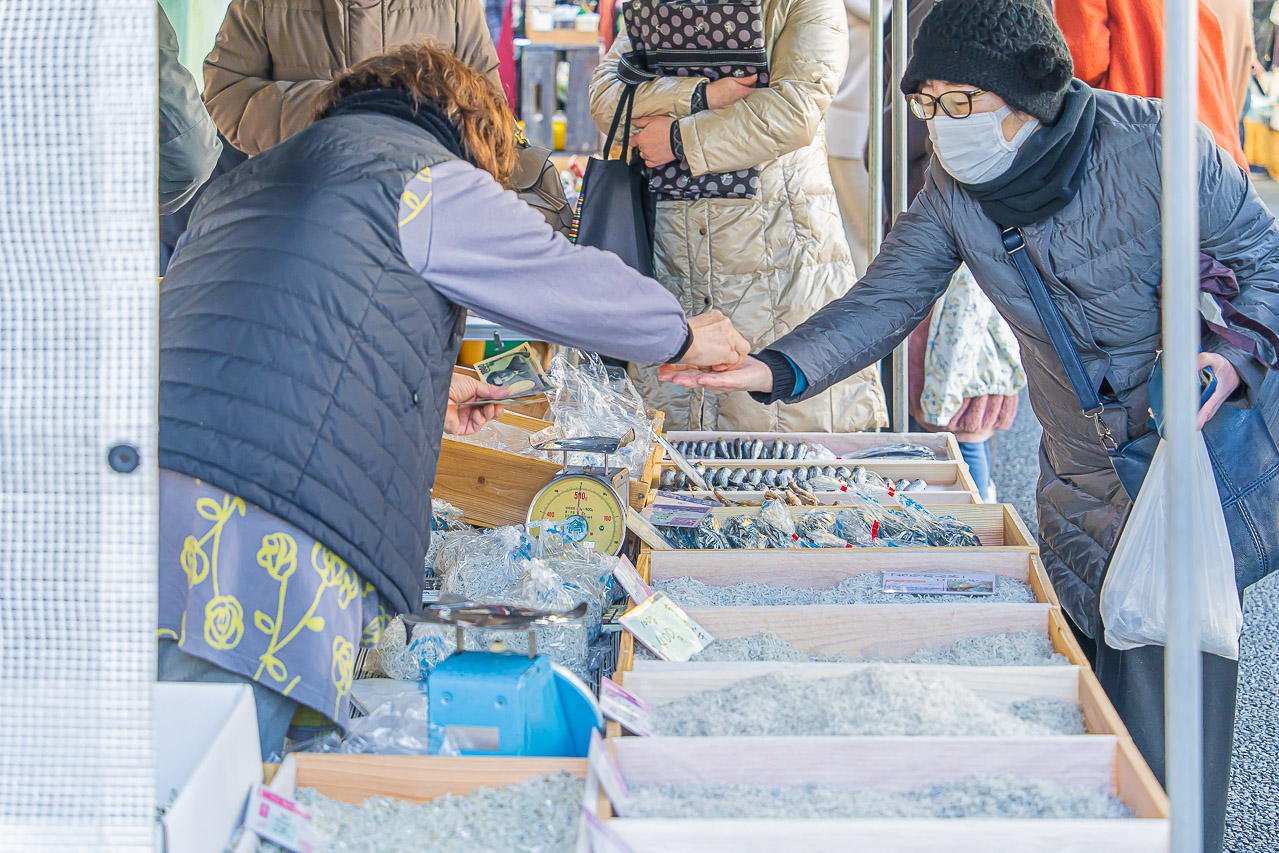
as well as Kochi’s specialty, tiny dried fish called chirimen (ちりめん).
Kochi has long been famous for bonito. Large catches of the small fish used as bait for bonito also helped make chirimen a local specialty.
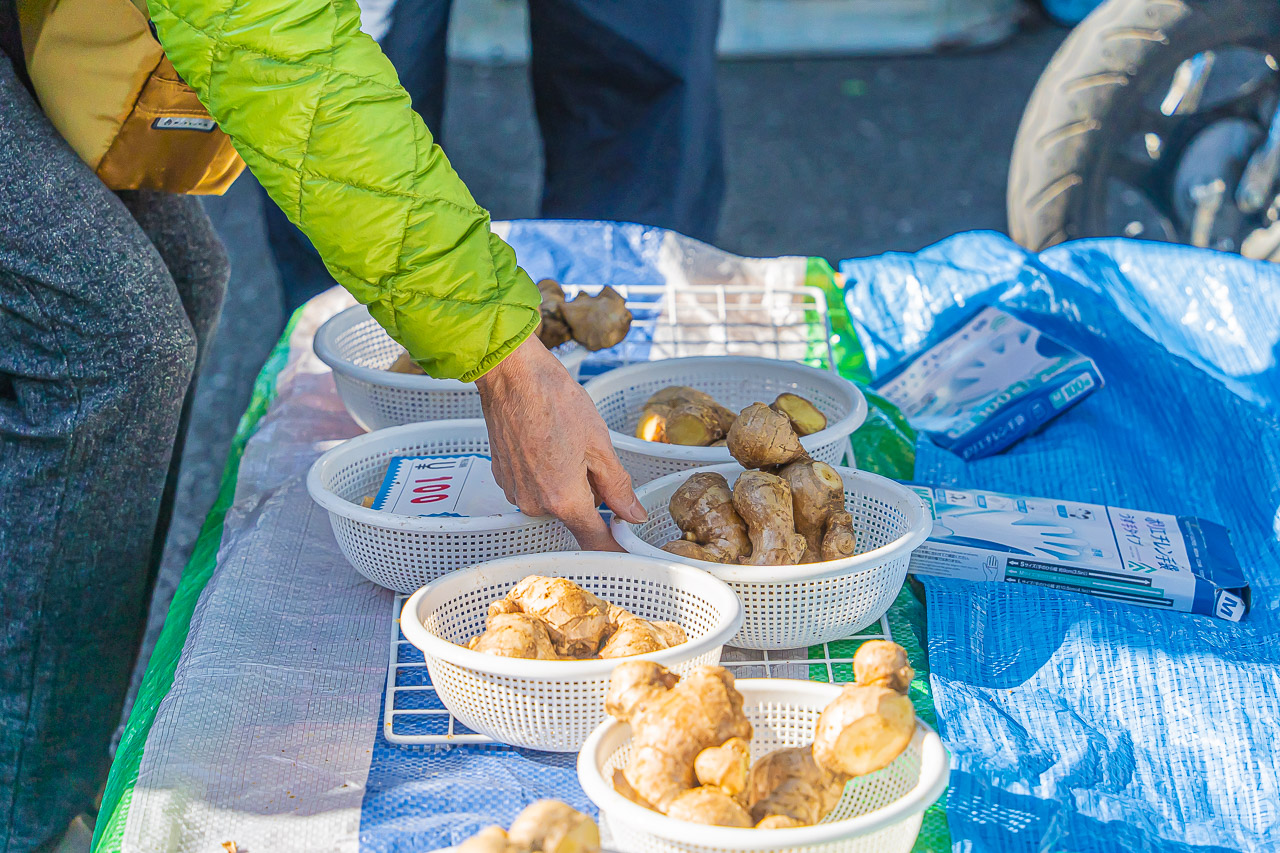
Enormous ginger roots.
Kochi is also known as Japan’s leading ginger producer in the original account.
A basket cost just JPY 100—remarkably inexpensive, especially given the size.
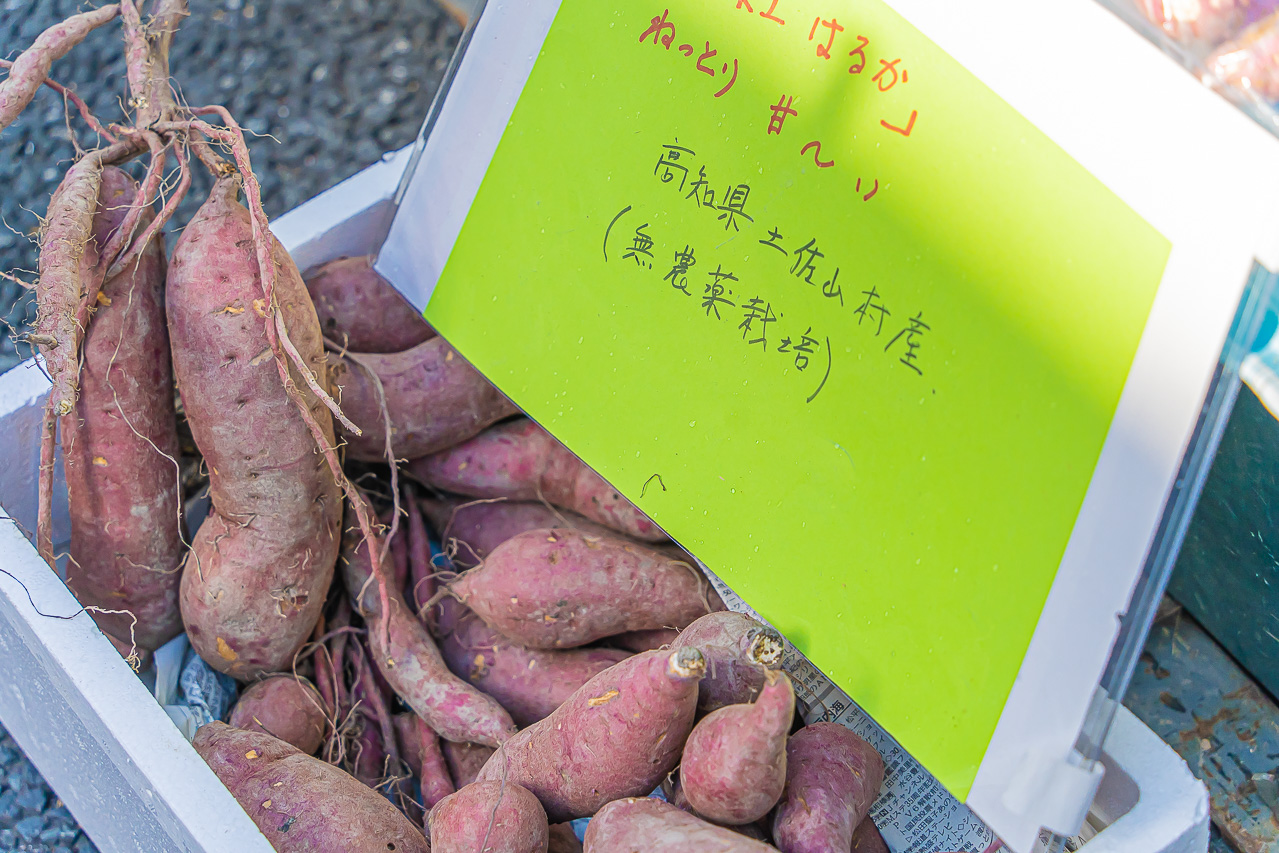
Pesticide-free sweet potatoes from Tosa.
I found myself wondering whether sweet potatoes were generally grown without pesticides anyway.
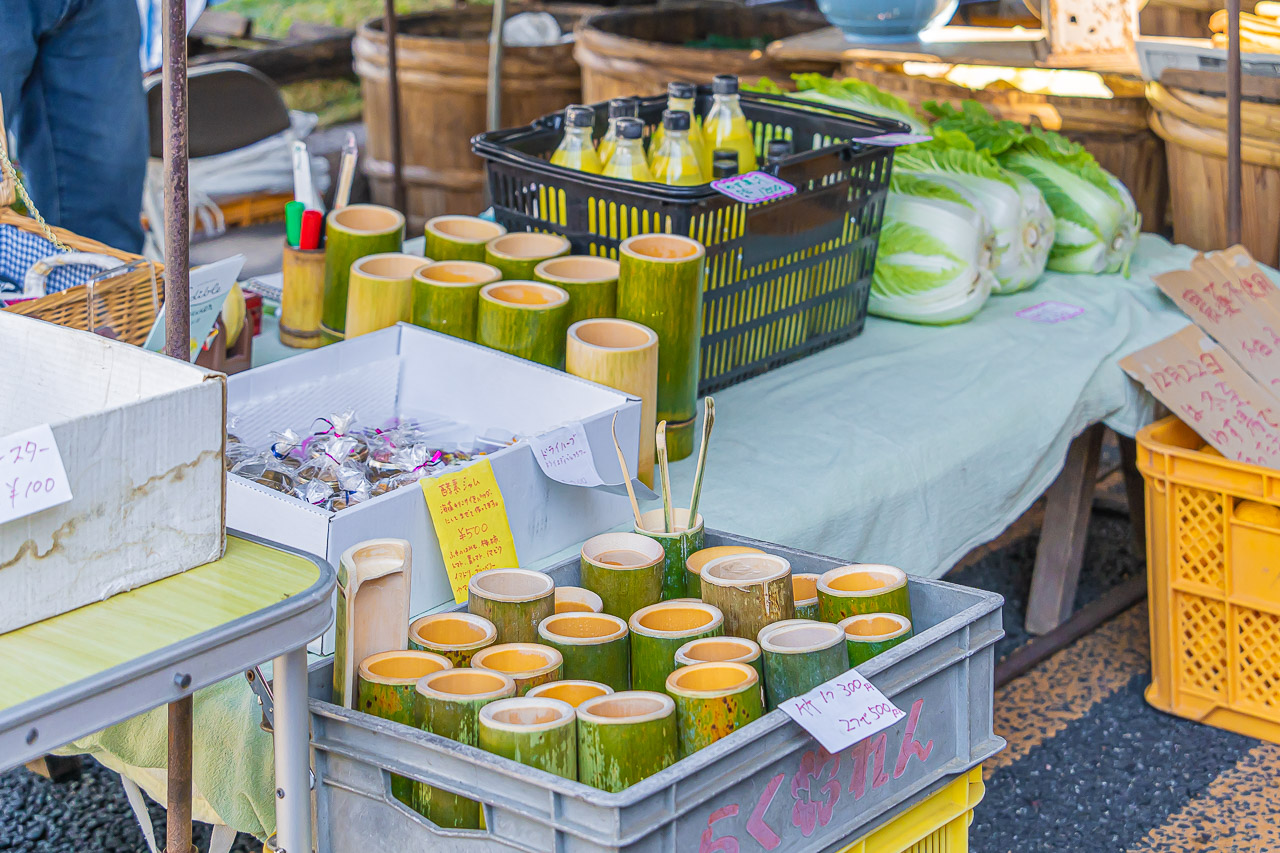
Bamboo firewood with plenty of possible uses.
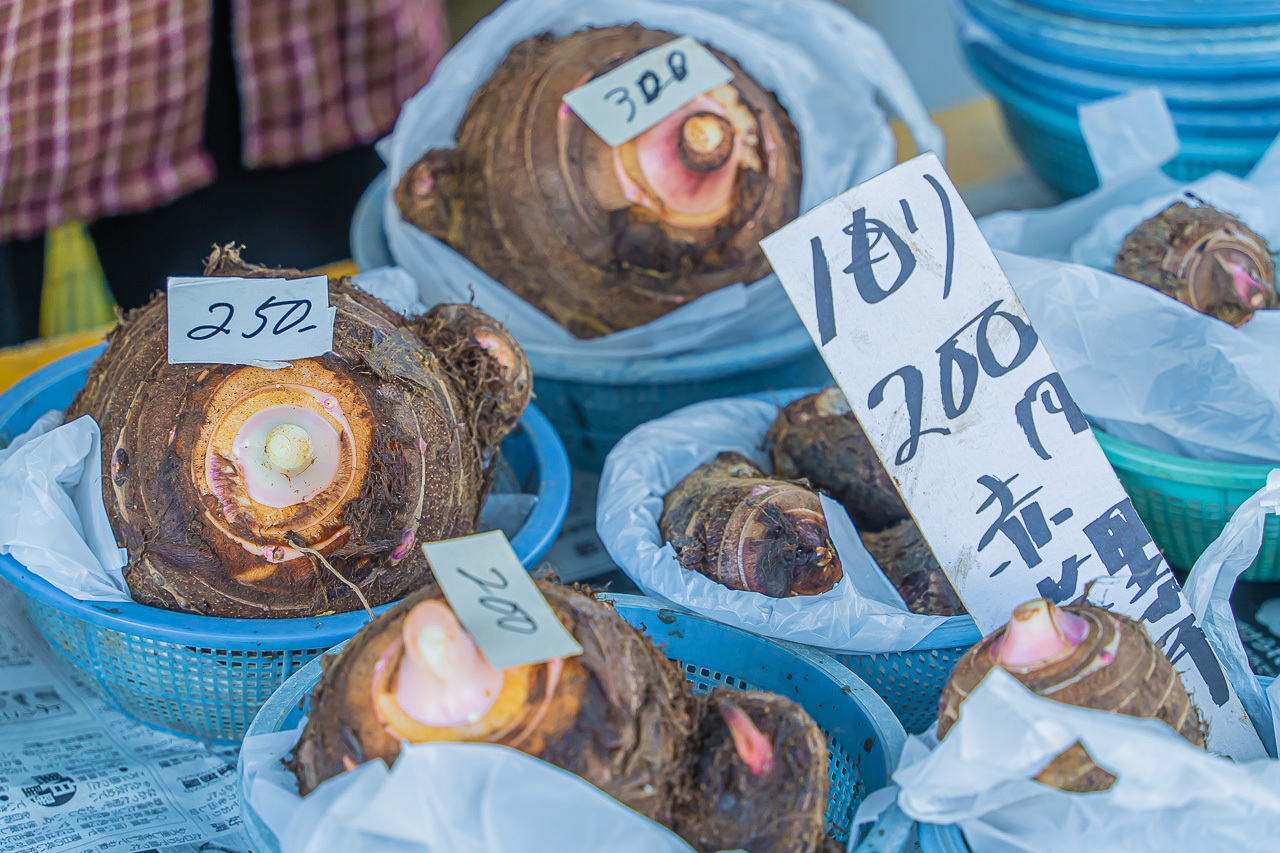
Large red taro (赤里芋).
Taro appeared in more Japanese dishes than I was used to seeing in Korea.
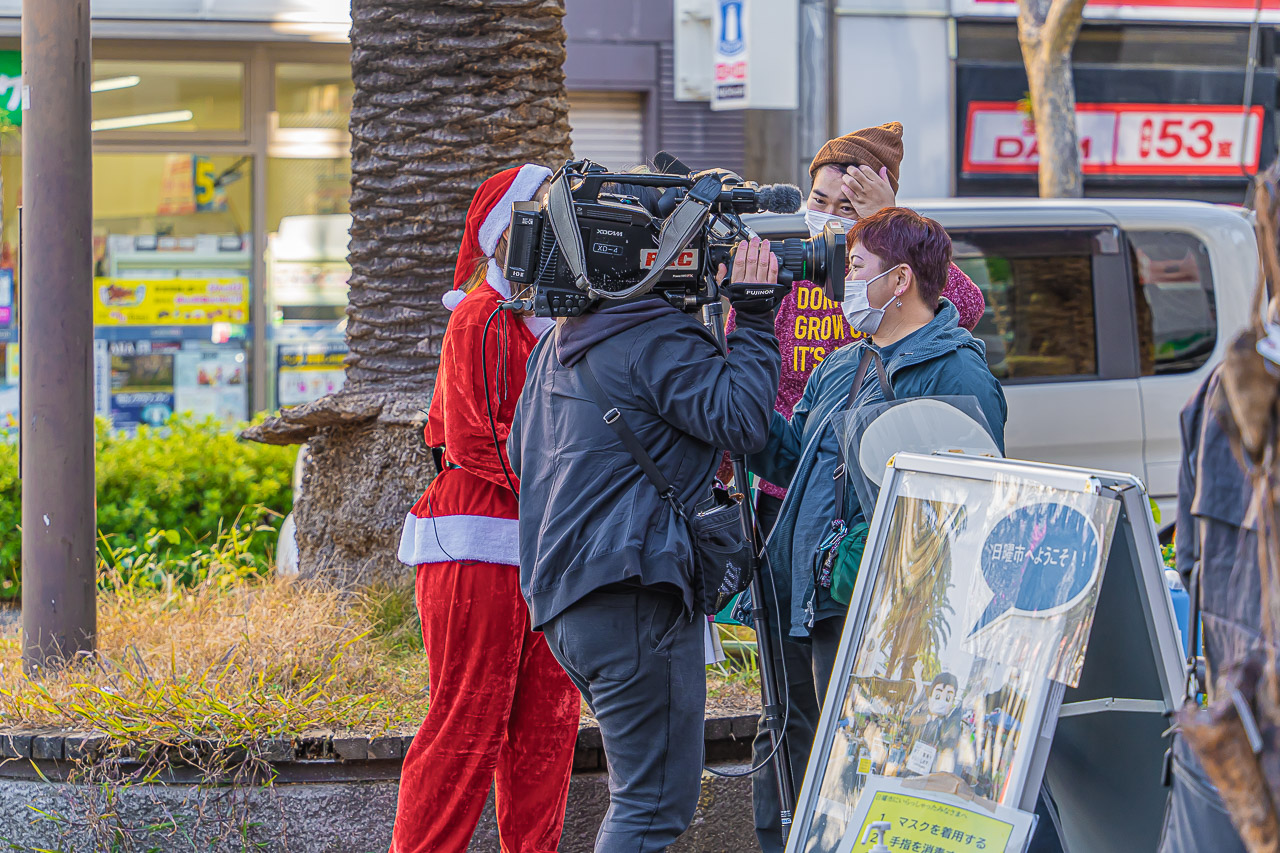
A TV crew was also reporting on the arrival of winter.
Their presenter was dressed as Santa.
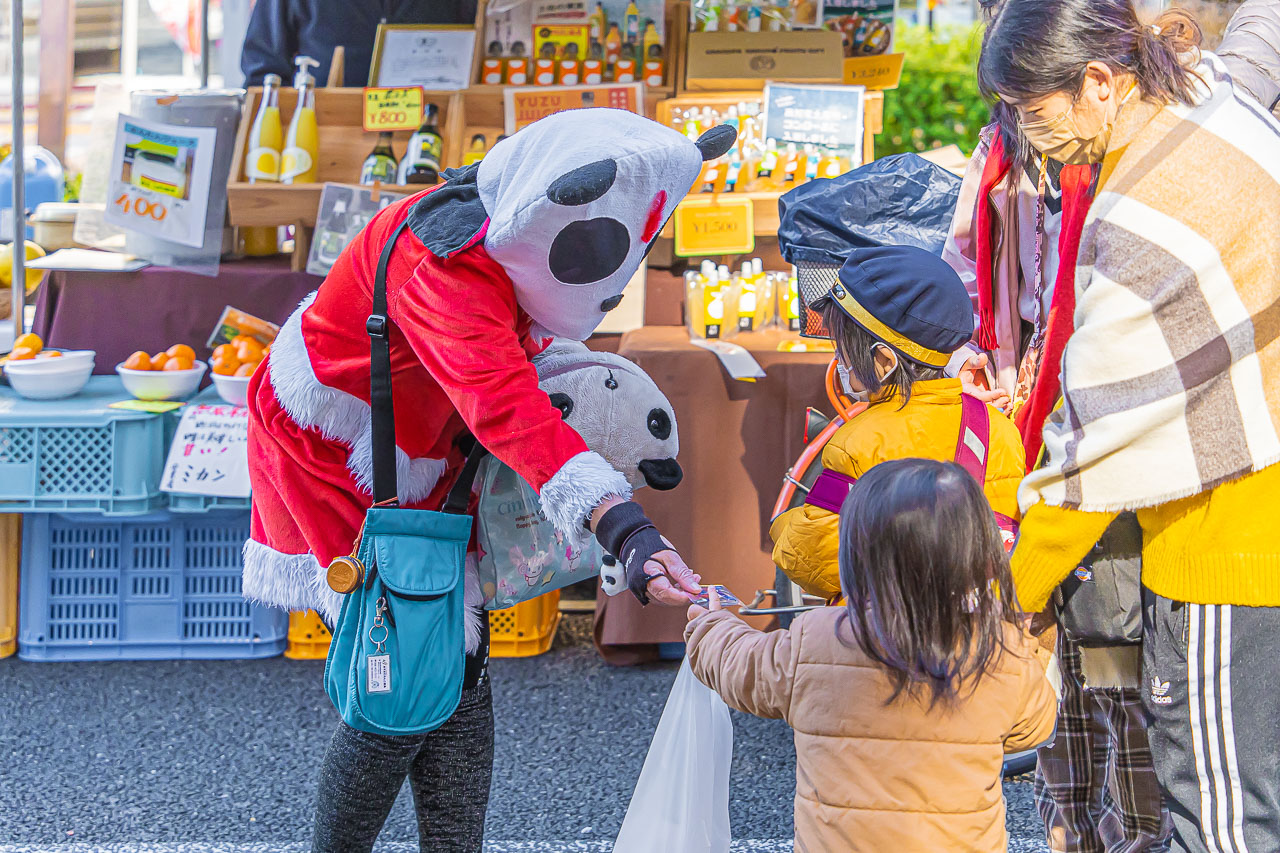
Some other visitors were wearing Santa outfits and handing candy to children too.
It was an unexpected little event.

Looking down the side streets, you could see city buildings behind the traditional market—an interesting combination.
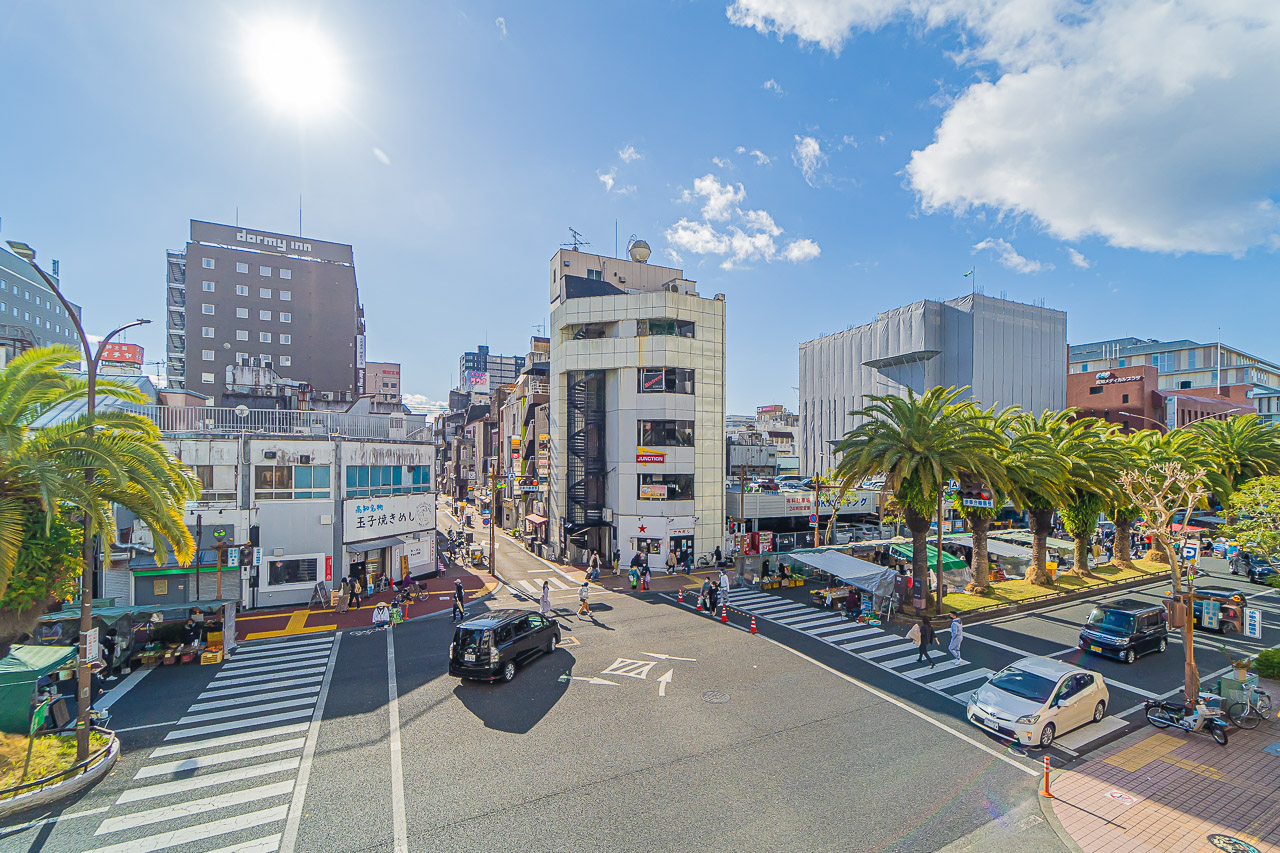
This was the Sunday Market in Kochi’s Tosa area.
If your Kochi visit falls on a Sunday, I think it is worth stopping by.
Tosa Sunday Market (土佐 日曜市)
Market days in the source: Sundays, except January 1–2 and August 10–12.
Hours in the source: around 6 a.m.–3 p.m.
Address: Otesuji, Kochi City (高知市追手筋)