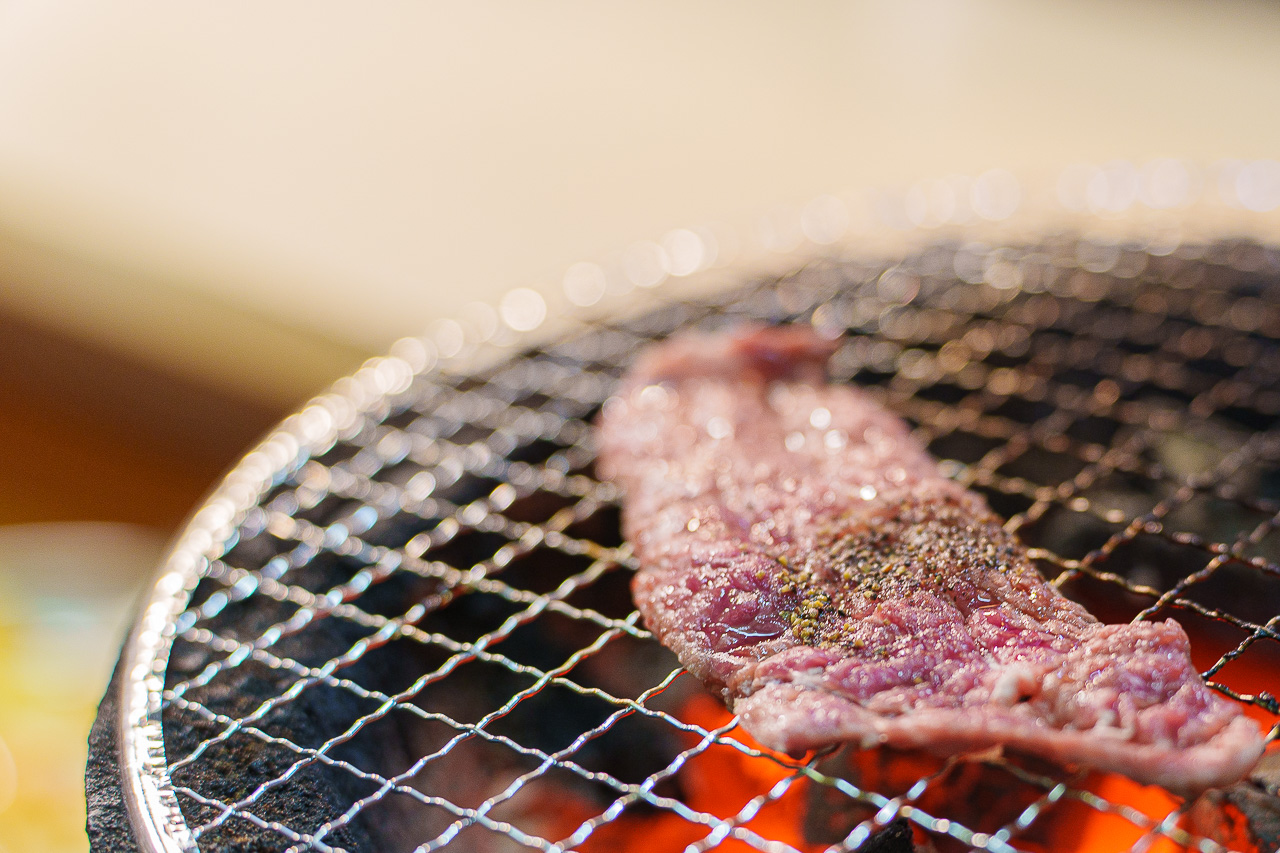
On this Osaka trip, we looked for a restaurant visited by Matsuda from the Korean series ‘People Living in Osaka’ and the entertainer Jung Jun-ha,
where the two had enjoyed yakiniku together.
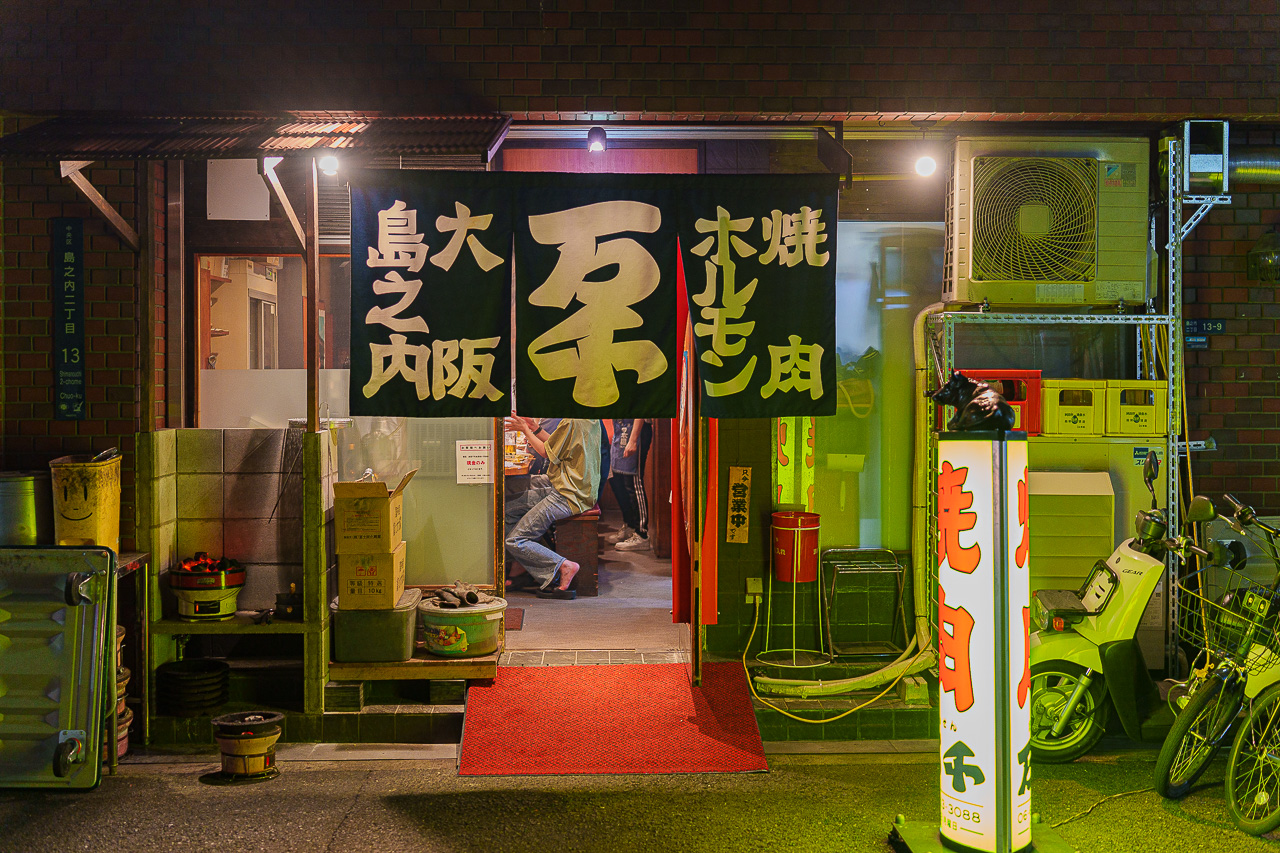
Yakiniku Horumon Mansen (焼肉ホルモン 万千)
is about ten minutes on foot from Namba Station, a convenient stop after browsing the shopping streets.
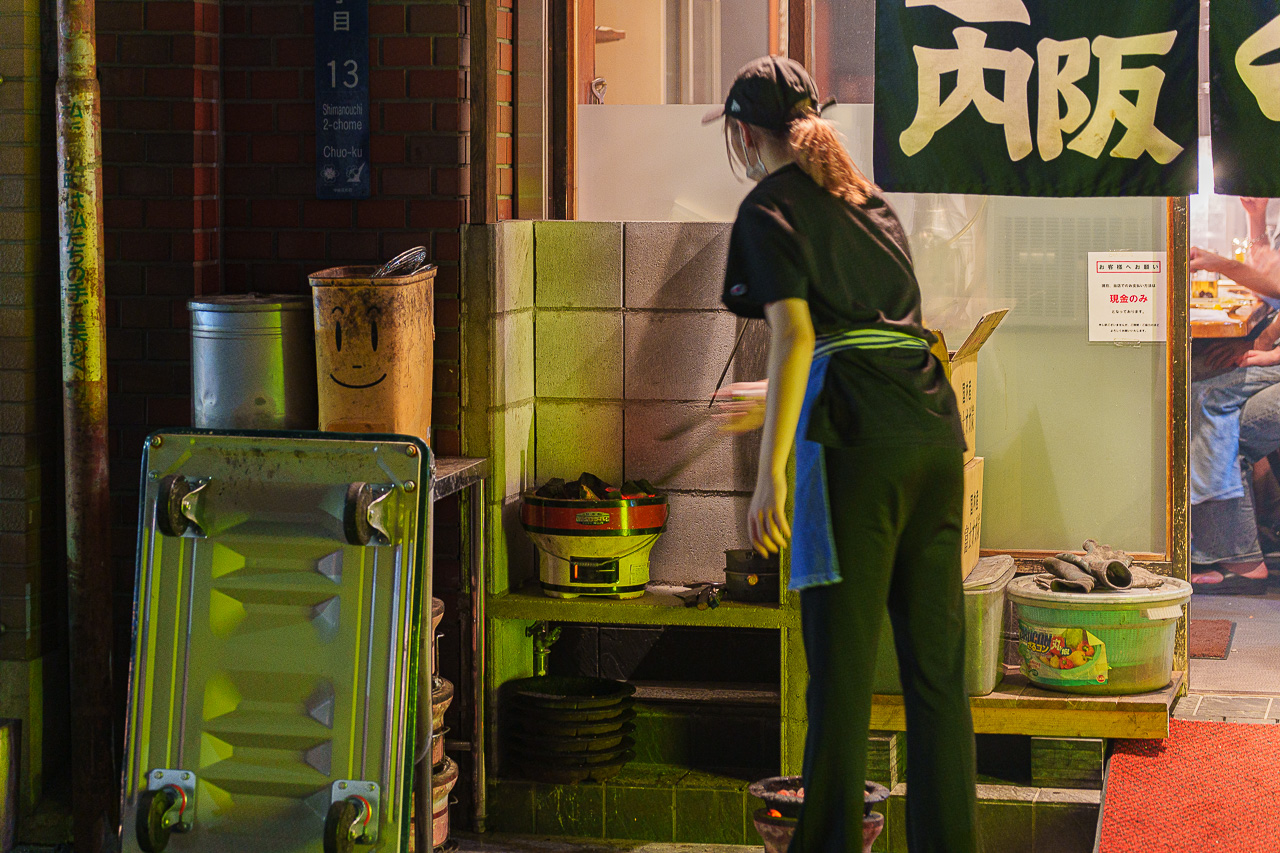
The owner trained at Yakiniku Manmasa,
a highly popular restaurant in Osaka’s Tsuruhashi district,
then opened Mansen in Ura-Namba in March 2022.
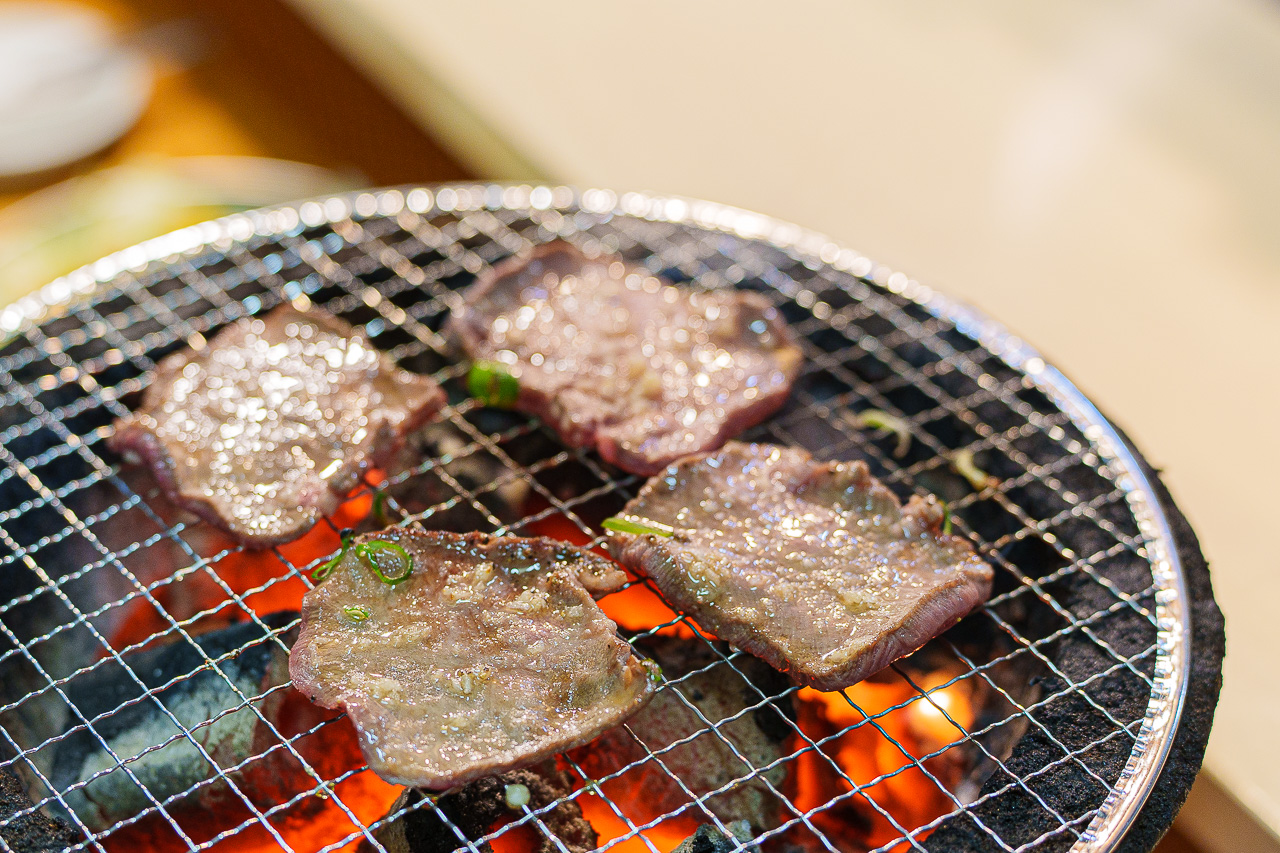
Yakiniku is one of the pleasures I look forward to in Japan.
The source traces it to the influence of Korean meat-grilling culture in Japan.
The Japanese word refers to grilled meat,
and generally covers dishes where meat is cooked fresh at the table.
Although it was a weekday, reservations were almost full,
and we could only secure a table at 11 p.m.
Inside was already packed.
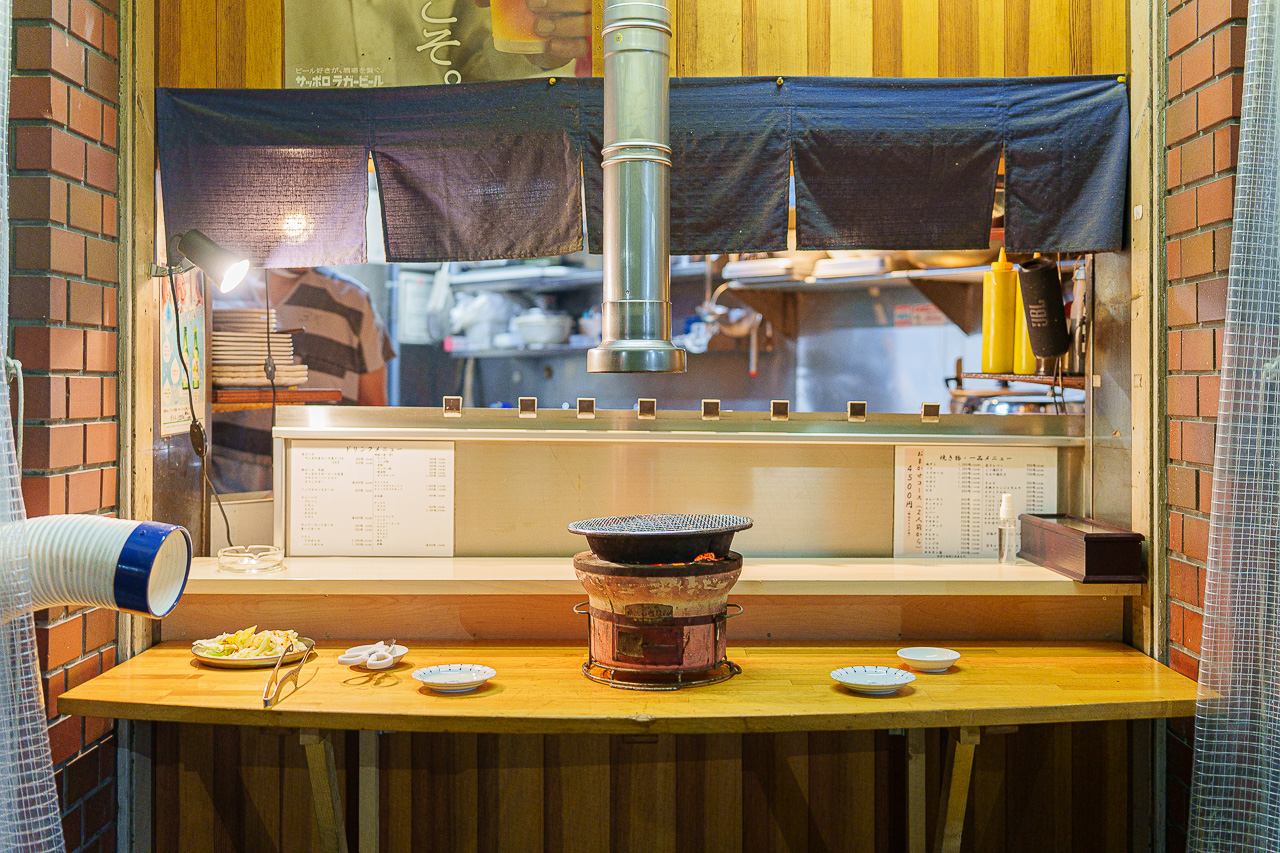
We happened to be seated at the outdoor counter
seen in the ‘Office Worker Side Story’ installment of that series.
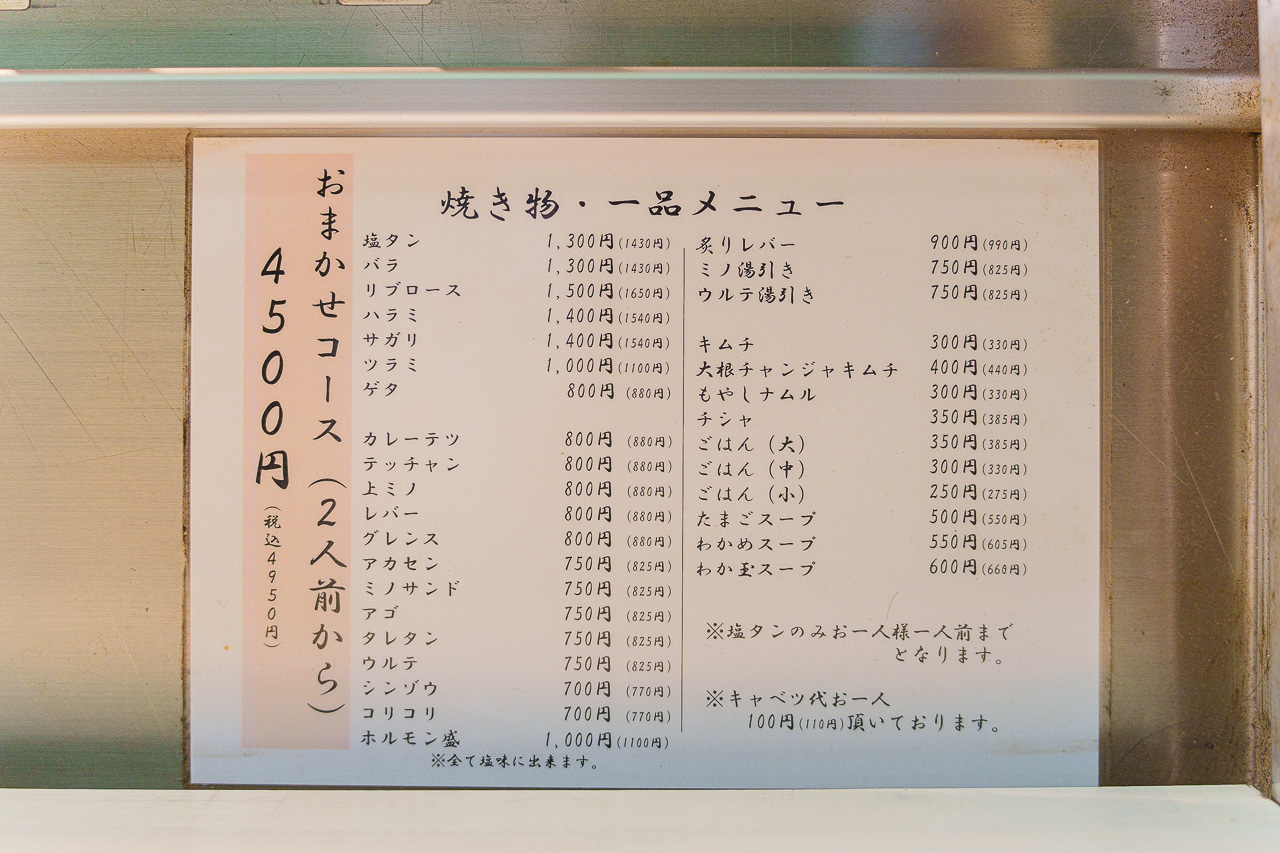
Overall, the menu felt a little expensive.
For example, one serving of beef tongue was JPY 1,300 and loin was JPY 1,500.
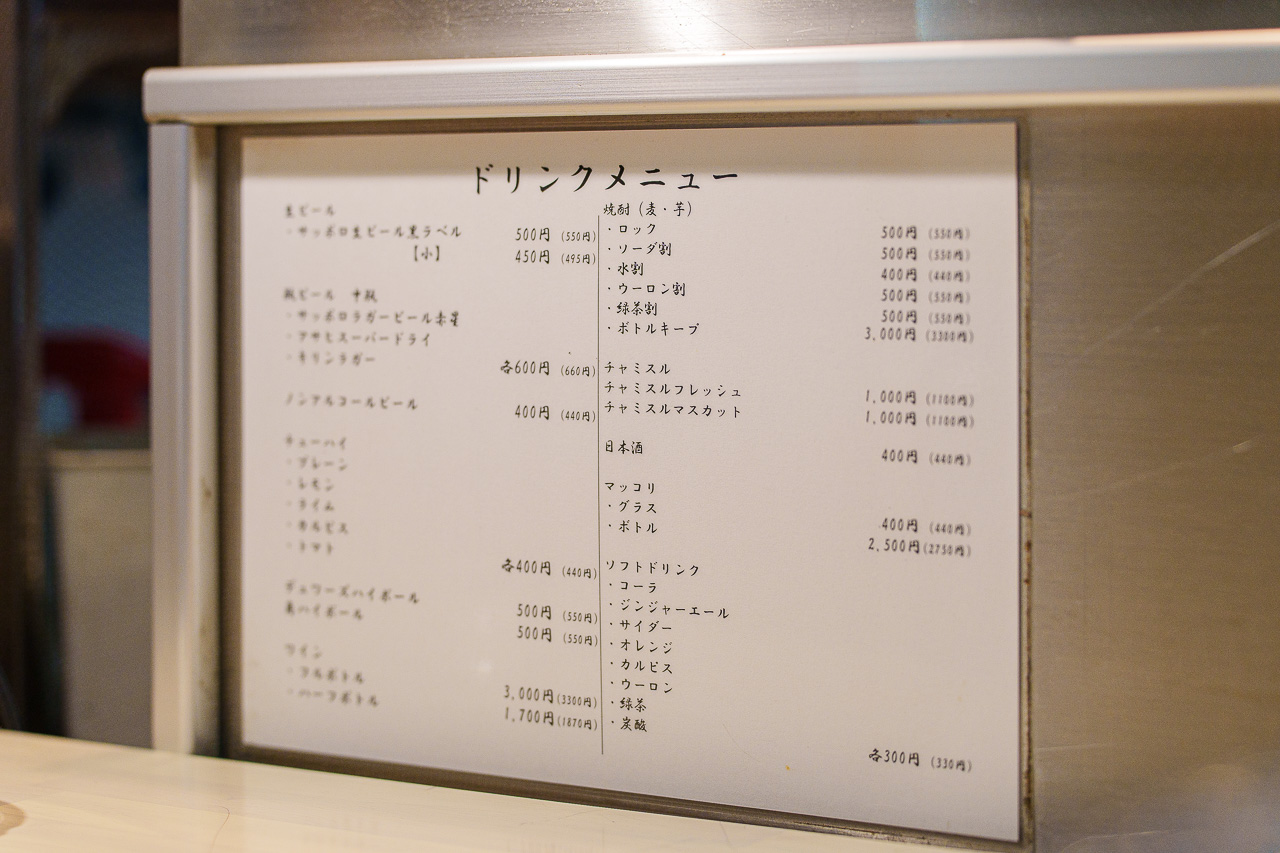
Chamisul soju at JPY 1,000 and a bottle of makgeolli at JPY 2,500 also caught my eye.
A full dinner could add up, so I thought it might work well as a second stop after an earlier drink and bite to eat.
The menu was written only in Japanese, which could make ordering difficult for visitors who do not read it.
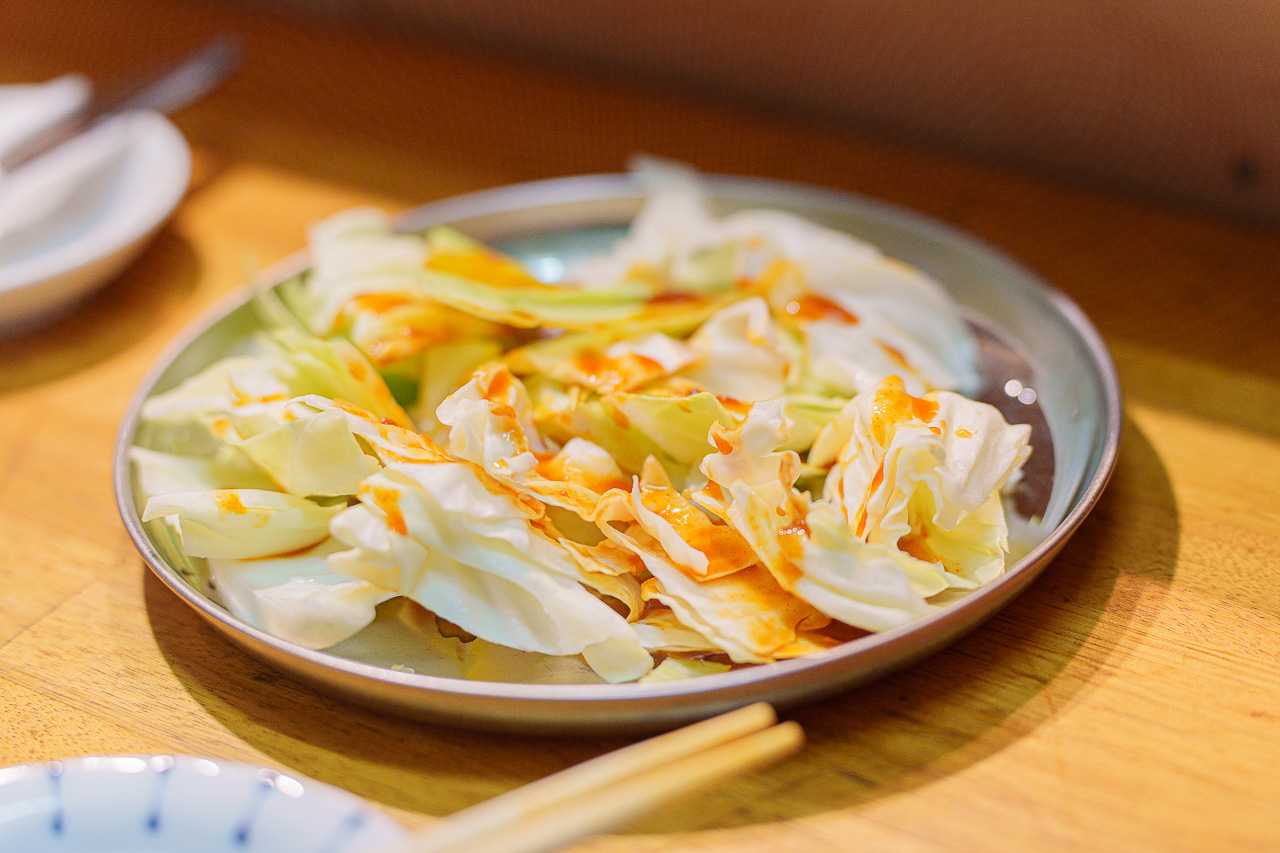
There was a JPY 100 cover charge for cabbage, a light accompaniment to the meat.
Rather than individual plates, it seemed intended for the table to share.
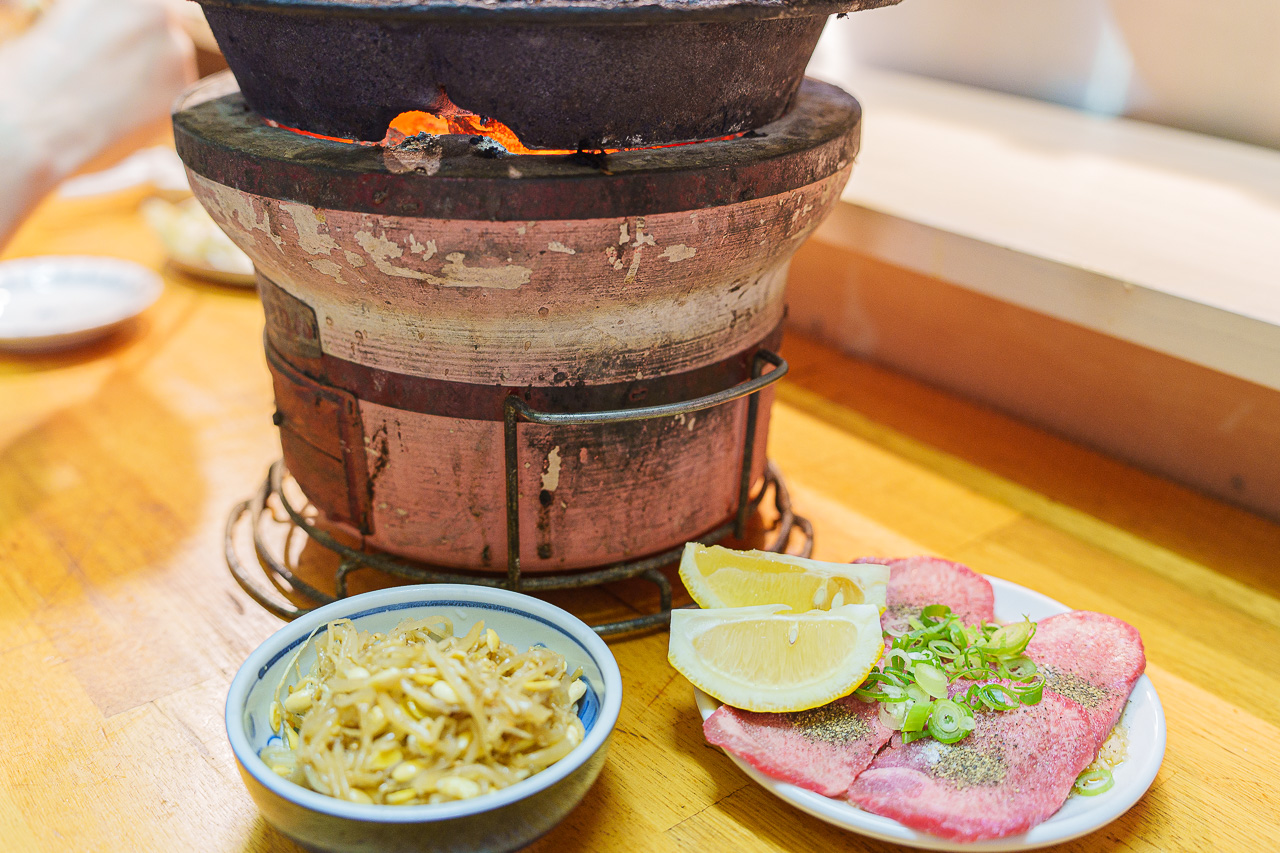
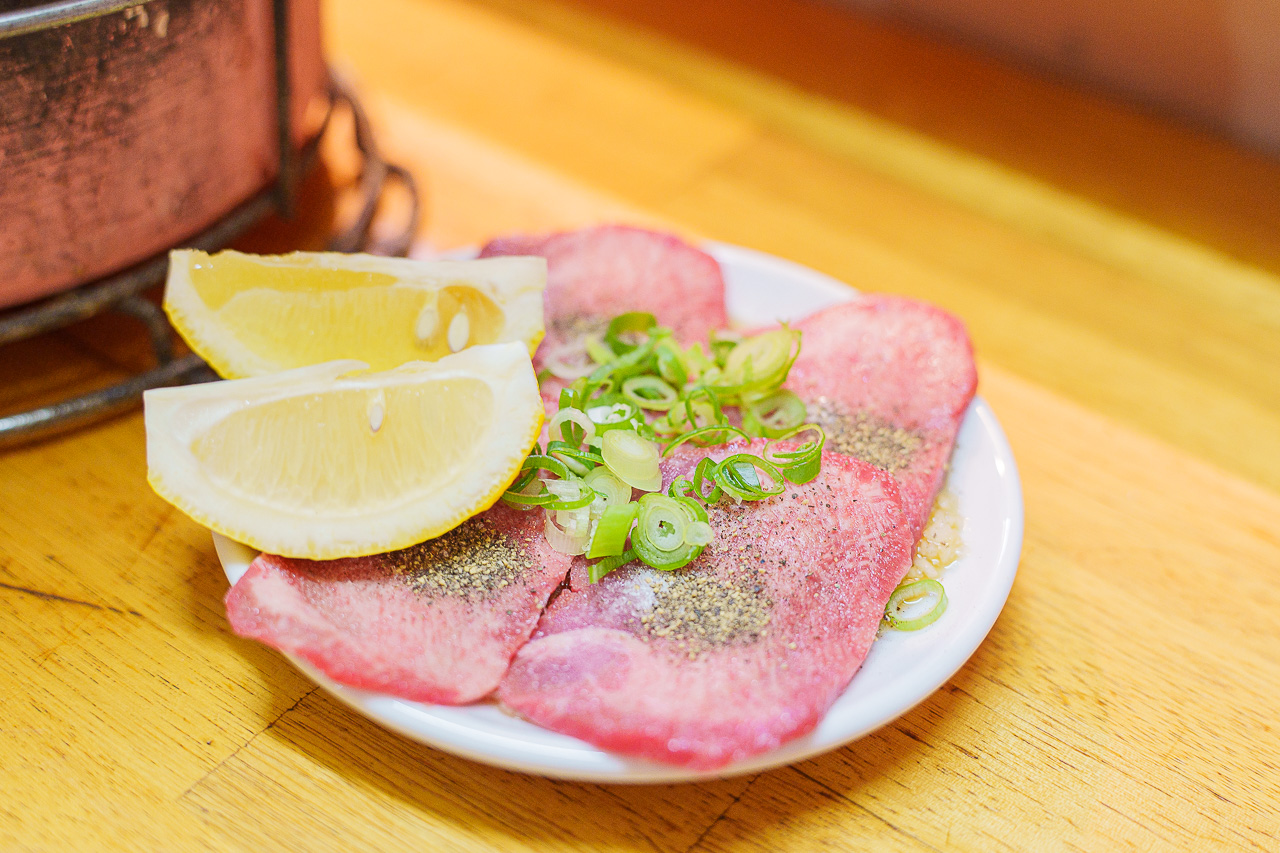
The shop’s most popular dish: shio-tan, salted beef tongue.
It was so popular that orders were limited to one serving per person.
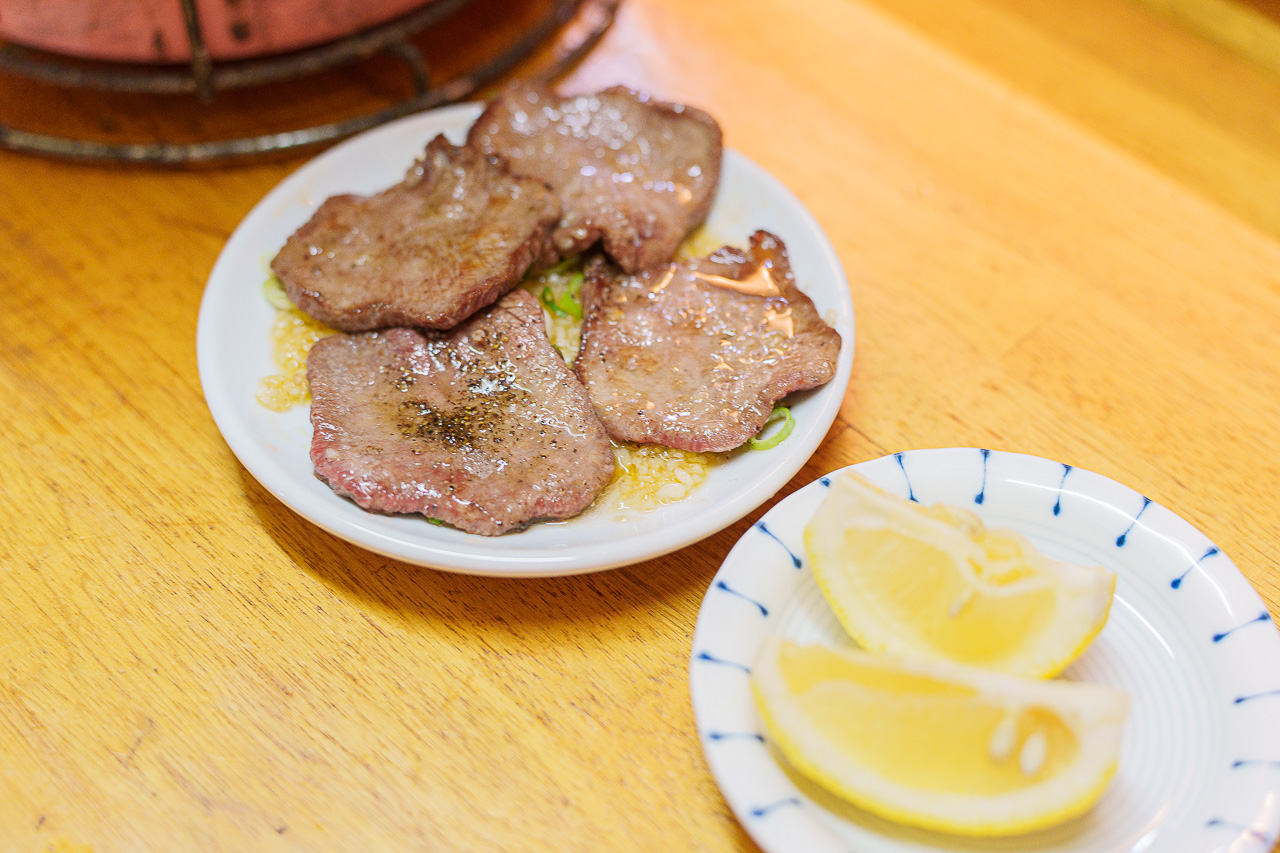
A special garlic-and-sesame-oil sauce covers the bottom of the dish,
with unusually thick slices of tongue on top.
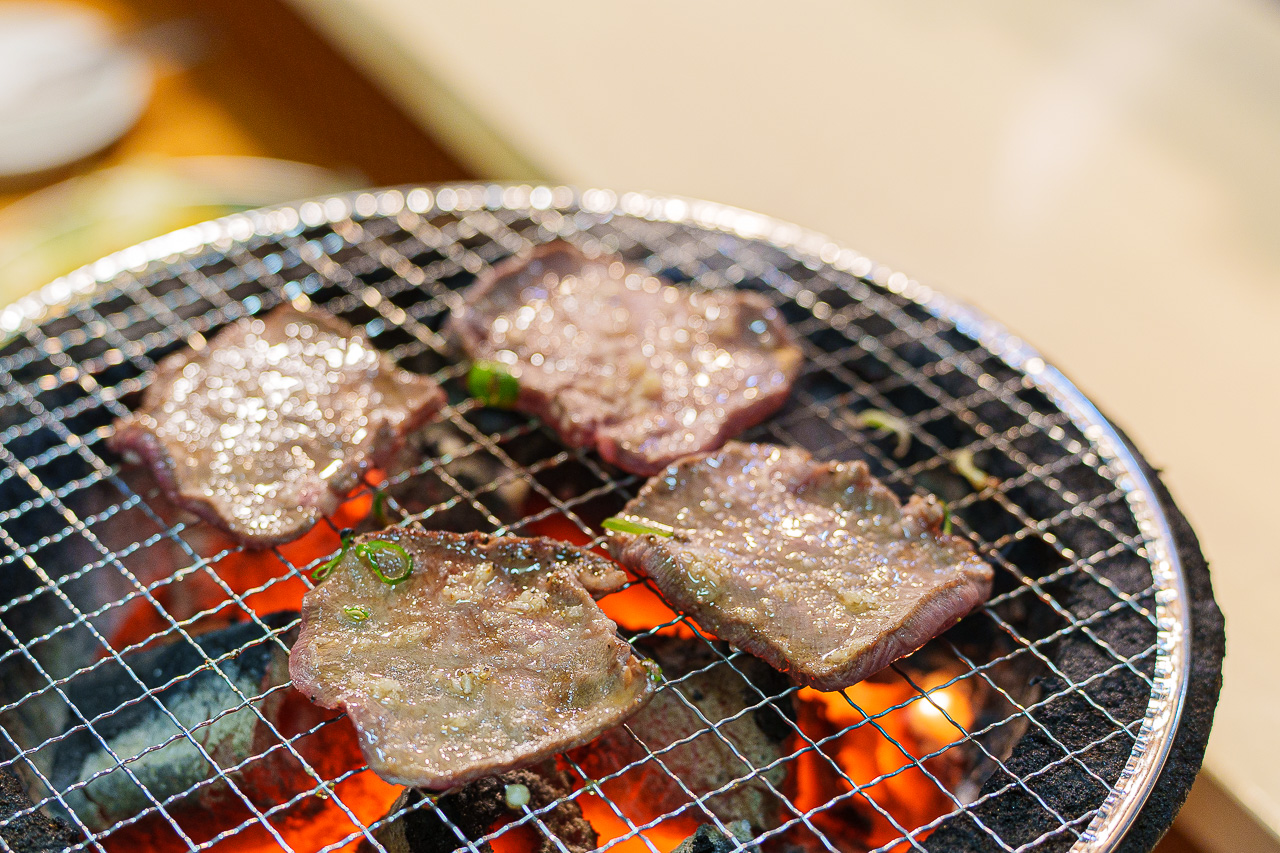
The source describes grilling both sides of the tongue,
then adding the garlic sauce from underneath.
It also suggests lemon sauce according to taste.
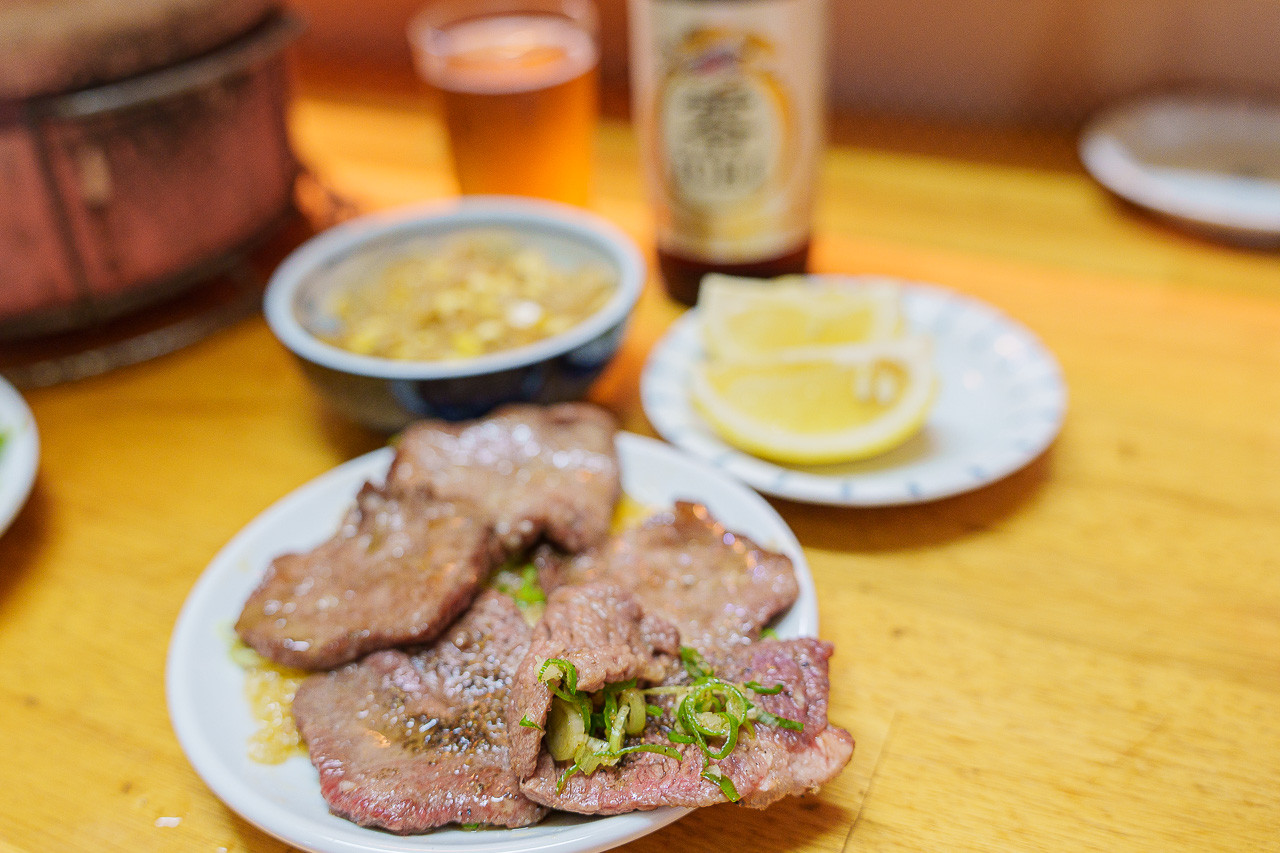
The original says fresh tongue can taste good rare,
and reports being told that Mansen’s could be eaten that way. This is a historical account of that advice, not a safety assurance.
Since first trying beef tongue in Japan, I have often ordered it for its springy chew.
This version was particularly delicious.
Our lightly cooked serving was tender while retaining its characteristic bounce.
Scallion, garlic and sesame oil cut through the strong aroma and added umami.
I enjoyed it enormously.
I could understand the one-serving limit.
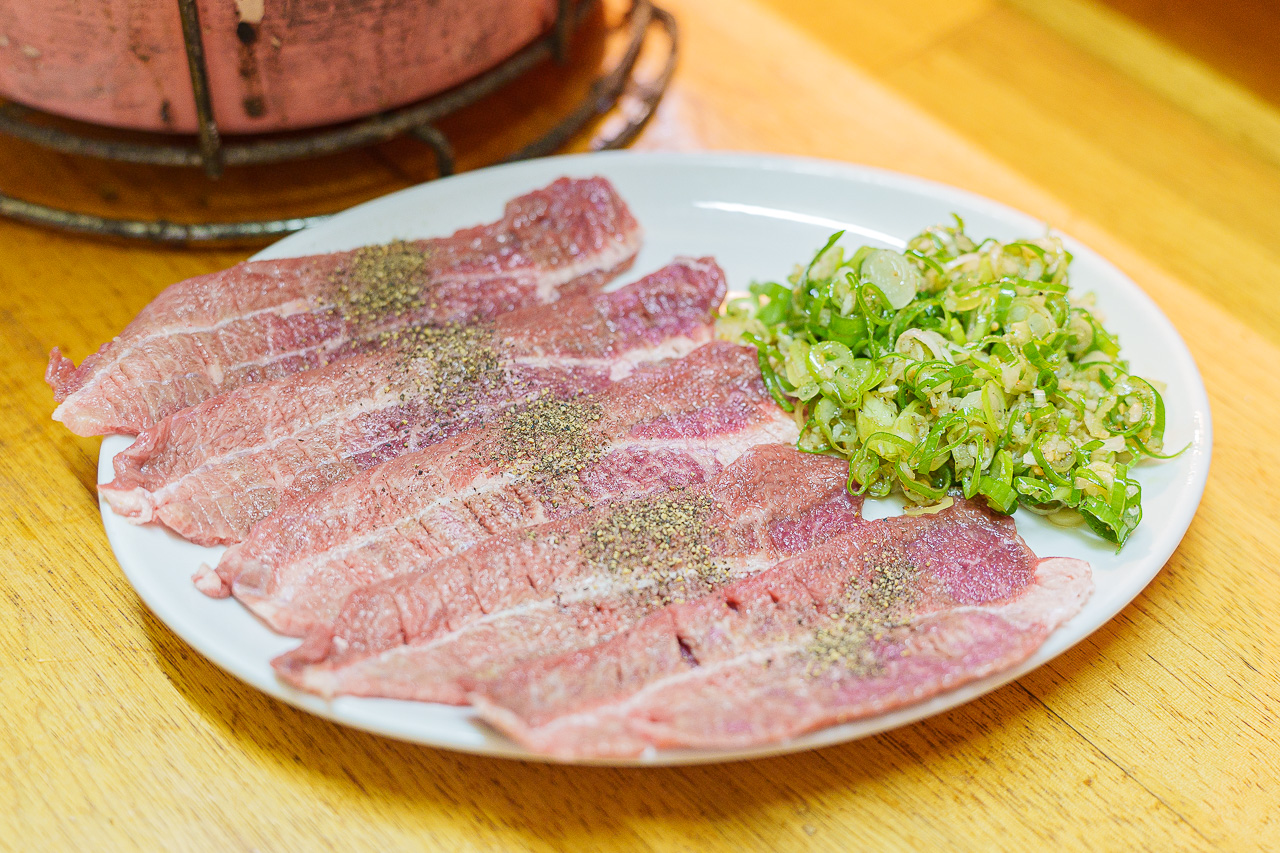
The second cut we ordered was tsurami (つらみ).
The name combines tsura, meaning face, with mi, meaning flesh or meat.
It refers to beef cheek.
Although its flesh is distinctly red,
the Japanese meat trade commonly classifies it with horumon rather than regular muscle cuts, according to the source.
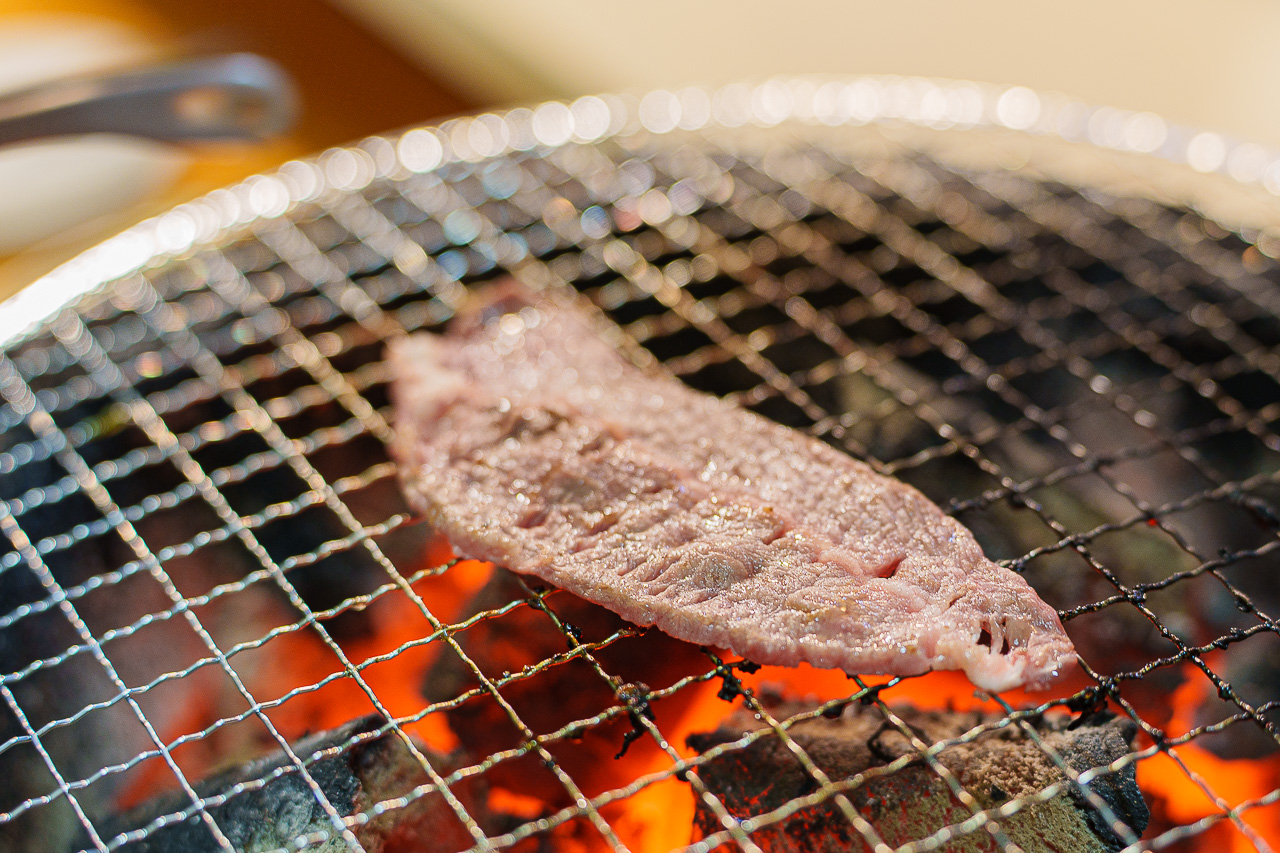
Only a small area of the animal provides it.
The source gives a yield of roughly 1 kg per animal, making it a relatively scarce cut.
That helps explain why it is not often seen in ordinary home kitchens.
Tsurami is the usual name,
but different regions and shops may call it tsura (つら),
hohoniku (ホホ肉),
or hoppe (ほっぺ).

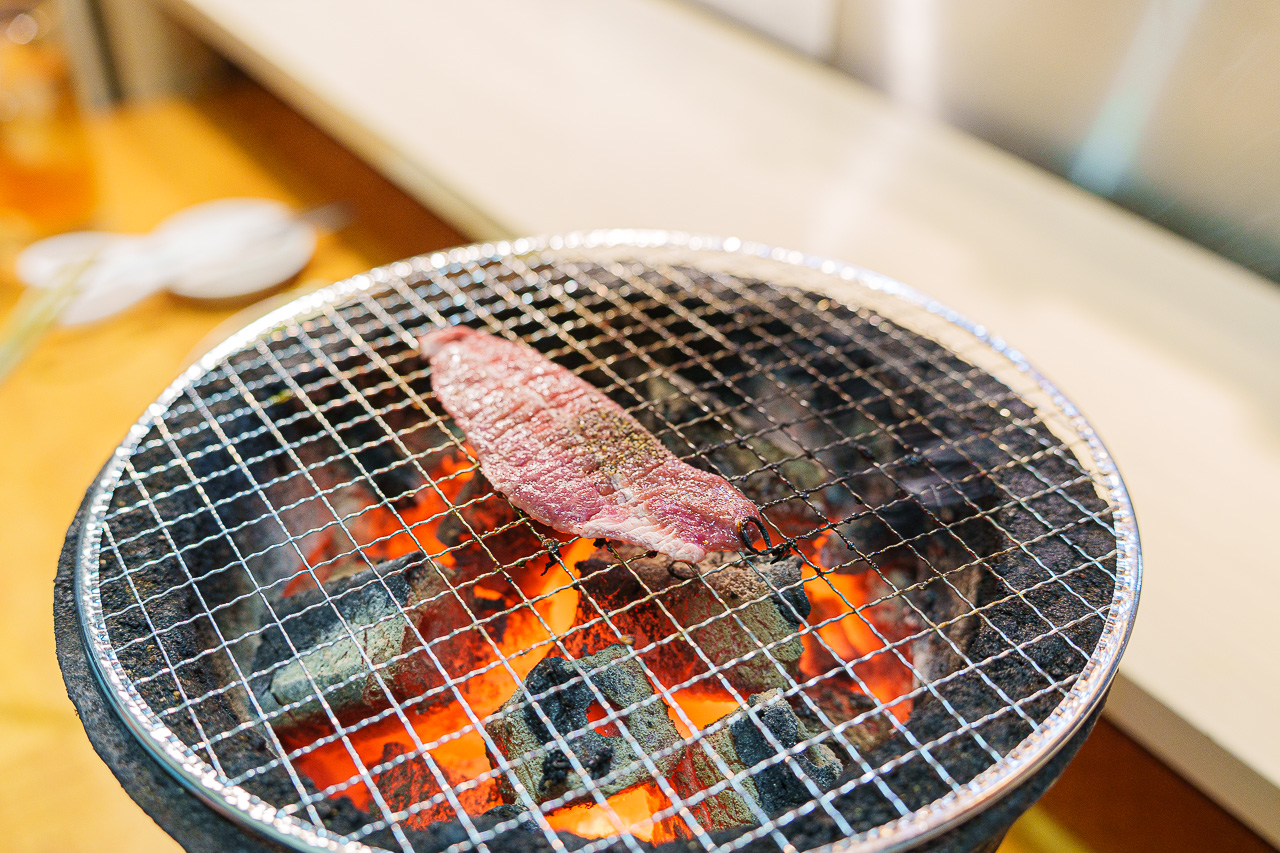
The original suggests a light, rare cook with salt and pepper,
or dipping it in yakiniku sauce. These are the source’s preferences, rather than independently verified safe-cooking guidance.
It notes that overcooking can make the meat firm.
At Mansen, we enjoyed it with the special sauce; it was outstanding.
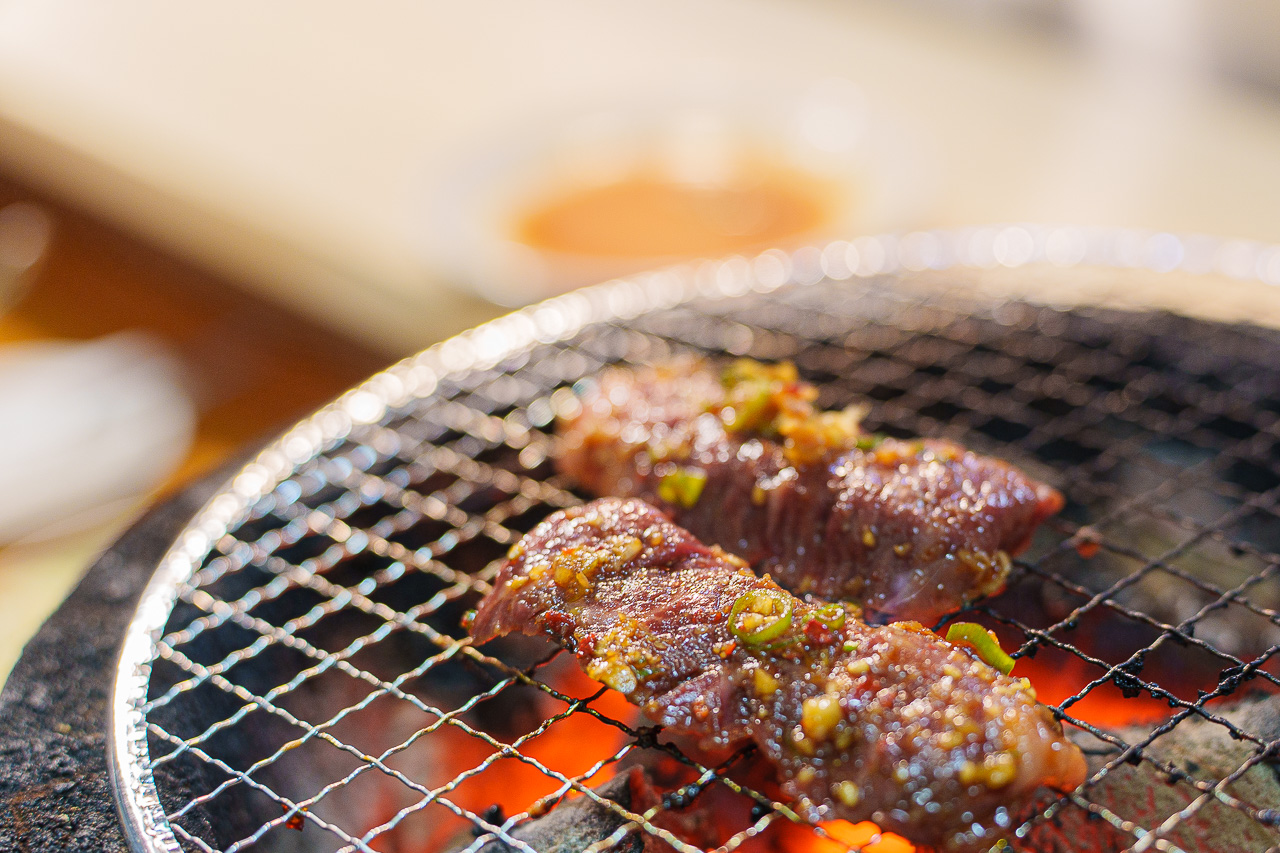
Harami (はらみ) is described in the source as a cut near the ribs.
More precisely, it comes from the diaphragm muscle,
which spans the interior between the chest and lower back.
It looks and eats much like other red meat,
but is classified with offal in Japanese yakiniku terminology.
The source gives a yield of only about 2–3 kg per animal.
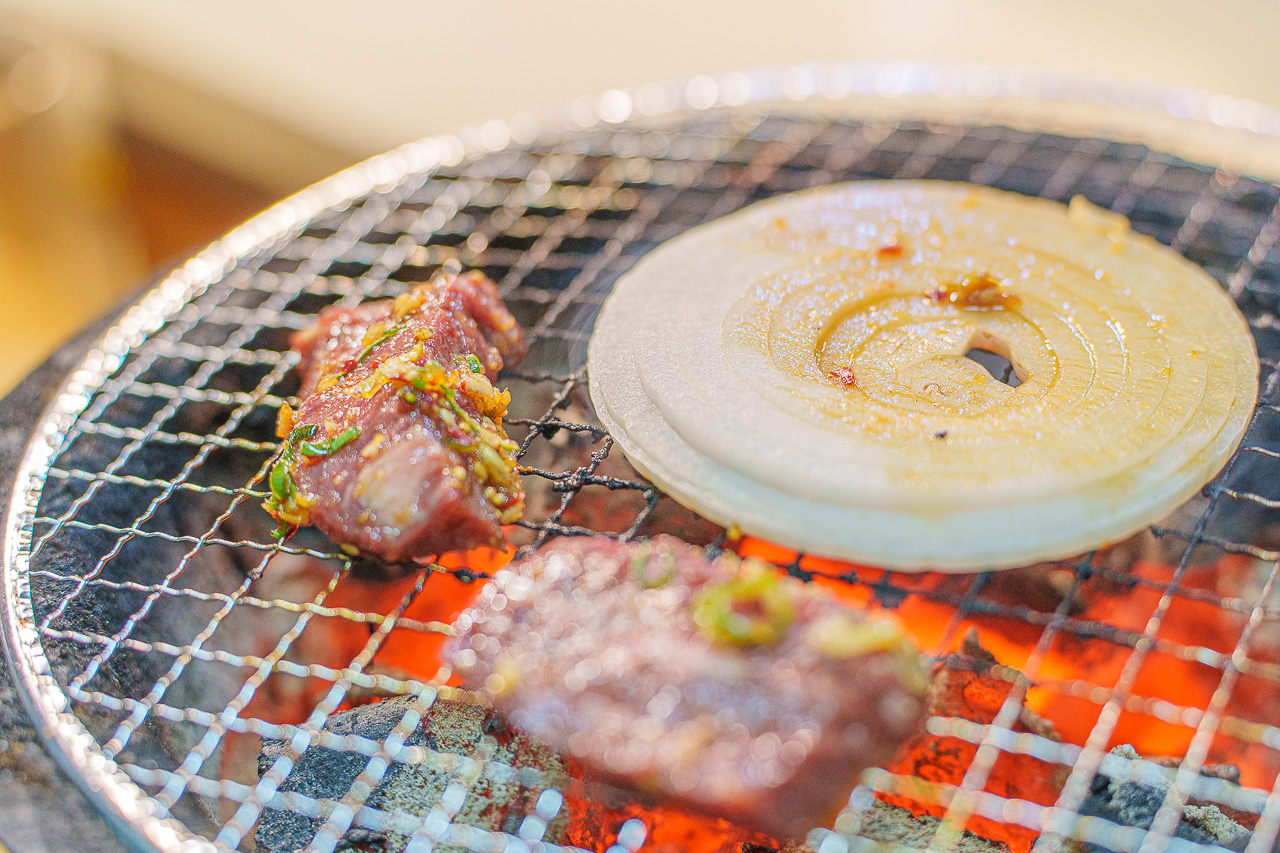
Dark in color and full of juices, harami
has a texture that is springy yet tender.
It is enjoyed in Korea as well as Japan.
In Korean it is called anchangsal.
The original explains the name by the trimmed diaphragm’s resemblance
to a shoe’s inner sole, or anchang.
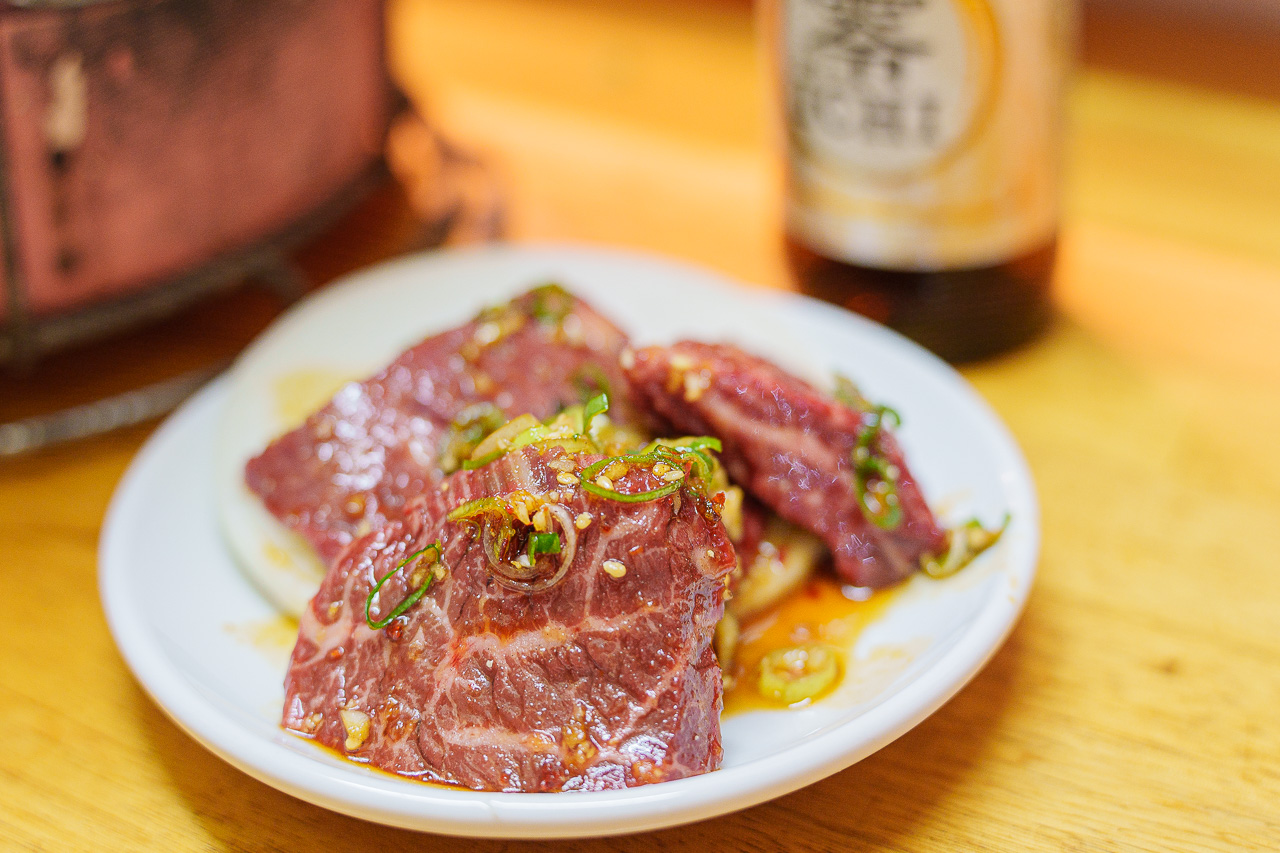
Sagari (さがり) is another diaphragm cut related to harami.
The source identifies it as the part attached on the lumbar side.
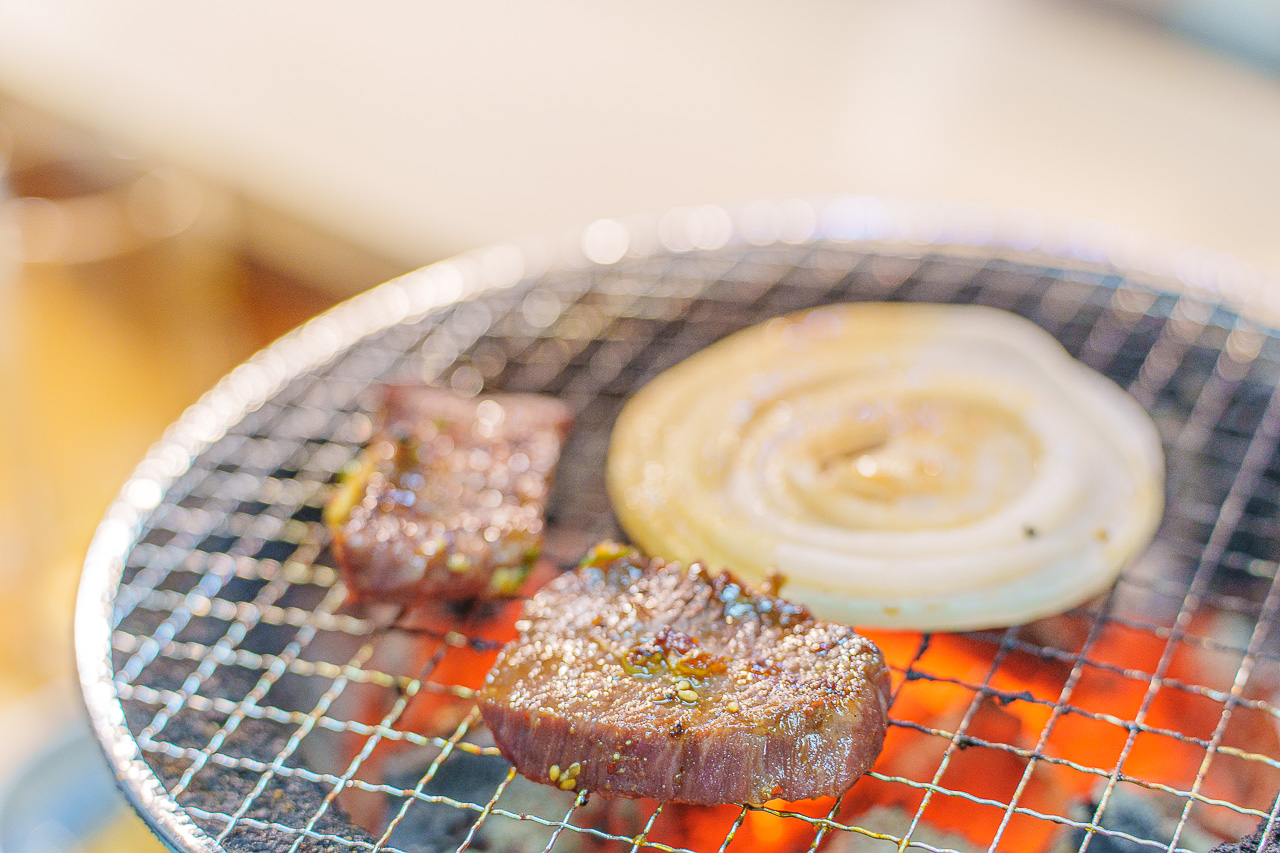
Like harami,
it is red meat classed as horumon and not commonly seen in an ordinary market.
Its springy but tender texture is excellent, much like harami.
‘Horumon’ at a yakiniku restaurant may make you think only of digestive organs.
But it also includes these tender, juicy, relatively uncommon cuts.
Trying different parts of the animal can be one of the pleasures of dining in Japan.
Yakiniku Horumon Mansen (焼肉ホルモン 万千)