
We traveled from Okinawa in Japan’s far south to Hokkaido in the far north.
Arrival was scheduled for 7:30 p.m. and departure for 11 a.m.; despite three nights and four calendar days, it felt closer to a one-night, two-day trip.
There was one direct flight a day, but its timing seemed geared toward Hokkaido residents escaping to warm Okinawa, making it less convenient in our direction.
The recorded flight times were three hours 30 minutes northbound and four hours 10 minutes back—a long journey.
Flying to Hokkaido from Korea would have been shorter.

A delay made the already late arrival later; we finally reached New Chitose Airport (新千歳空港) at 8 p.m.
The Rapid Airport train (快速エアポート) cost JPY 1,150 in the source and reached Sapporo (札幌) in about 35 minutes.
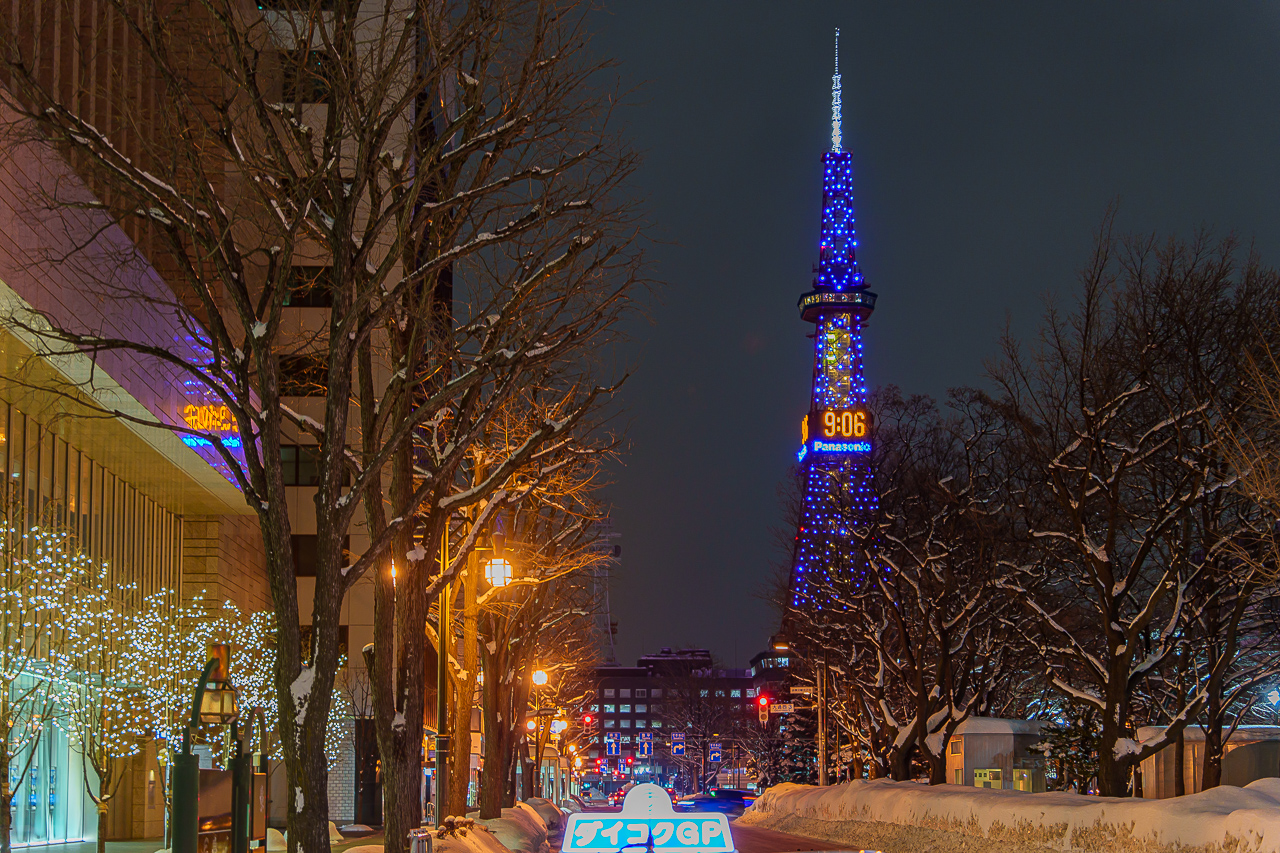
Our accommodation was in the Susukino (すすきの) nightlife district.
It was two subway stops, under five minutes, from Sapporo Station, but we walked to look around.
A route normally taking about 20 minutes took more than 30 in the snow.
It was already past 9 p.m.
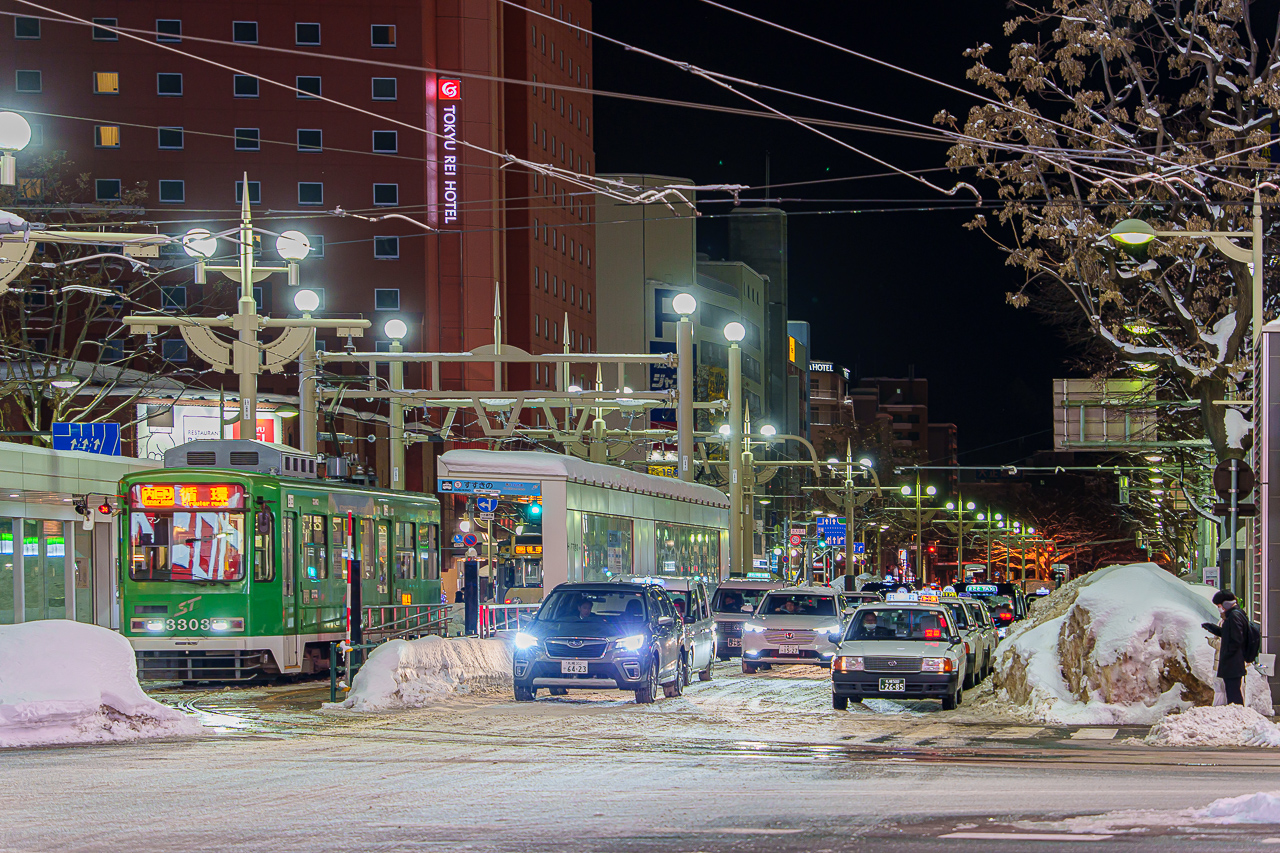
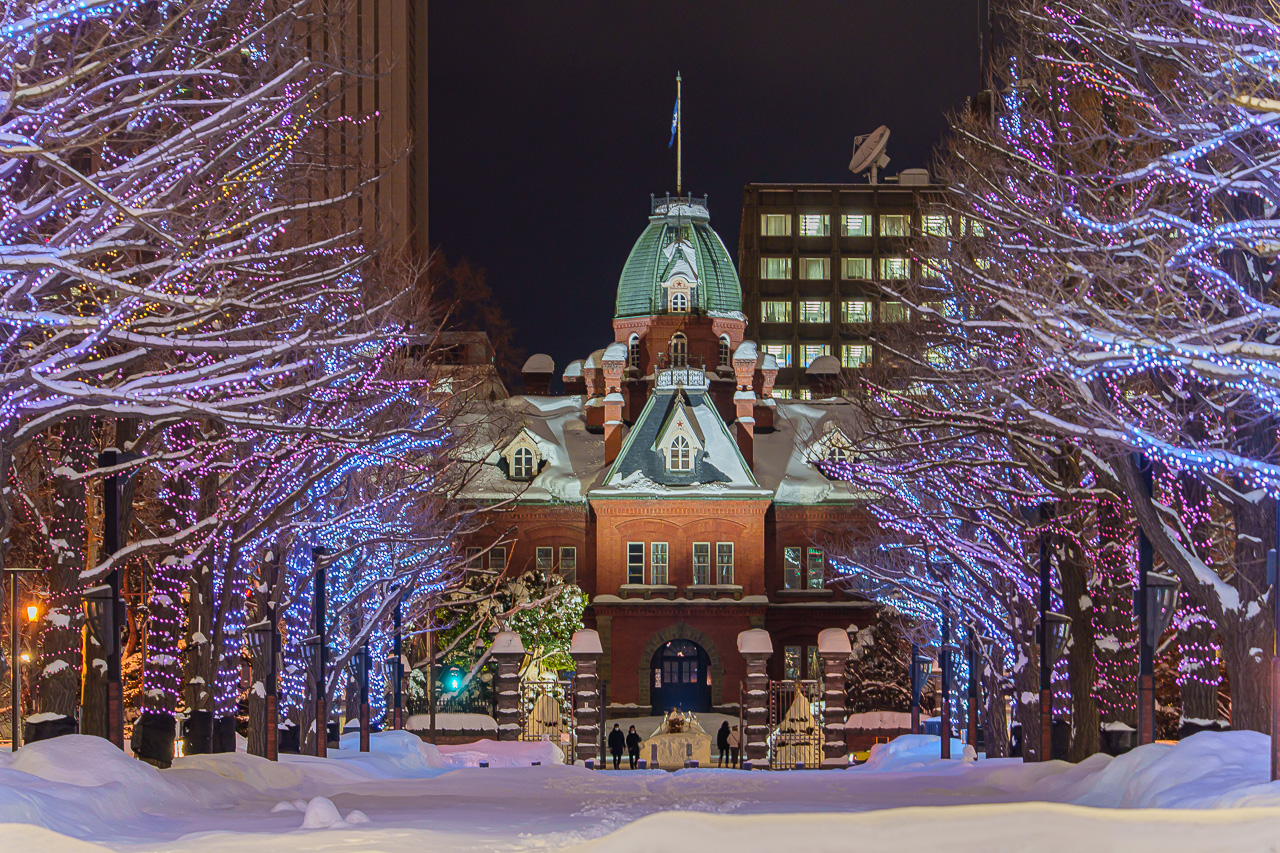
At least we could enjoy plenty of snow, something absent in Okinawa.
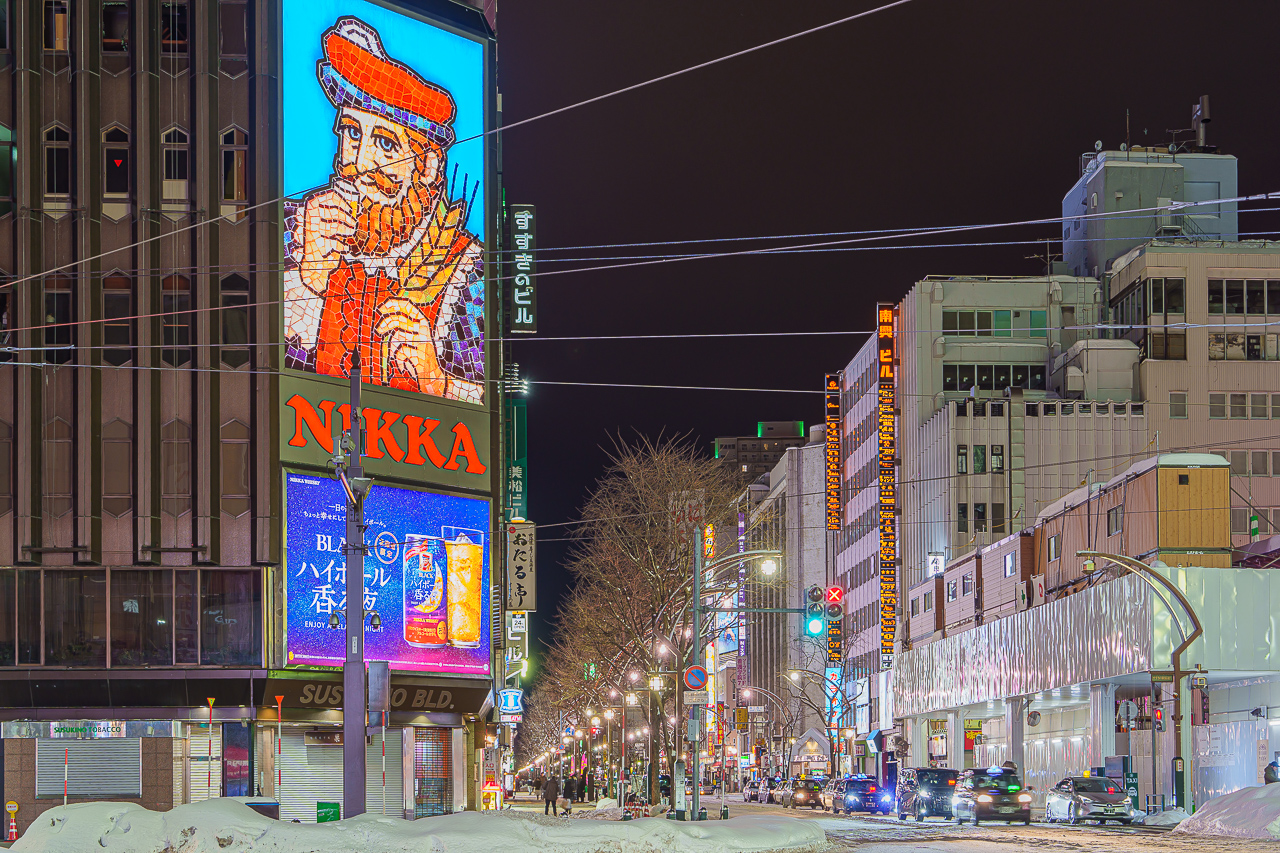
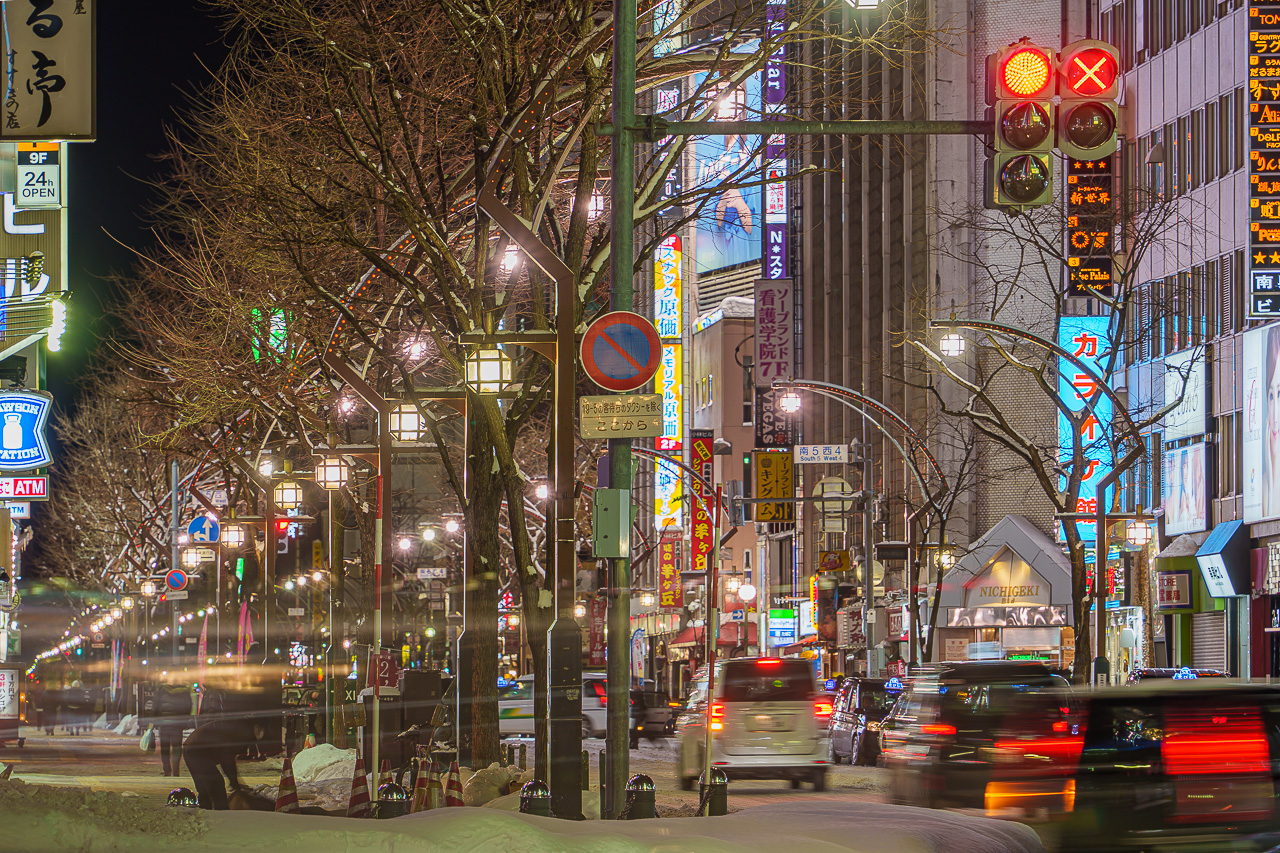
Finally, Susukino.
Osaka has the Glico runner; Hokkaido has the Nikka man.
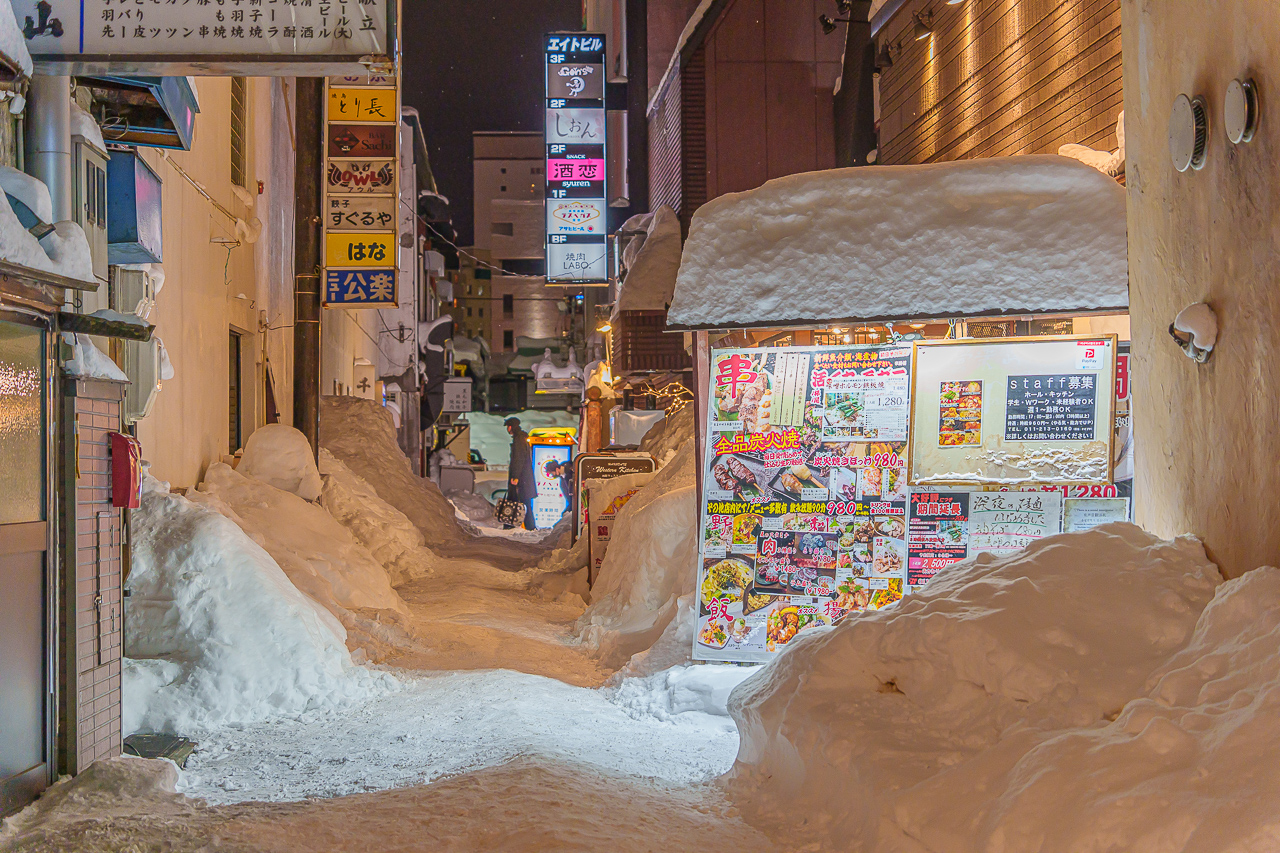
With many restaurants closed late at night, we went to an izakaya.
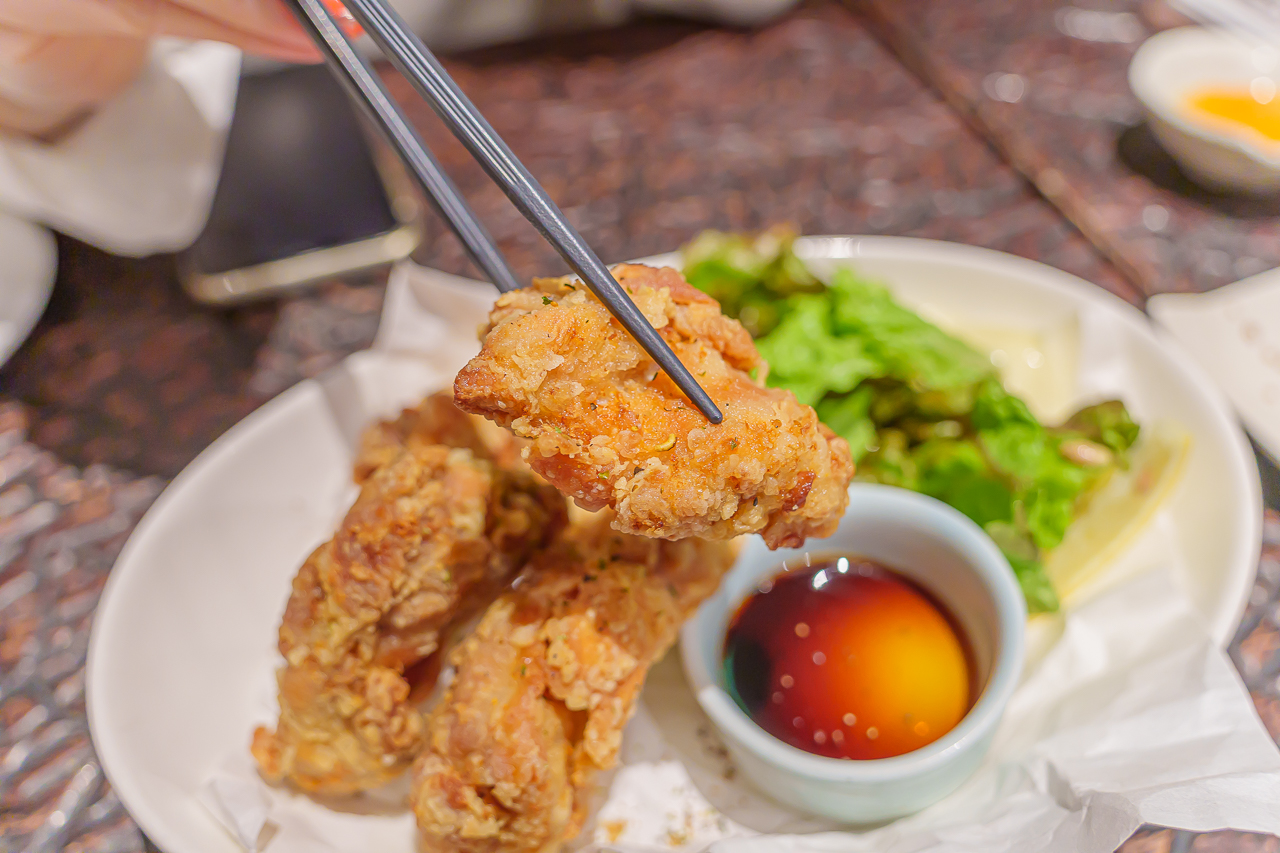
Having reached Hokkaido, we had to try zangi (ザンギ), its local fried chicken.
The source distinguishes it from other fried chicken by seasoning it before frying.
It was crisp outside and flavorful without needing another sauce.
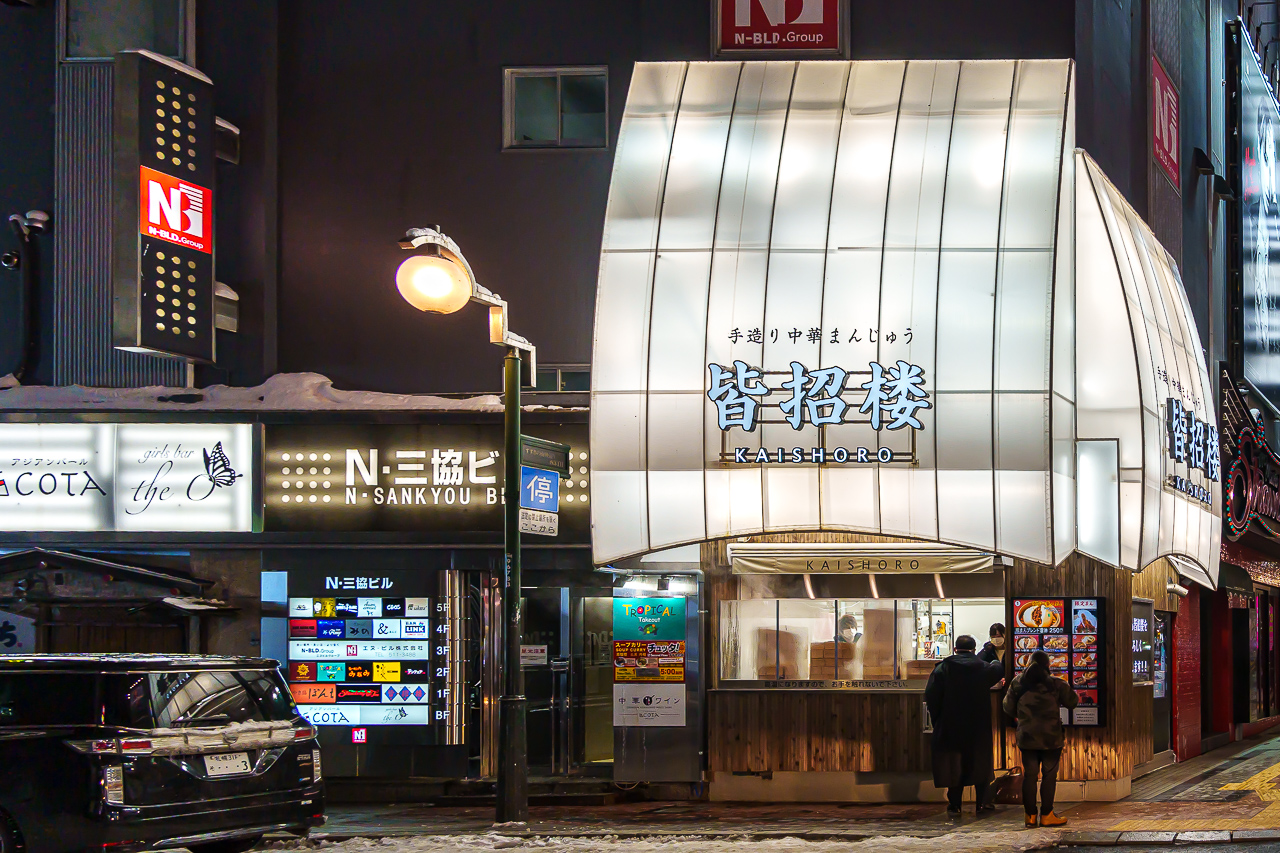
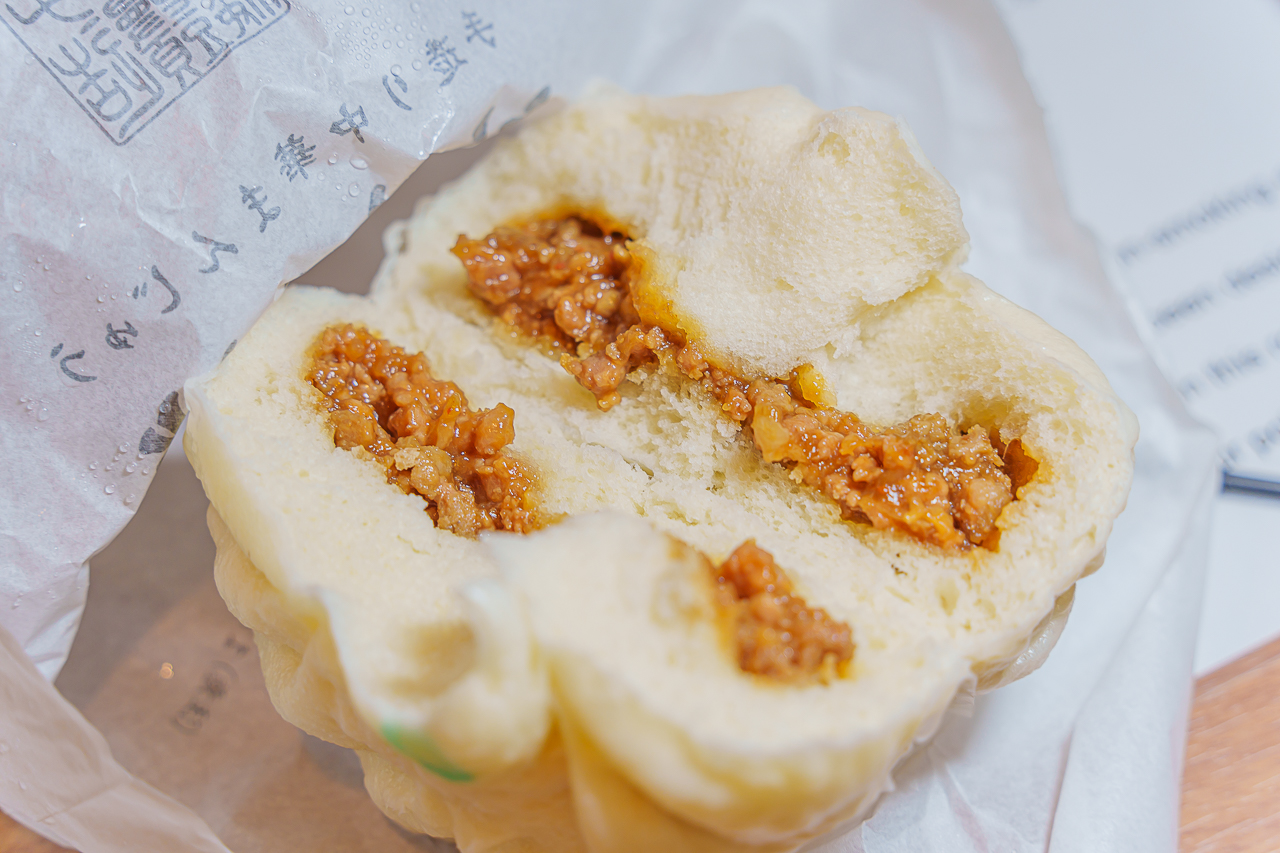
We also enjoyed a nikuman meat bun (肉まん) from Kaishoro, whose huge sign stood out.

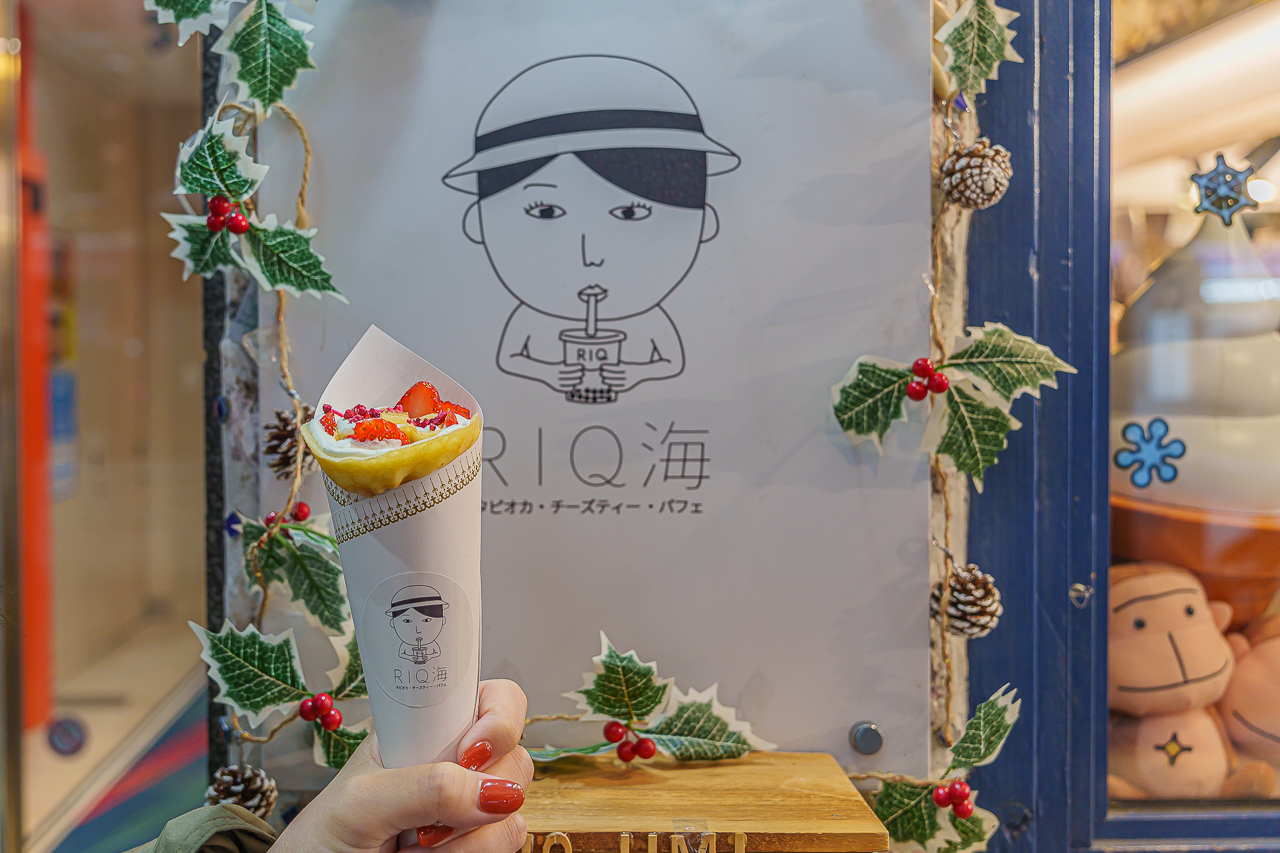
Even without doing much, it was past 11 p.m.
A strawberry-and-cream crêpe, with strawberries in season in February, finished the evening.
It felt as satisfying as a fancy restaurant meal.
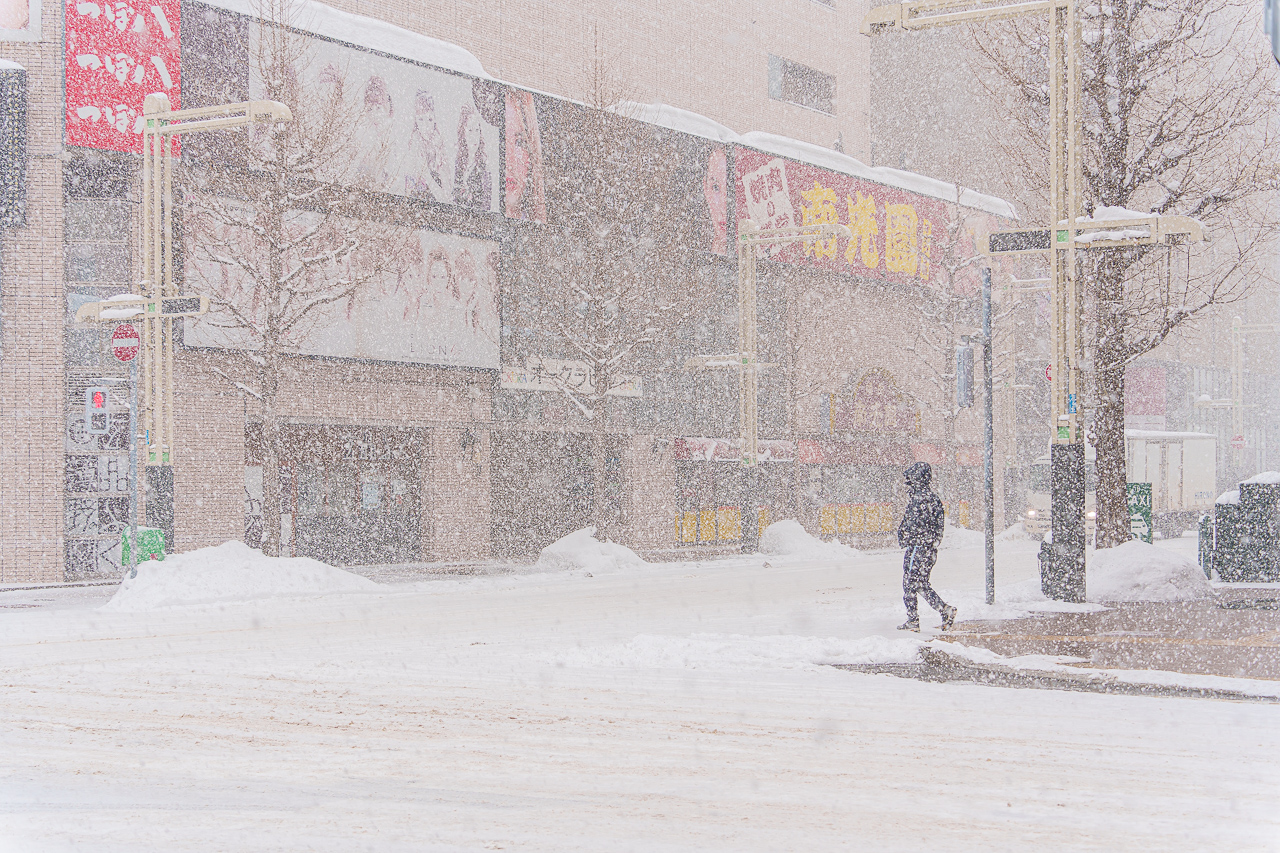
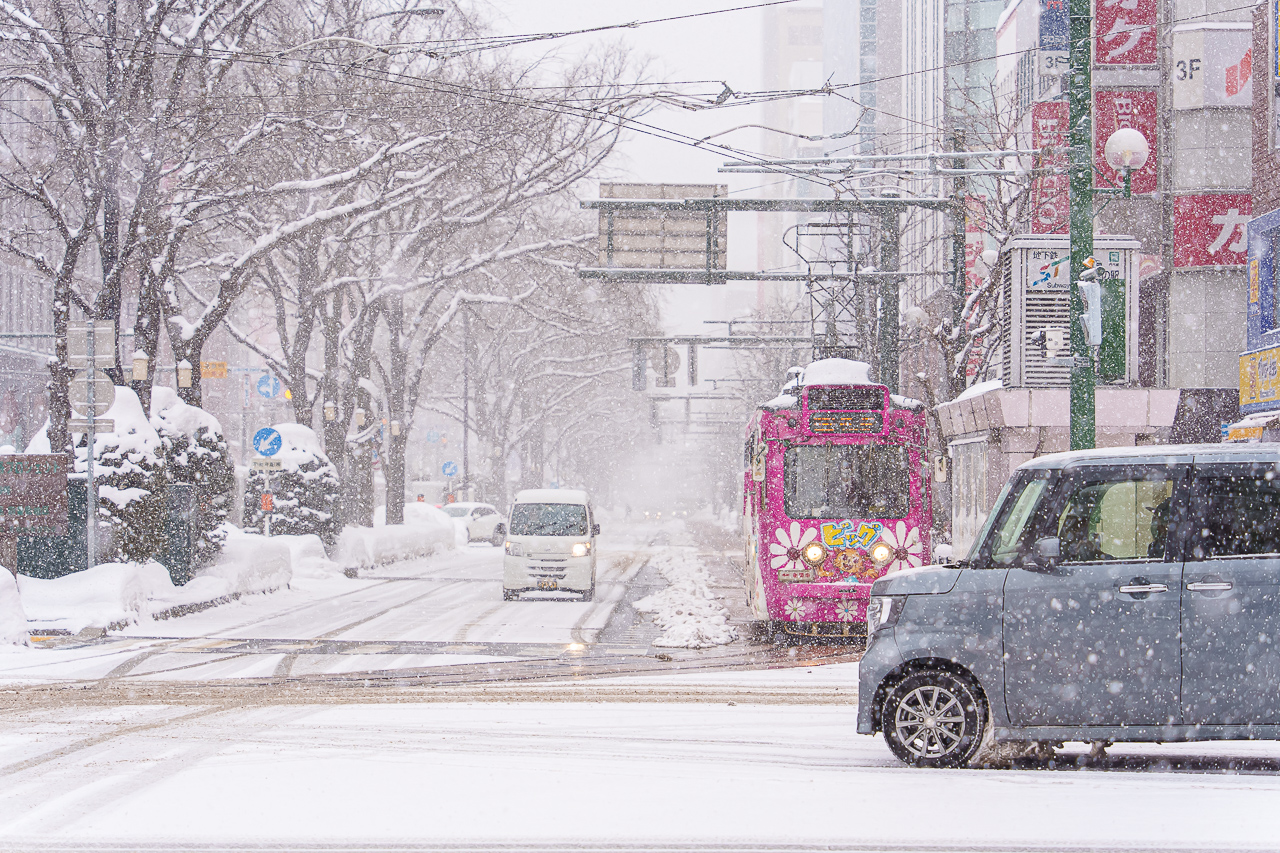
The next morning, heavy snow was falling when we went to collect the rental car.
Now it truly felt like we had reached the land of snow.
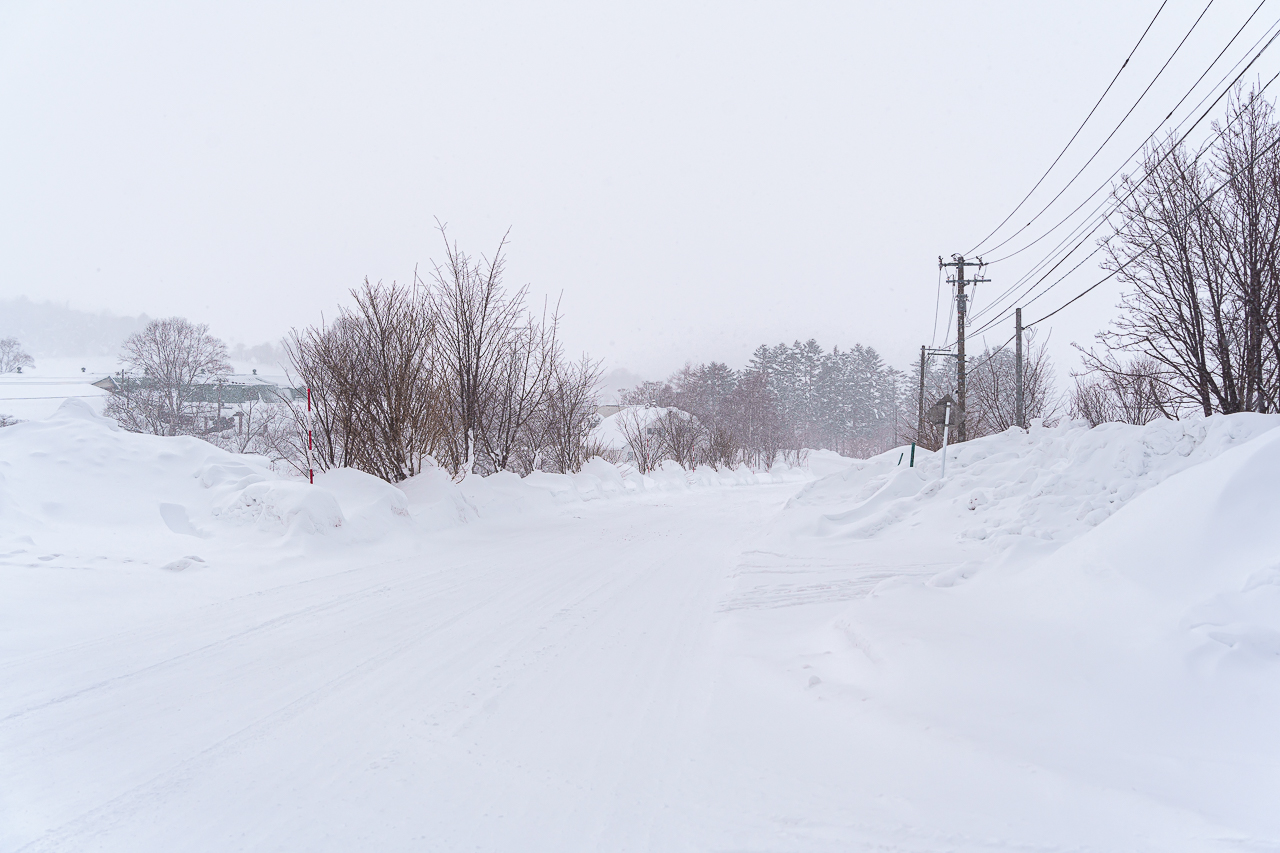
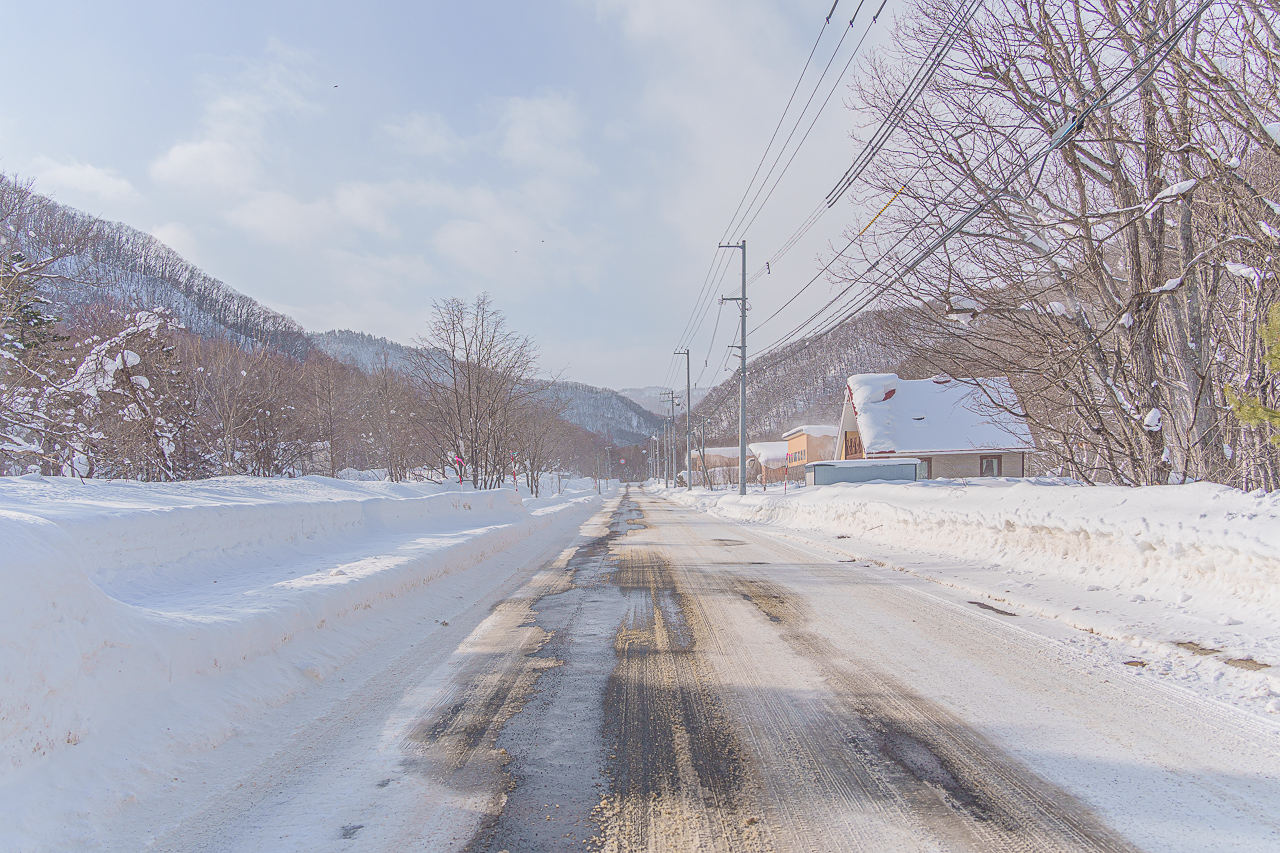
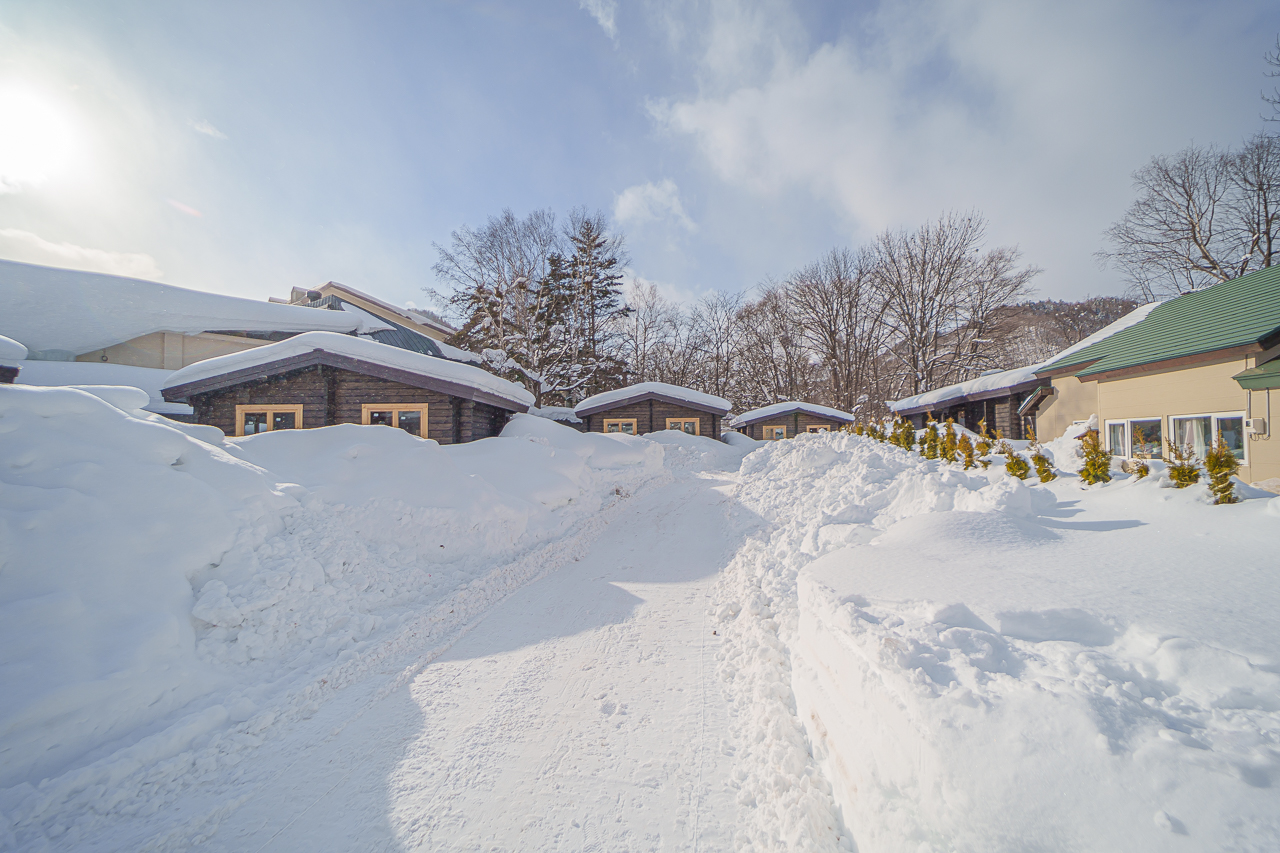
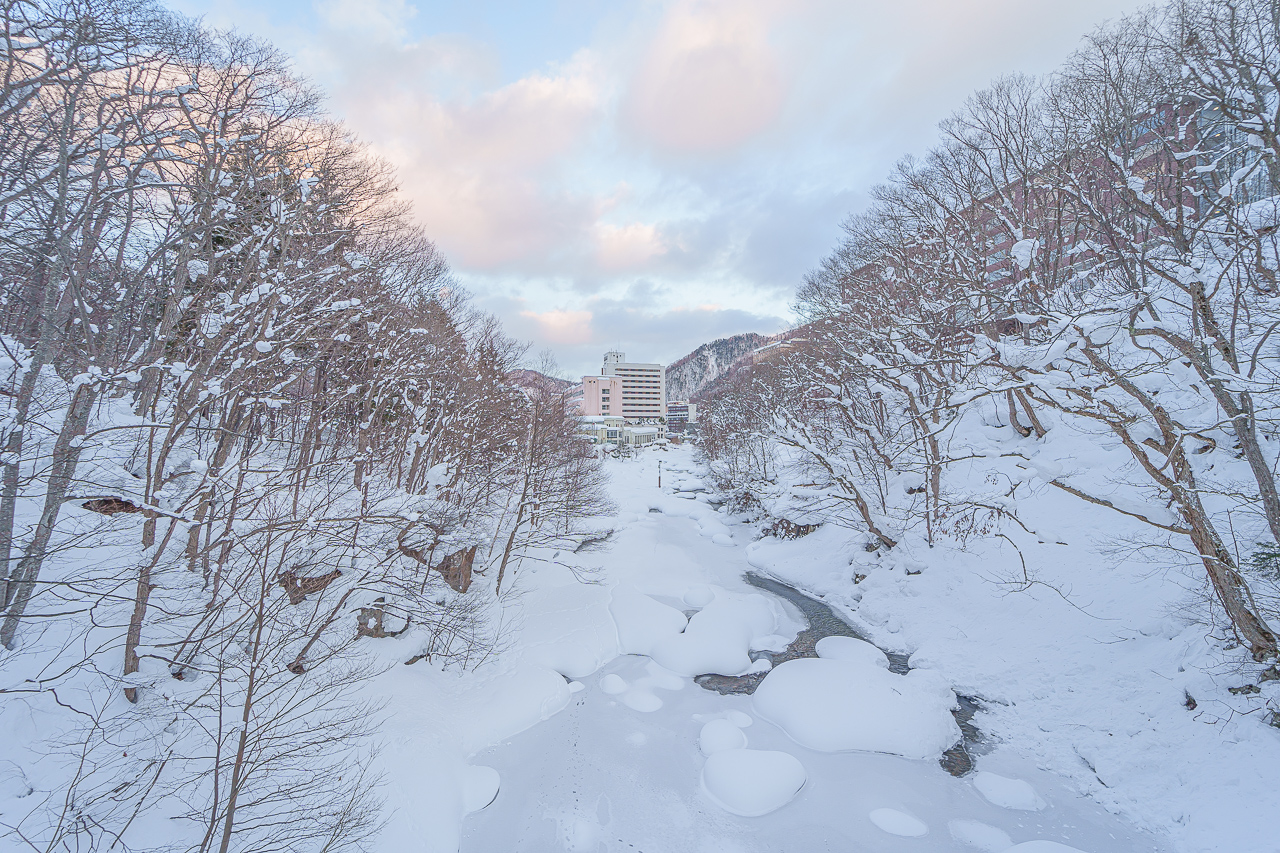
After a long drive on roads almost indistinguishable from snow, we reached Jozankei Onsen (定山渓温泉).
Our main destinations were Jozankei, about an hour by car from Sapporo, and Lake Toya (洞爺湖), so grand and wide that it resembled the sea.
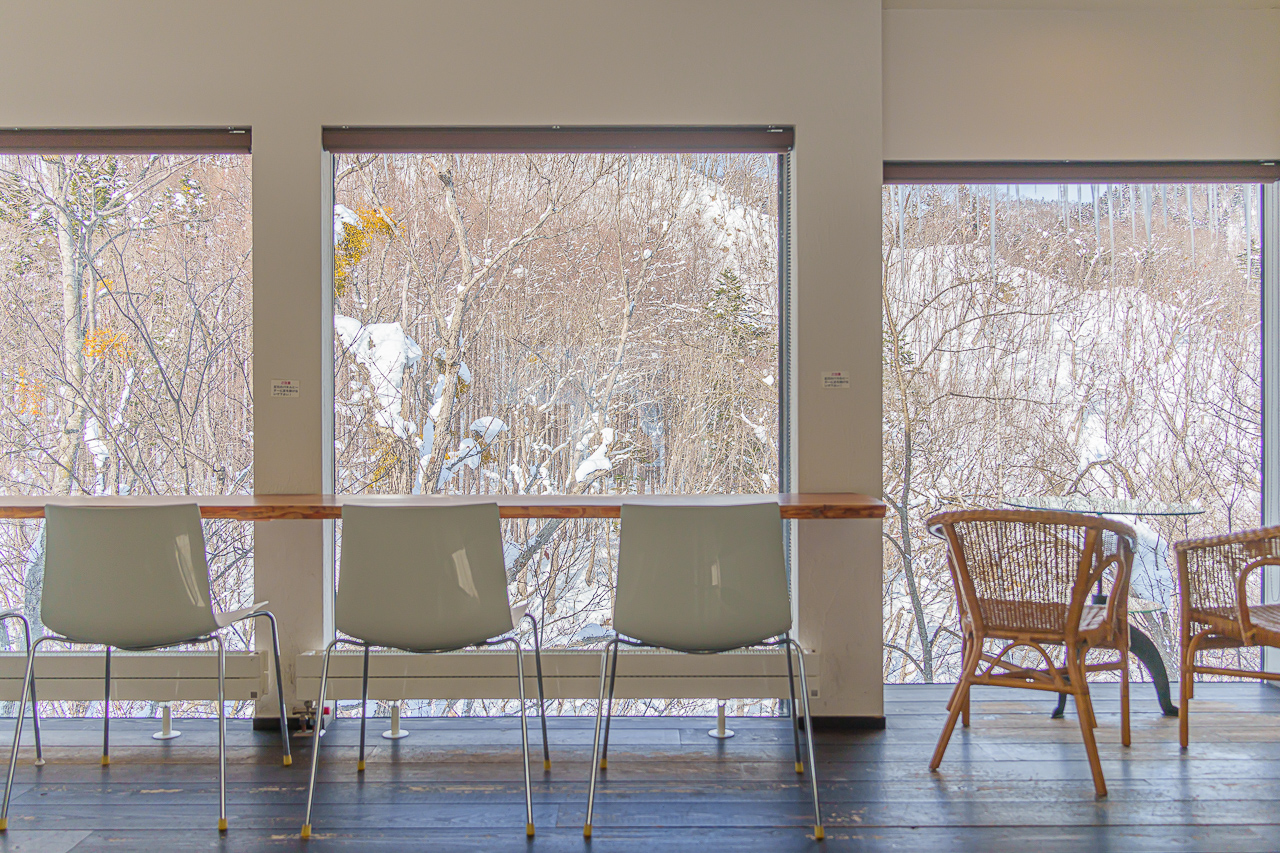
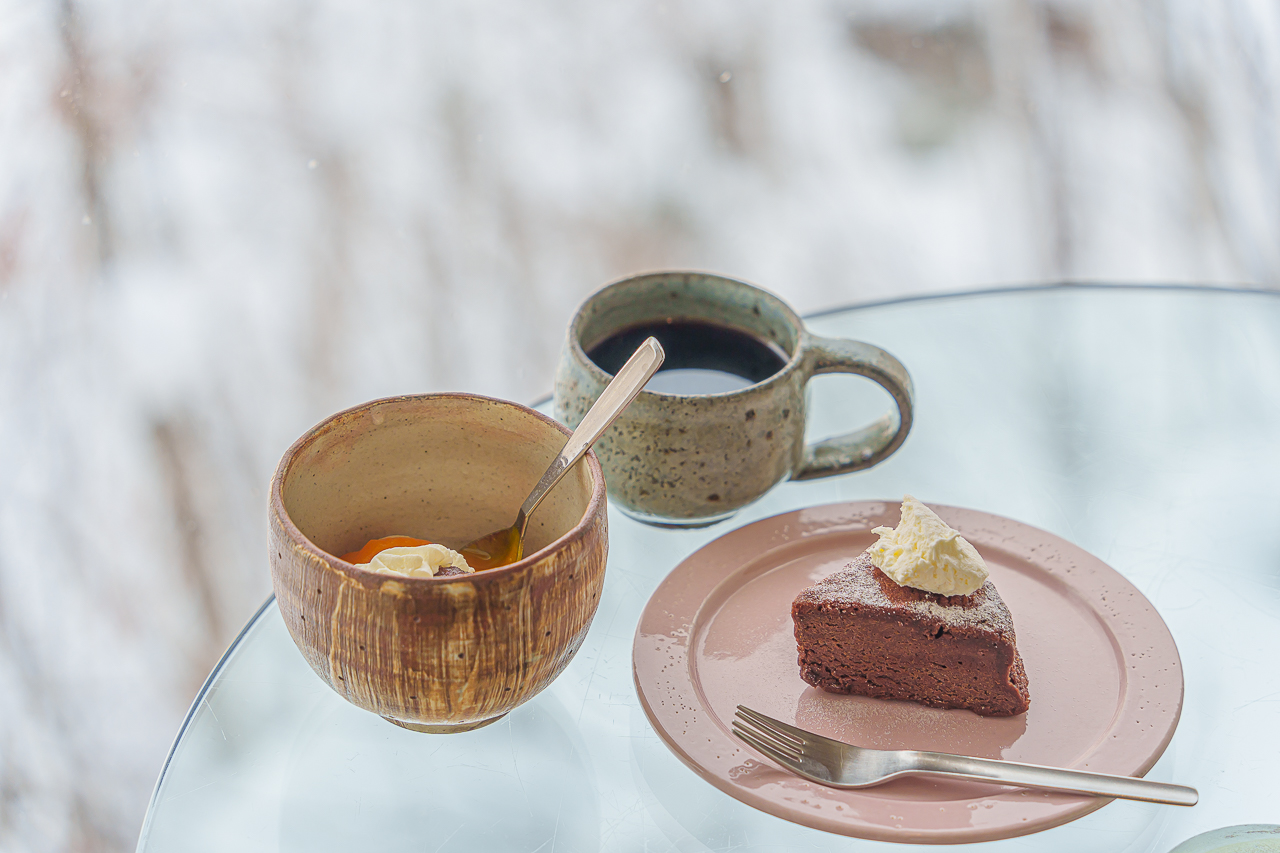
Close enough to the city for easy access, Jozankei had many cafés nearby.
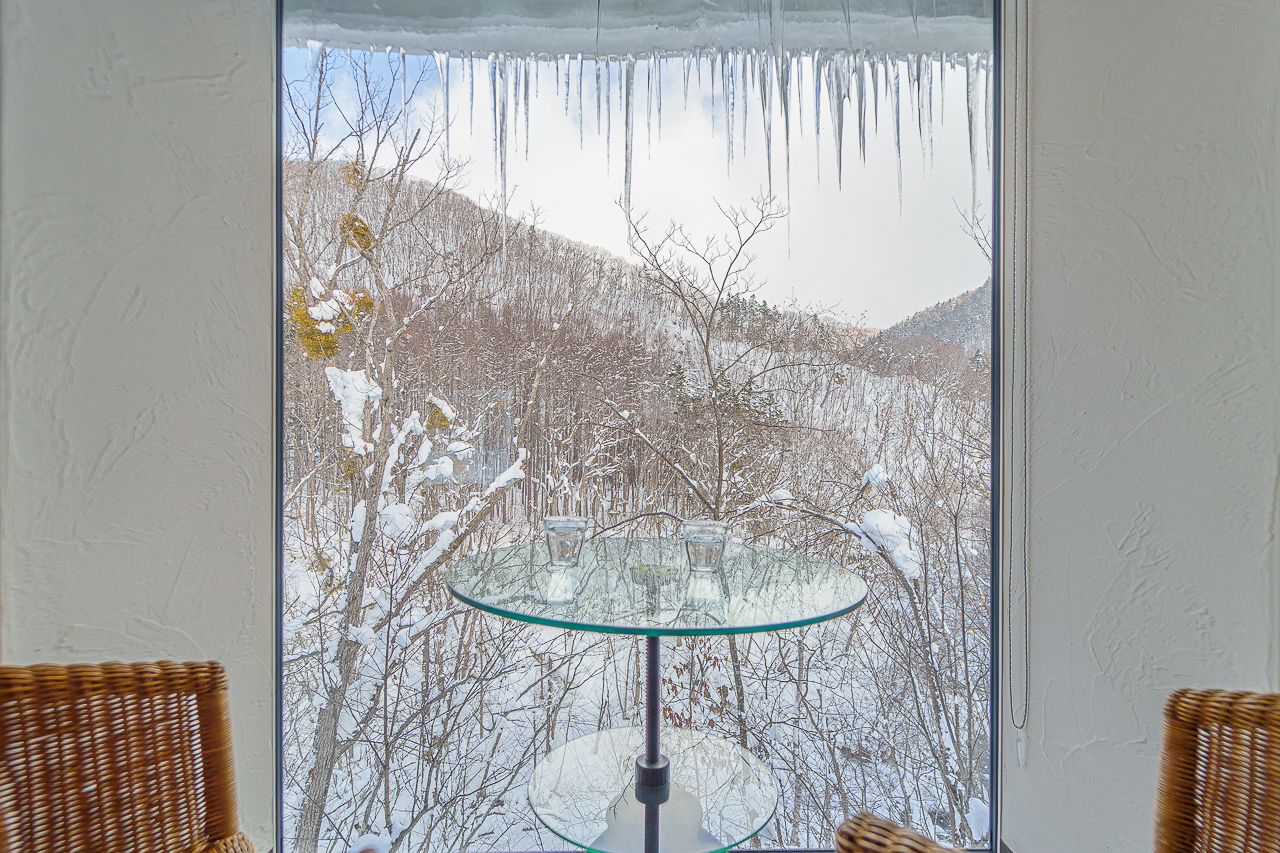
Cafe Gake no Ue (カフェ崖の上), overlooking dramatic cliffs.
The single table beside the full-height window made the best photo spot.
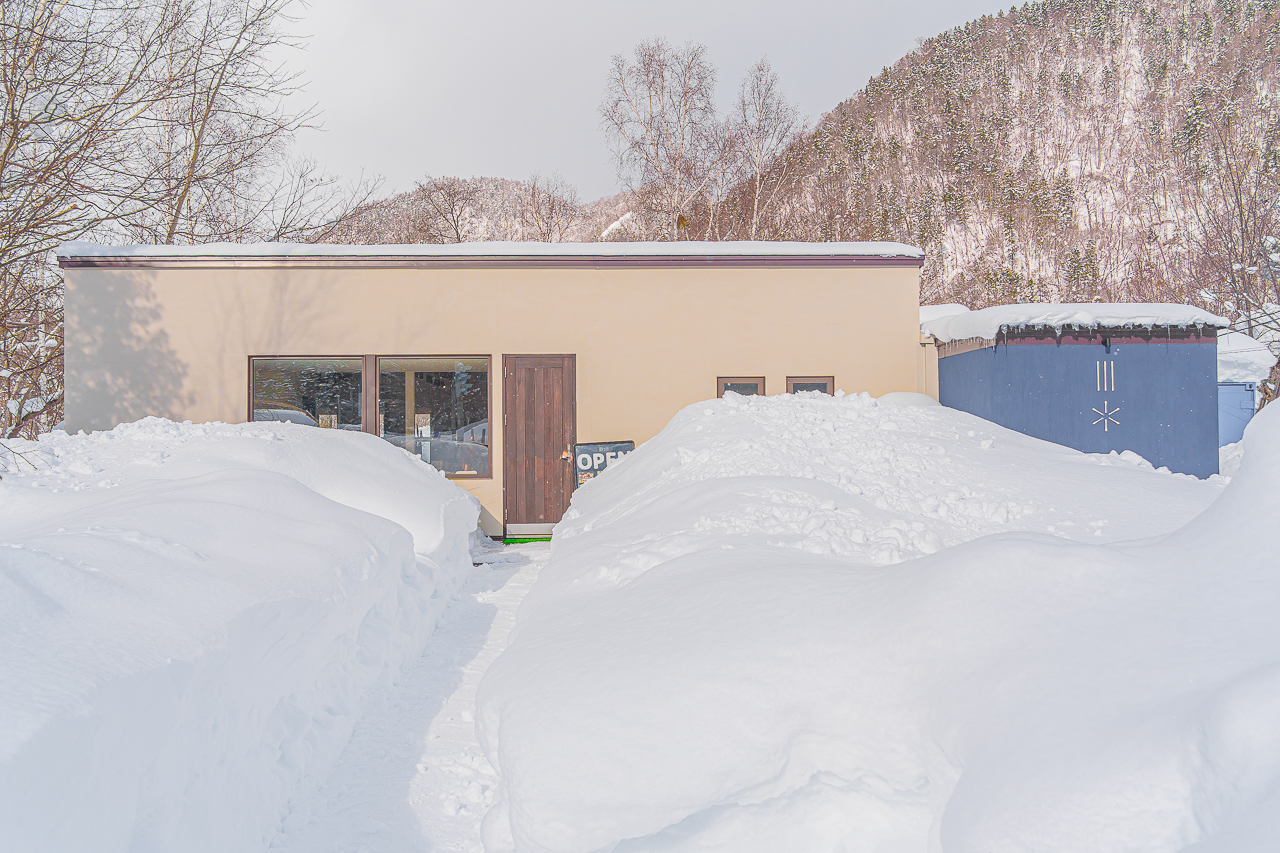
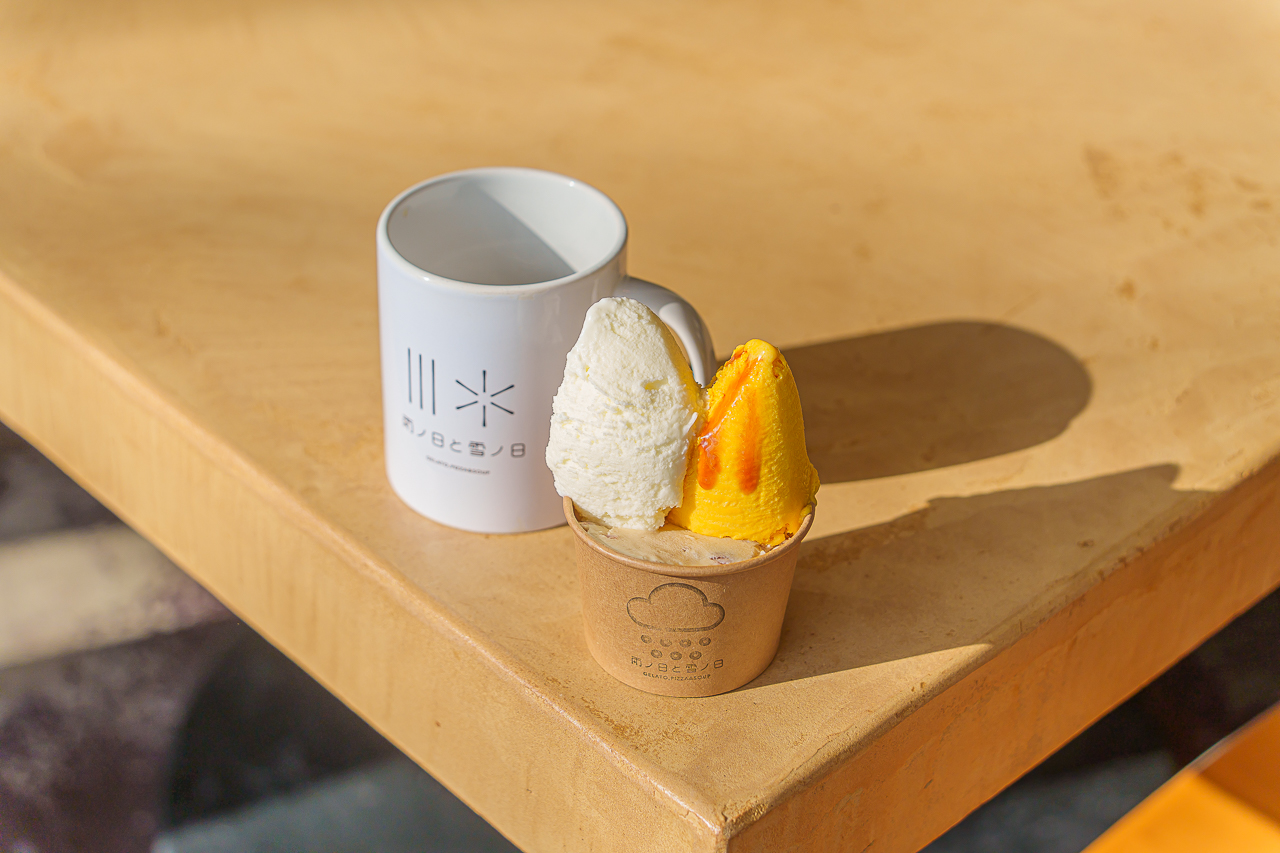
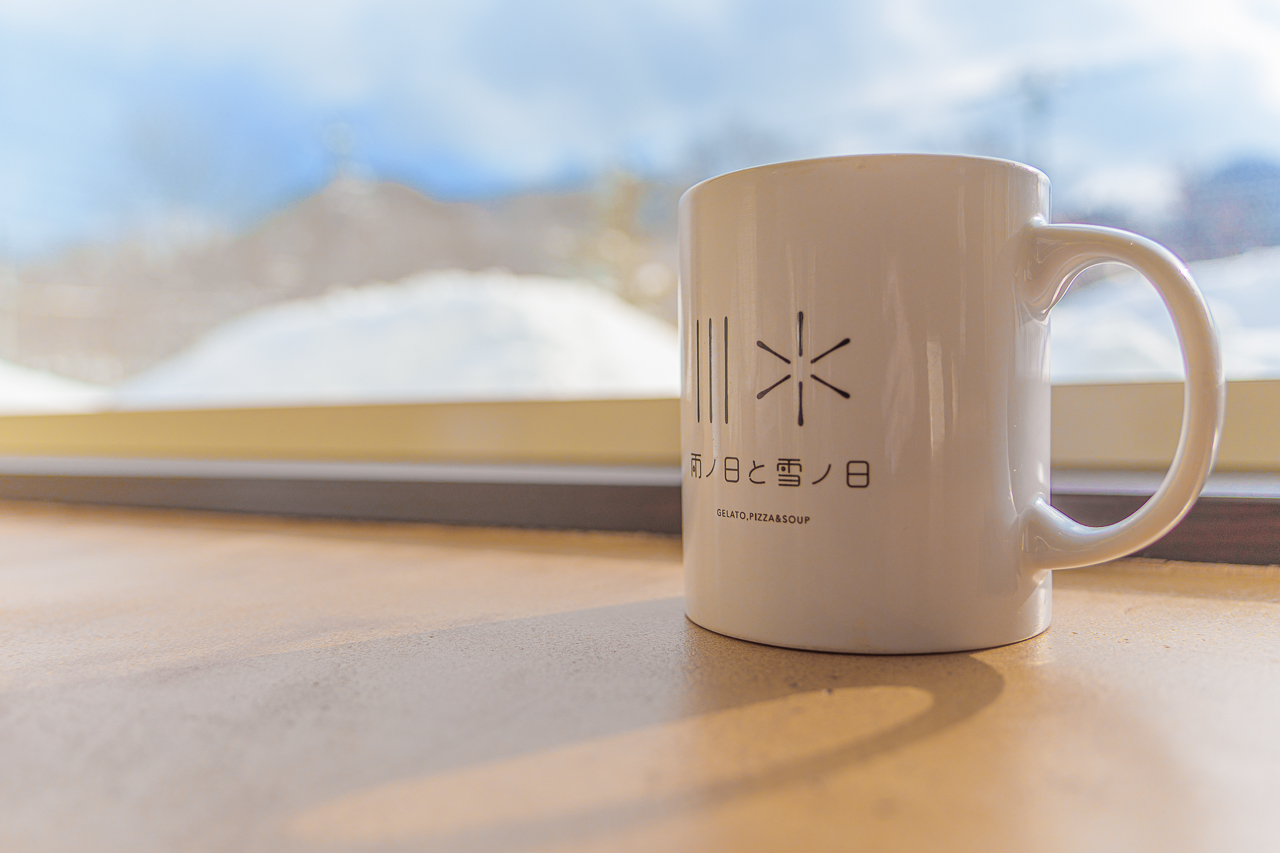
Rainy Days and Snowy Days (雨の日と雪の日), with a playful weather-dependent stamp on the gelato cup.
On the recorded visit, rainy or snowy weather also brought free coffee, another welcome feature.
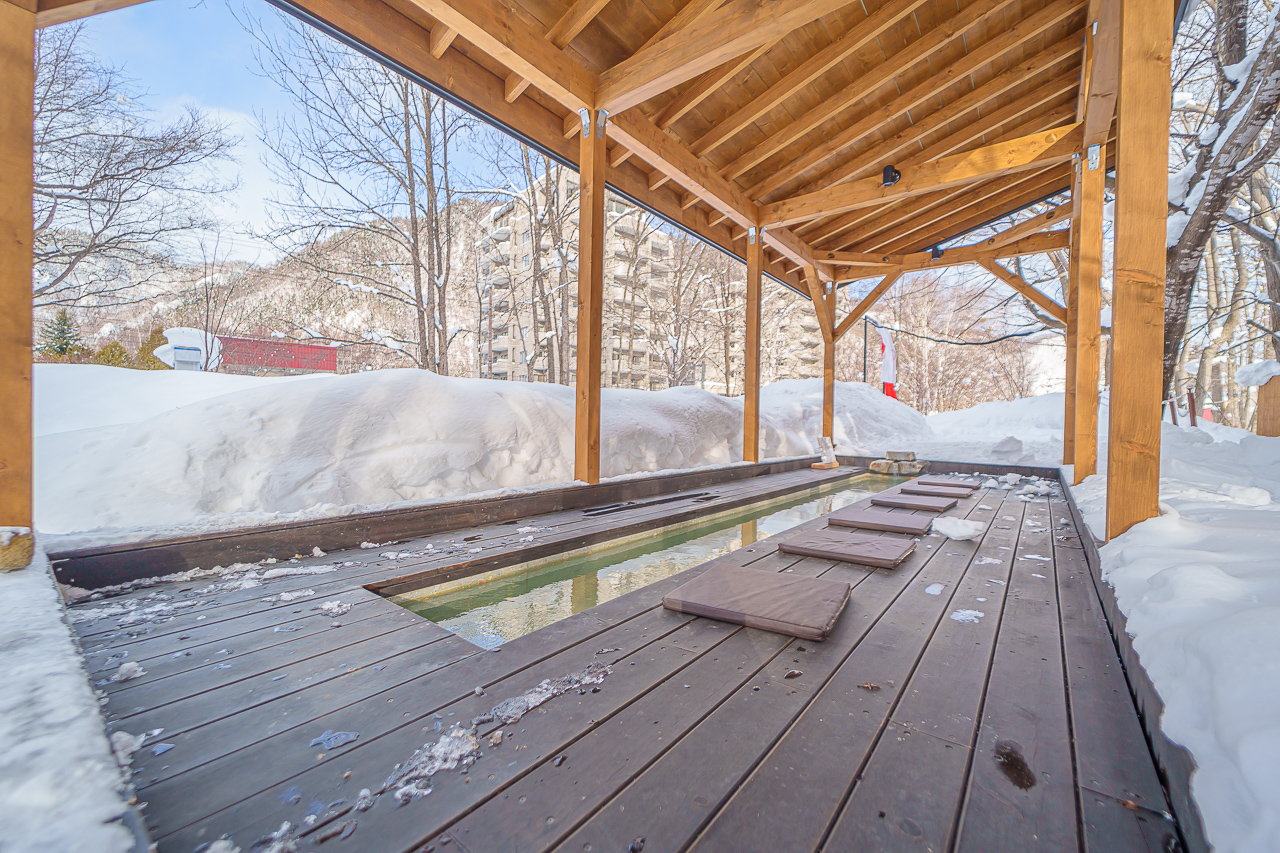
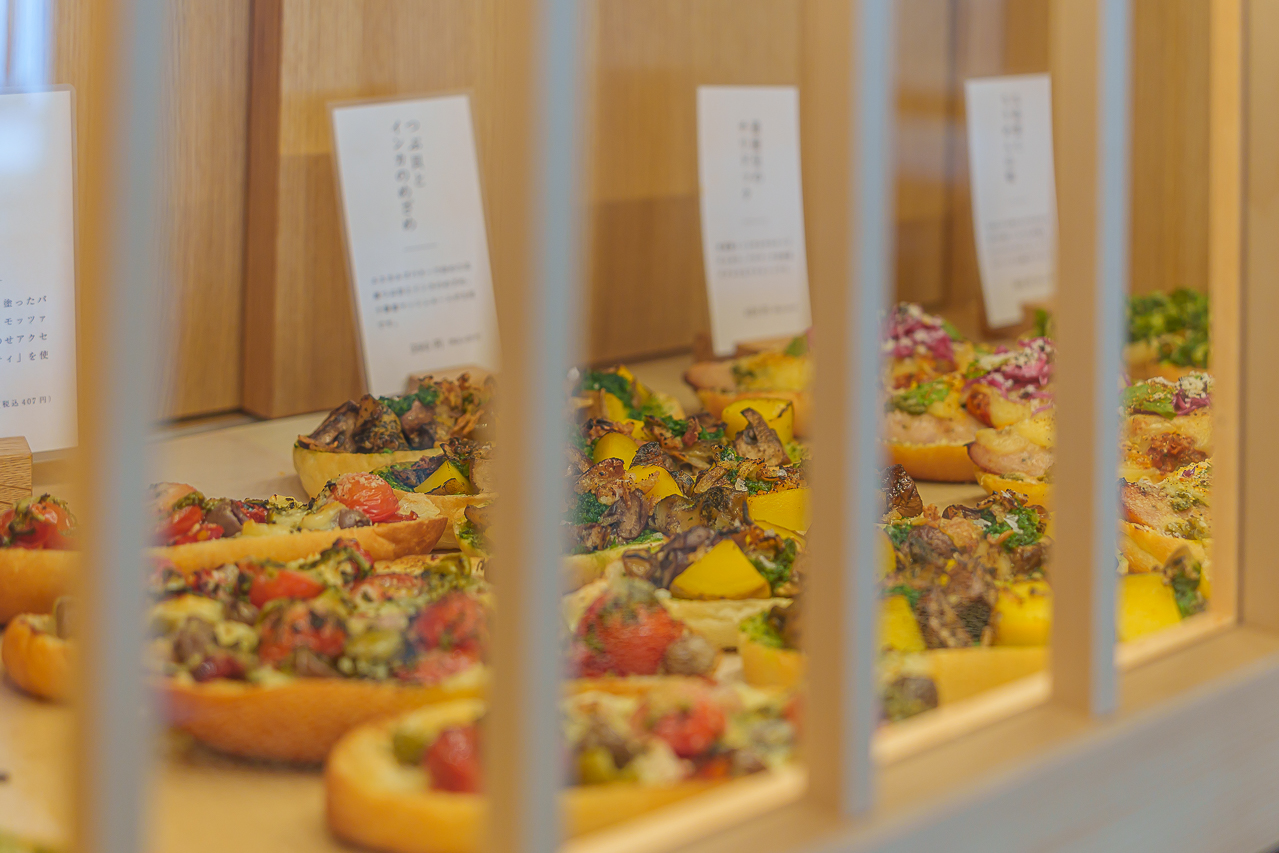
Exclamation Bakery (エクスクラメーションベーカリー), where we could drink coffee beside a free footbath.
The bread looked as if it were behind bars, making “rescuing” it part of the fun.
The more we rescued, the lighter the wallet became.
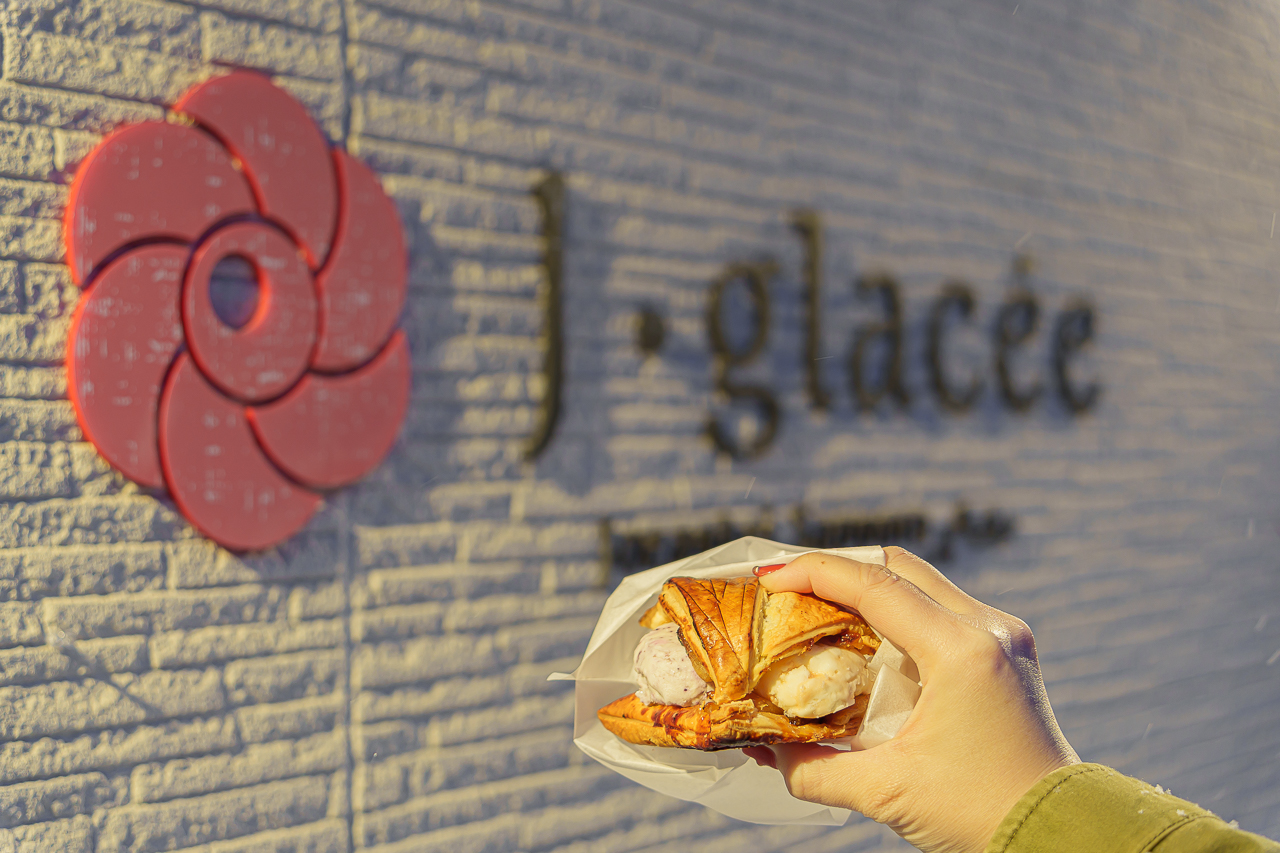
J-glacee, whose apple pie came generously filled with ice cream.
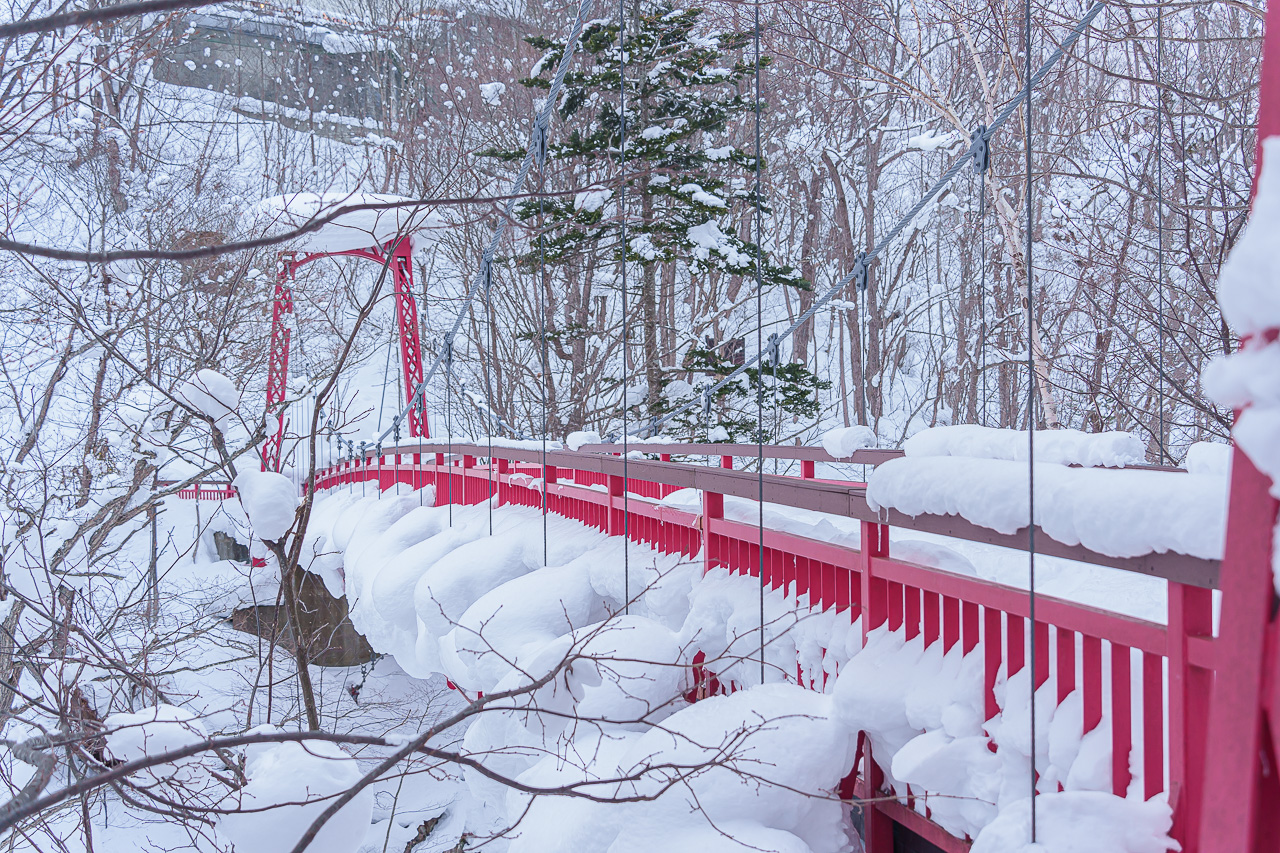
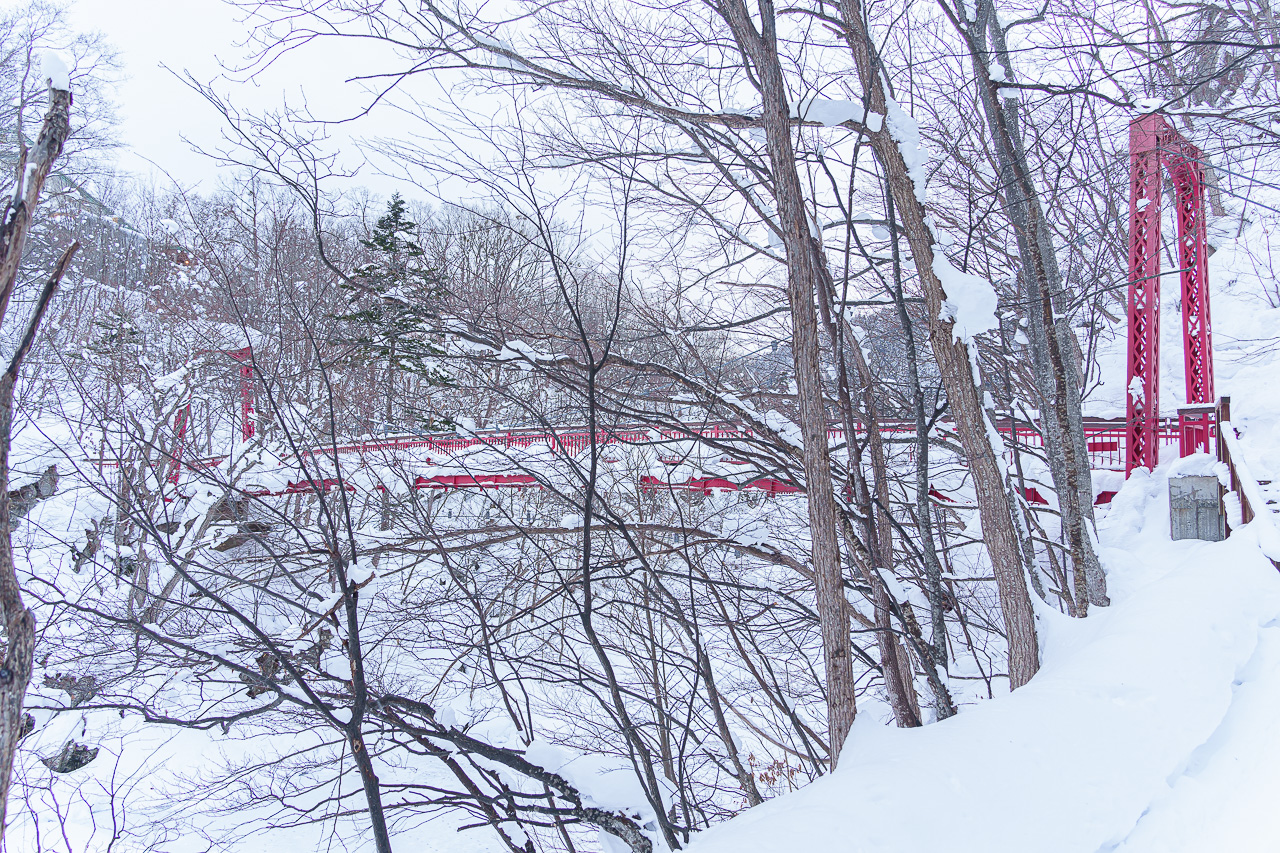
Futami Suspension Bridge (二見吊橋), a popular photo location in summer and autumn.
In winter, snow covered everything and made it difficult to distinguish the details.
There was so much snow that I wondered about its weight on the bridge.
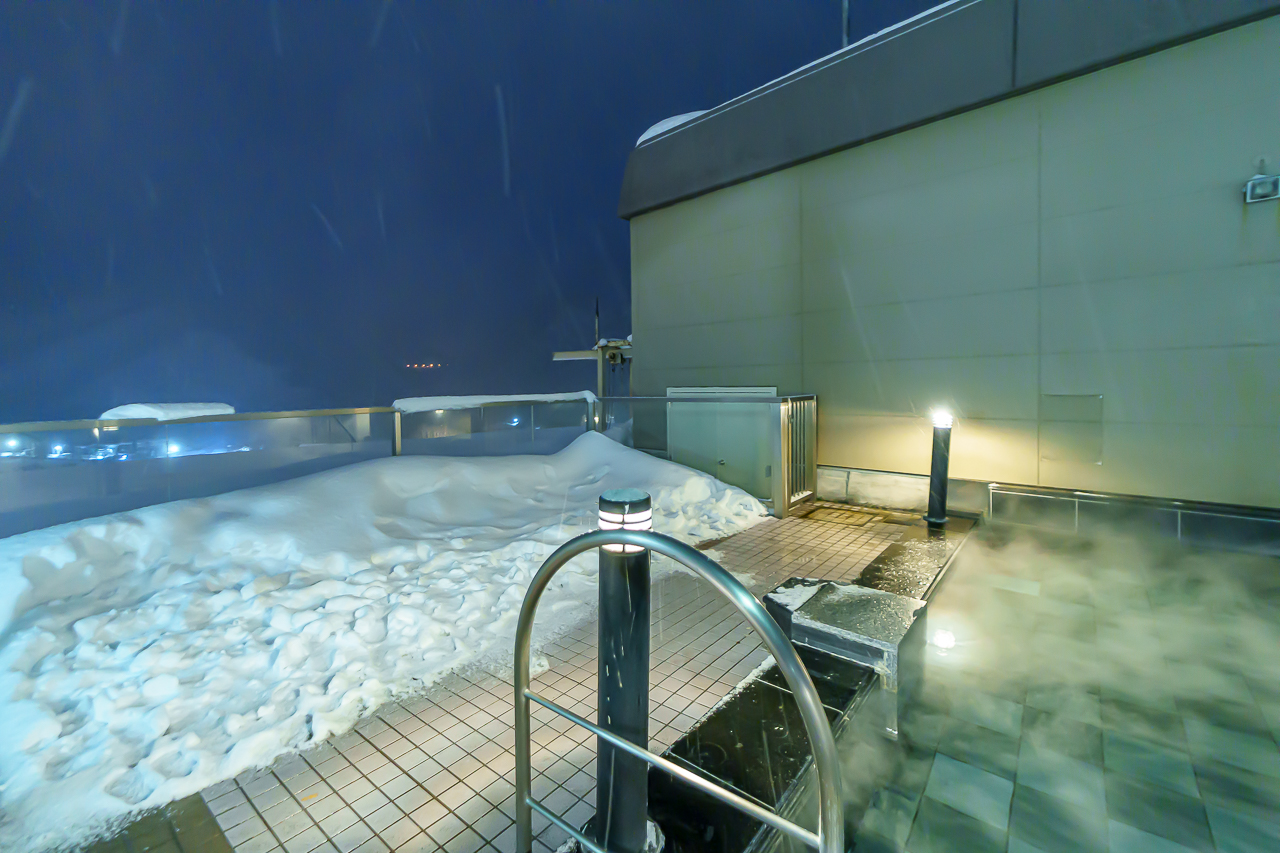
In a hot-spring area, most hotels had baths.
The source calls our stay Jozankei Onsen Hotel (定山渓温泉ホテル), with a rooftop outdoor bath overlooking the surroundings.
There were so many similarly named hotels that finding the right one took some effort.
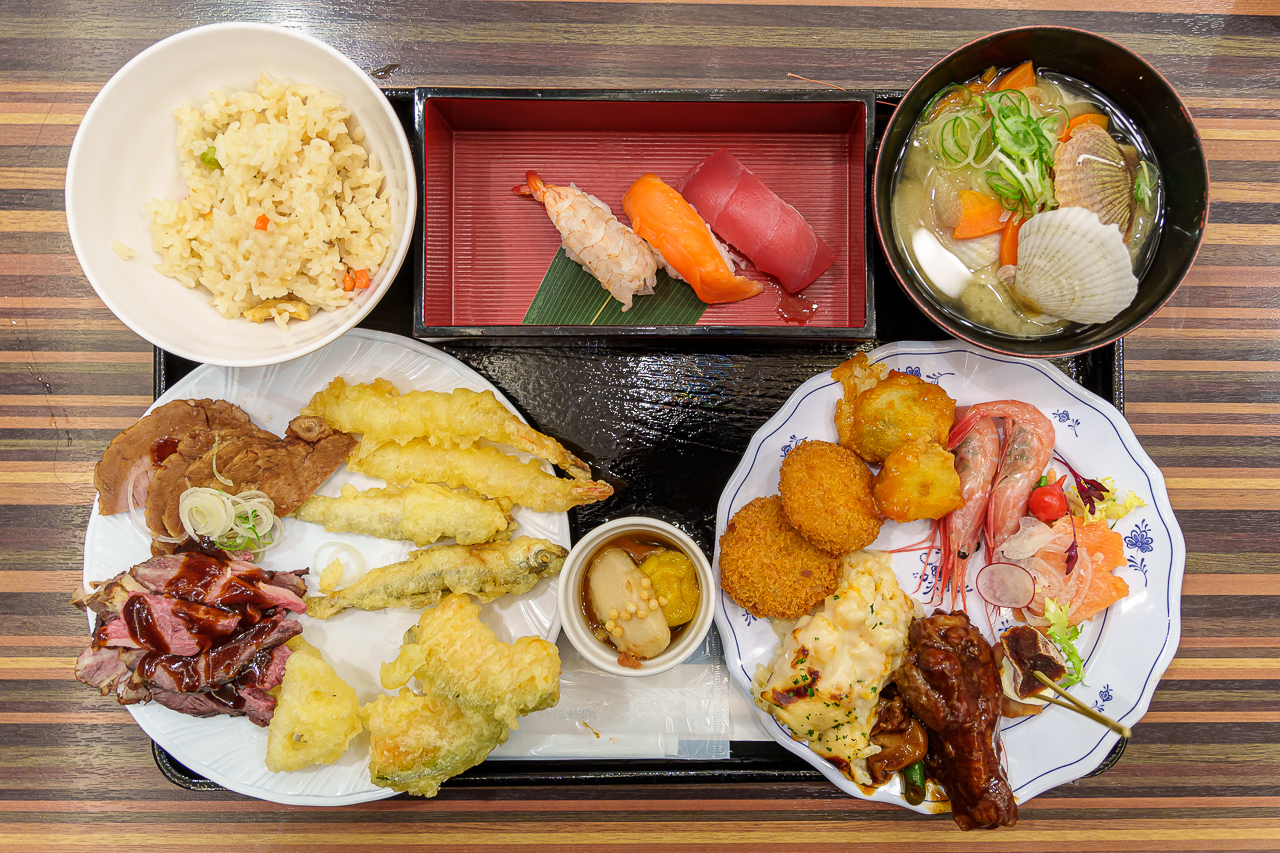

Dinner was a buffet with a large selection.
For a place in seafood-famous Hokkaido, however, its seafood selection disappointed me.
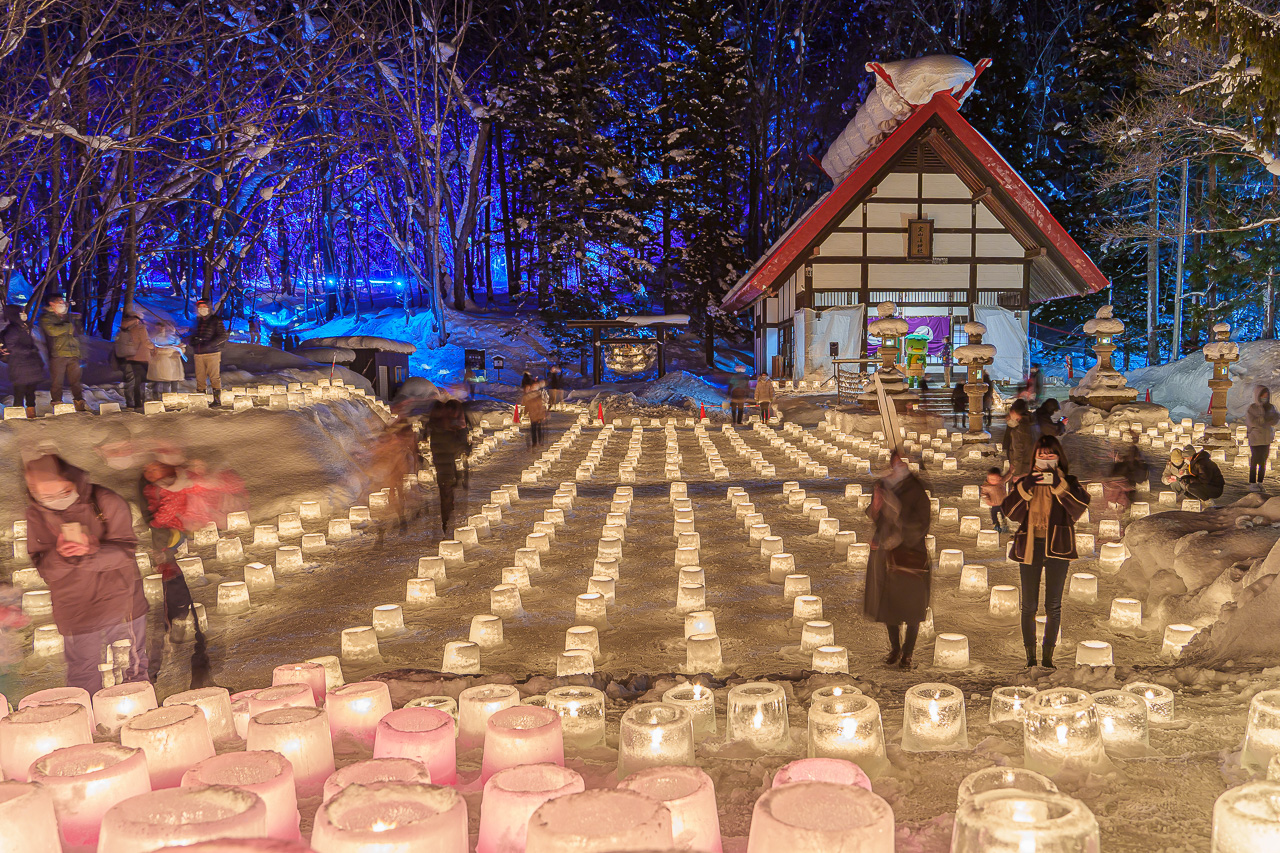
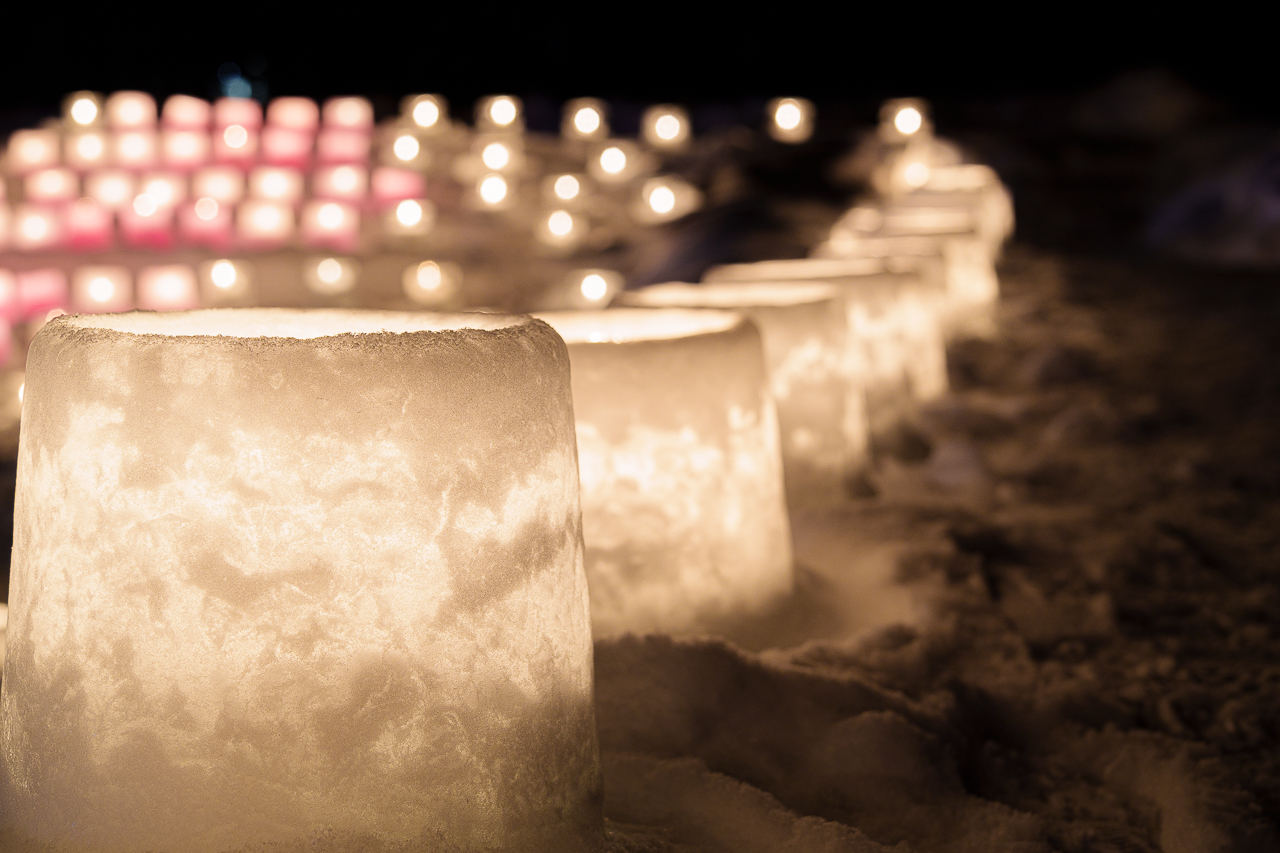
After dinner, we visited a lantern event at nearby Jozankei Shrine (定山渓神社).
Staff from neighboring hotels and ryokan were said to volunteer to make the many ice lanterns.
Visitors and local residents both seemed to be attending.
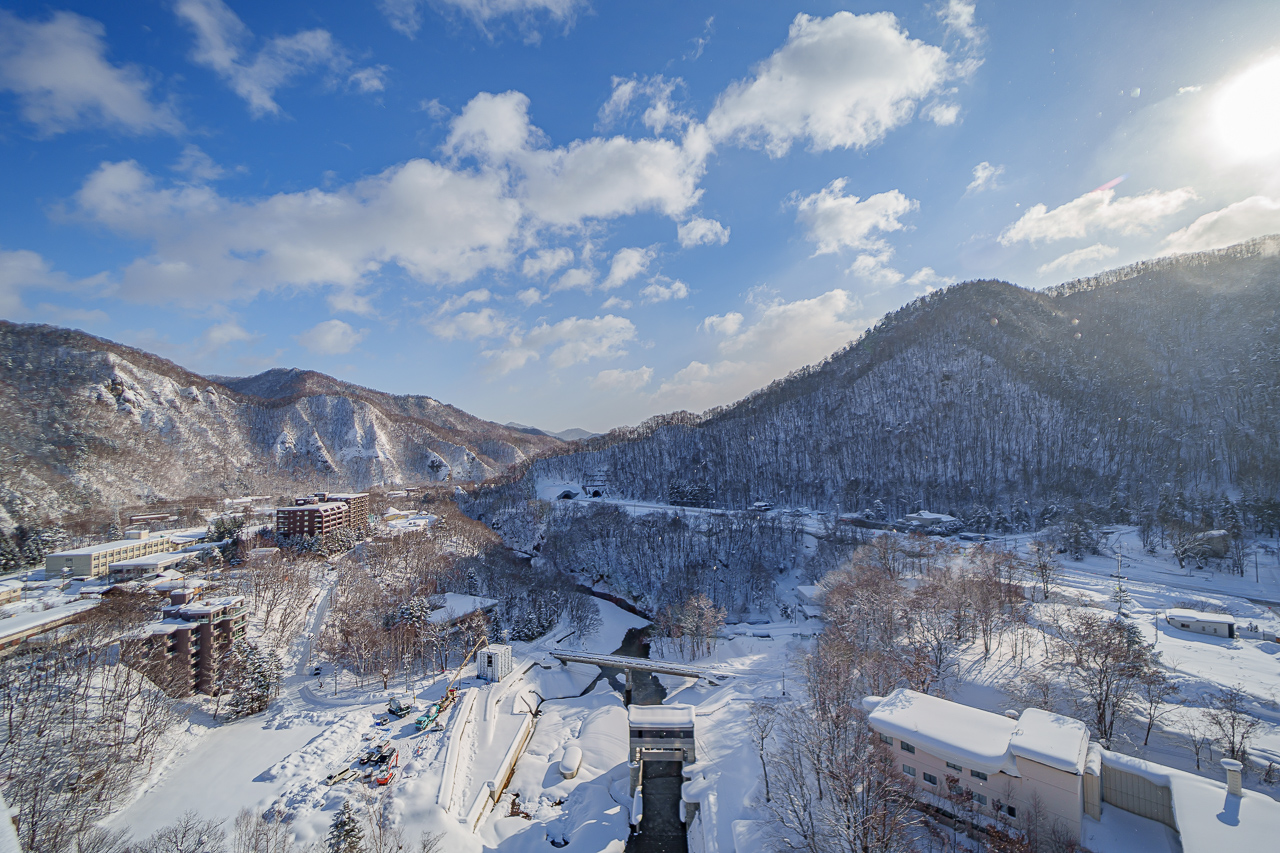
Overnight snowfall had turned most of Jozankei white by morning.
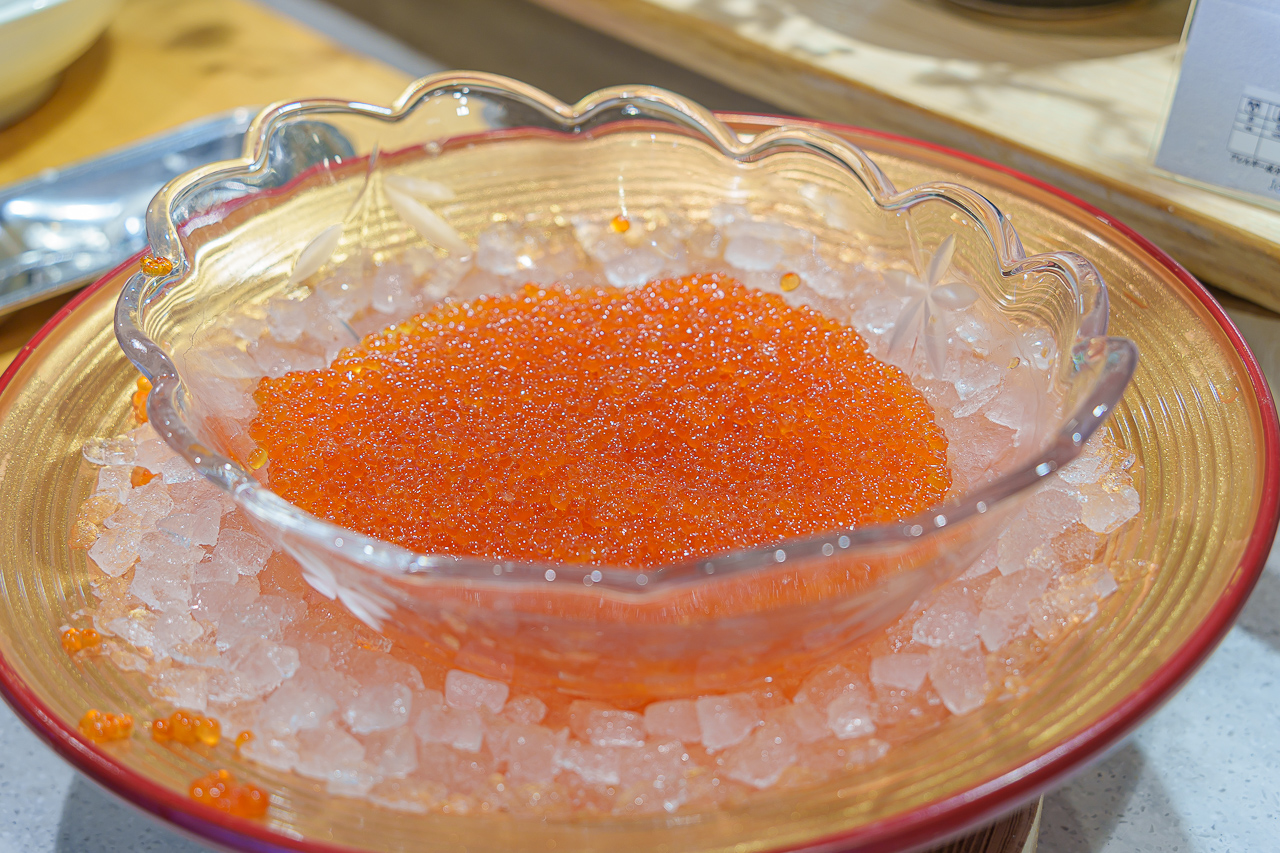
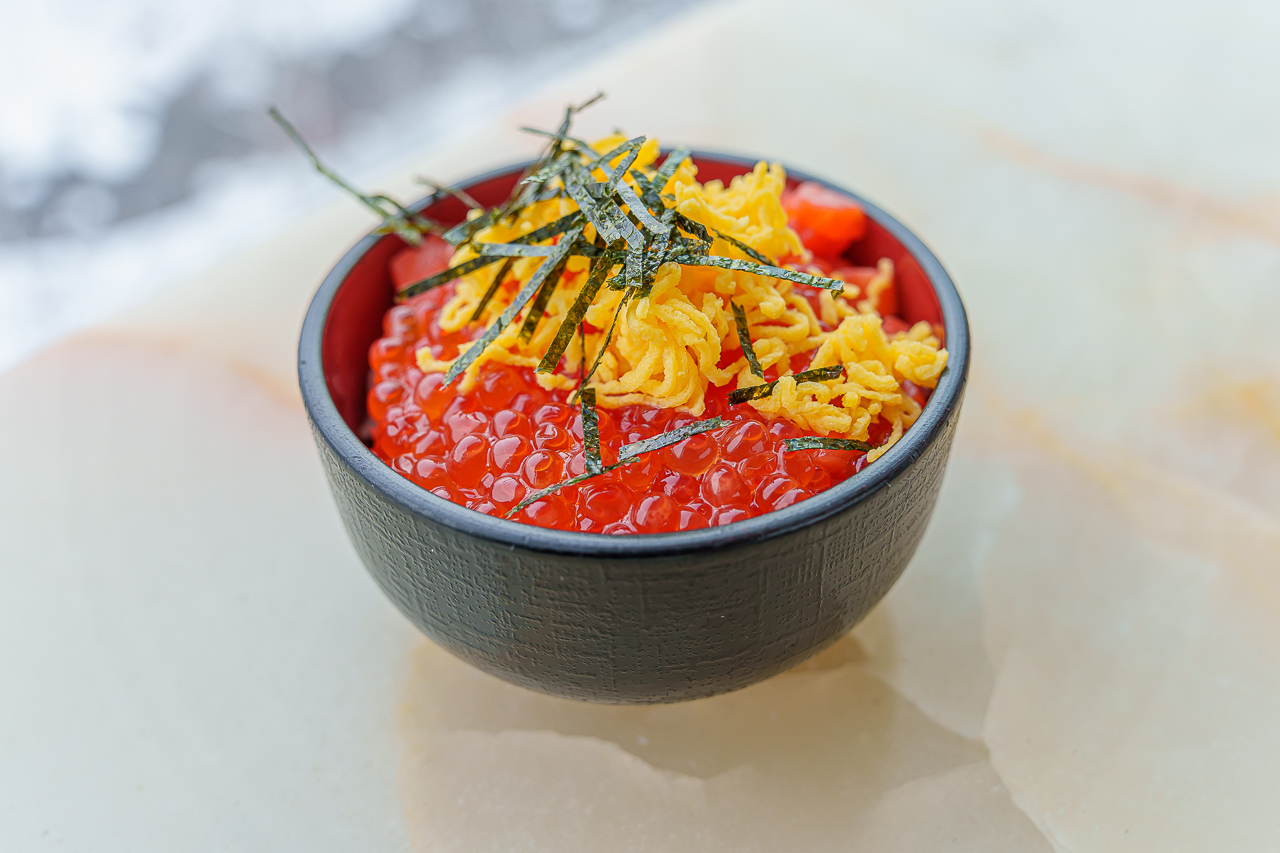
The seafood I had missed at dinner appeared at breakfast.
I ate three seafood rice bowls, enjoying fresh sea urchin and mild salmon.
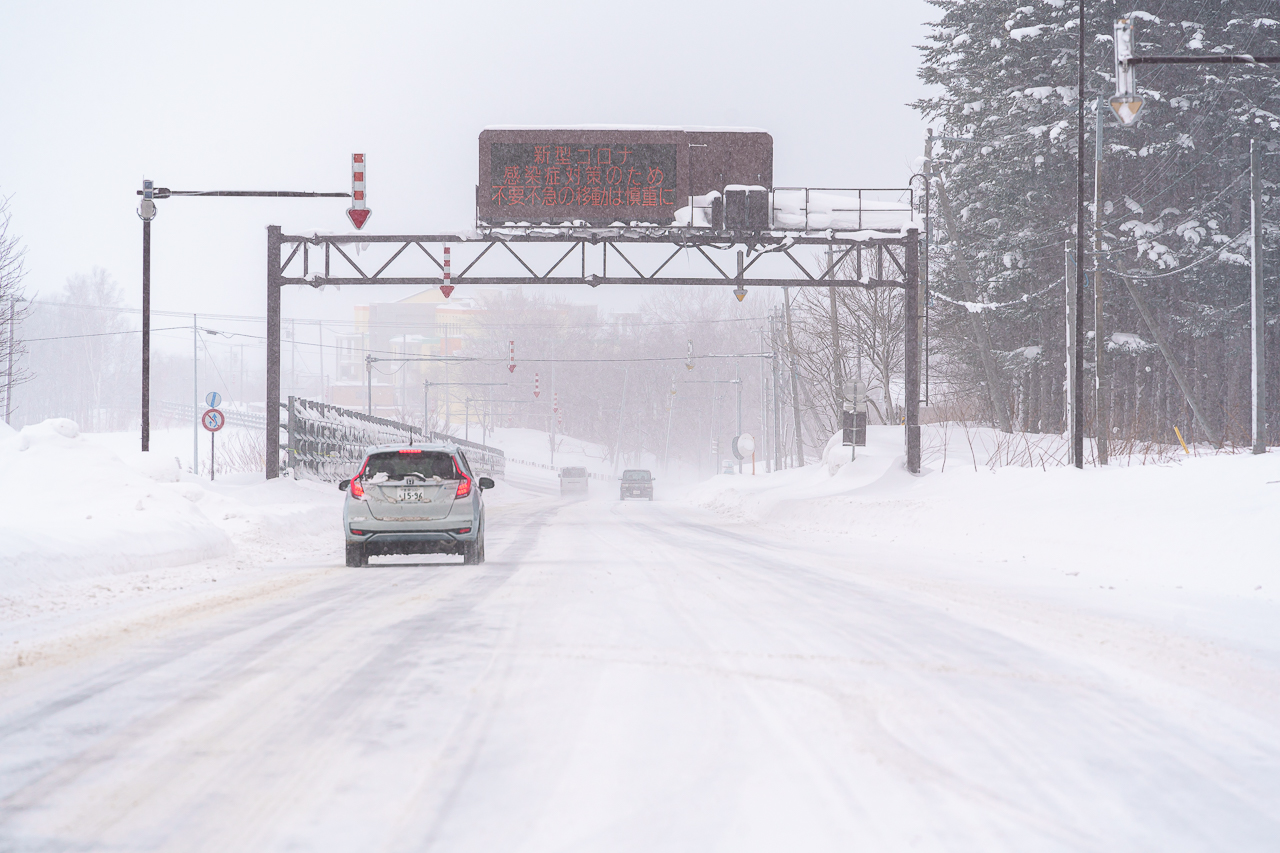
We drove another roughly hour and a half through snow toward Lake Toya.

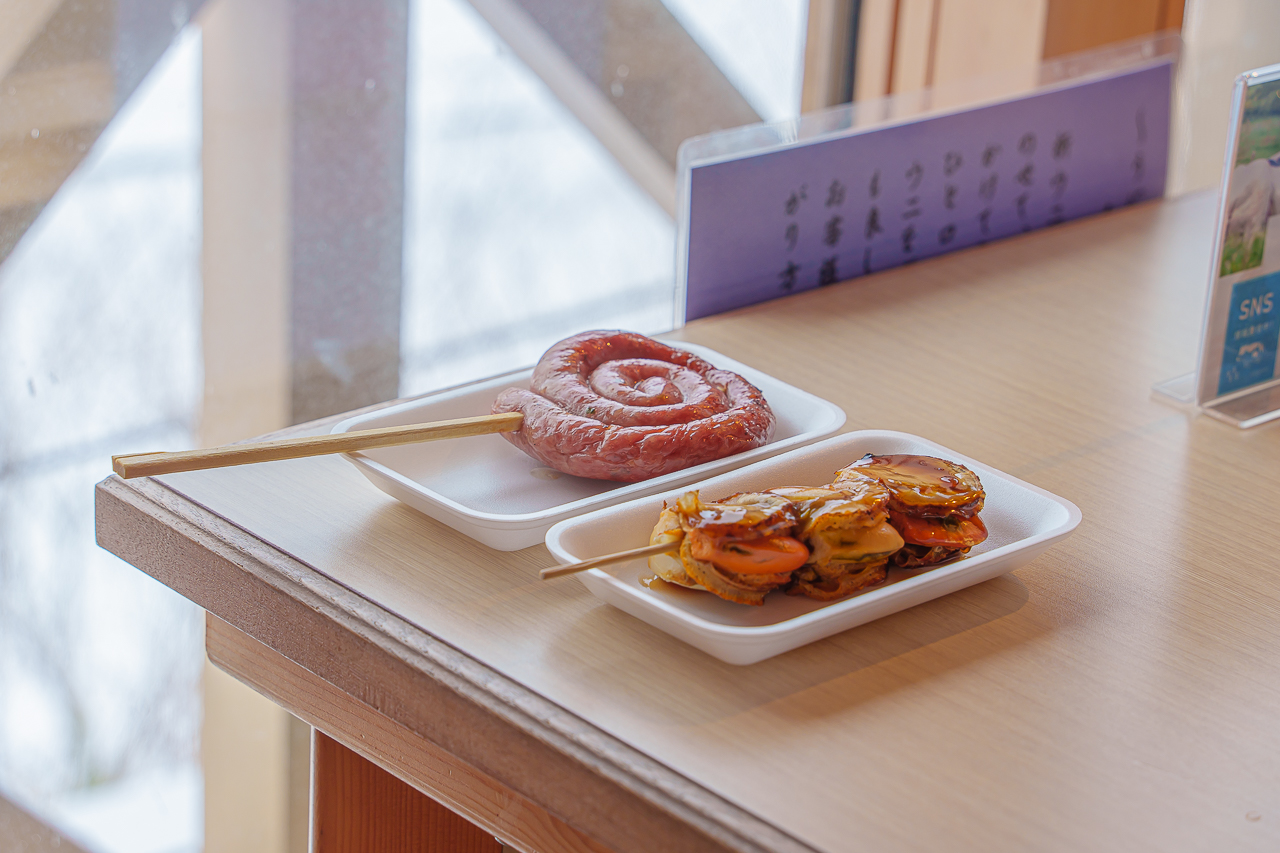
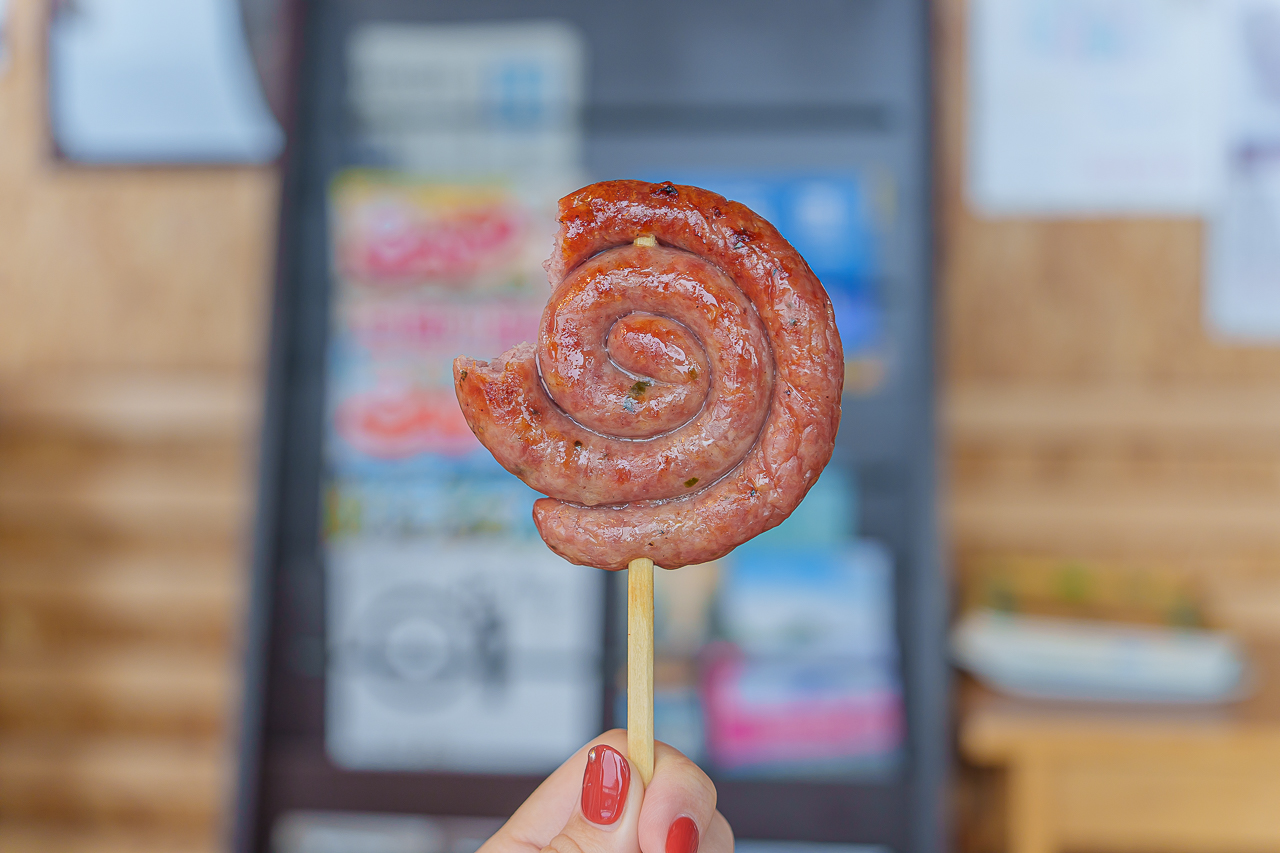
On the way, we stopped at Michi-no-Eki Aputa (道の駅 あぷた) for its sea-urchin rice bowl and spiral sausage,
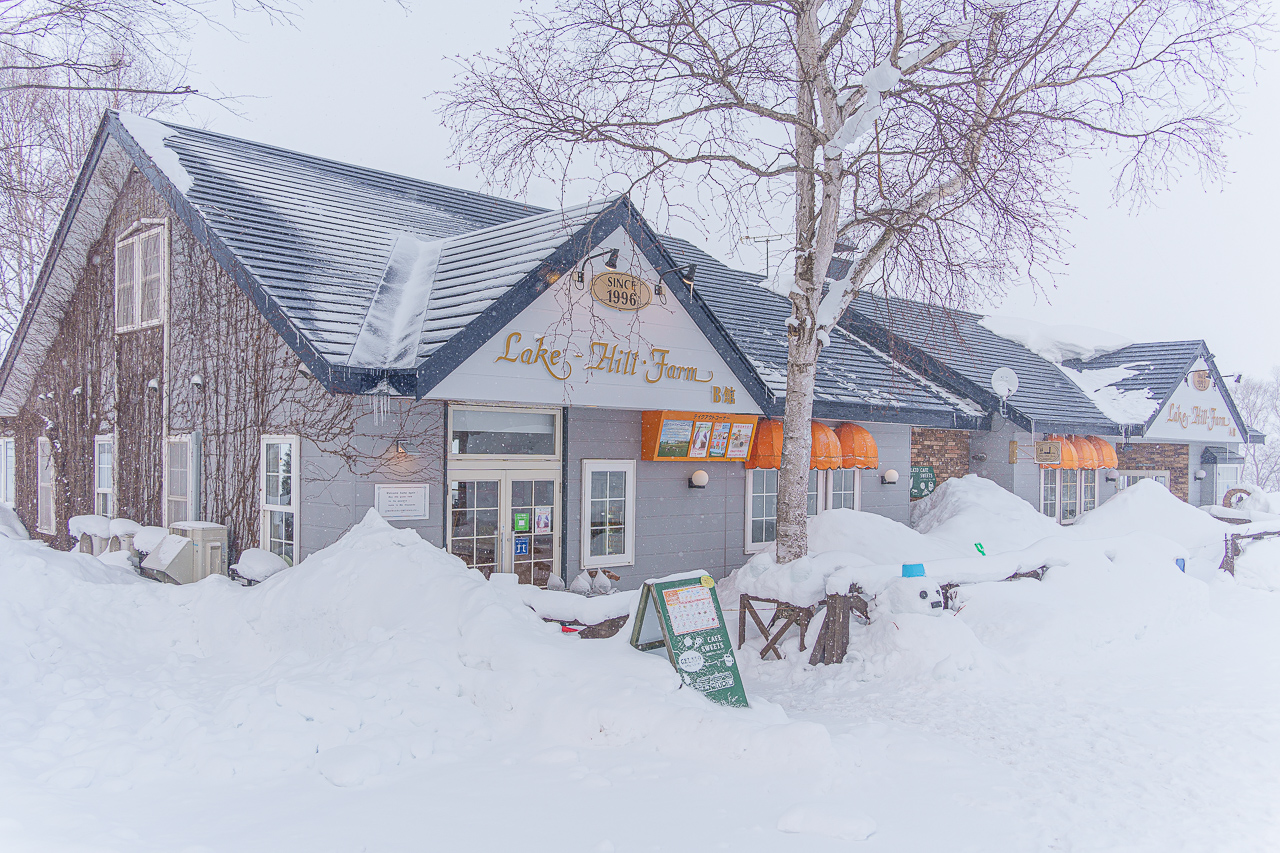

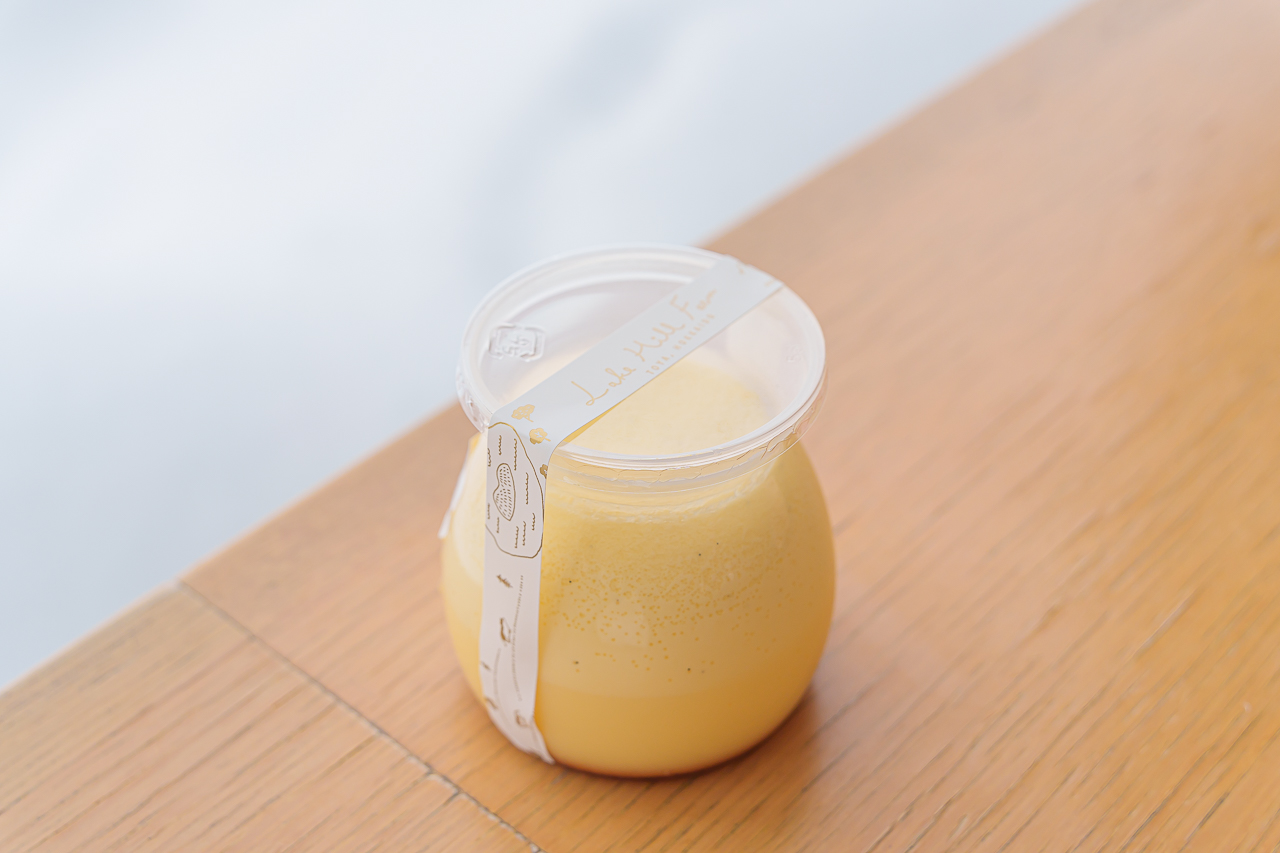
then had gelato and pudding at Lake Hill Farm (レークヒル・ファーム) for dessert.
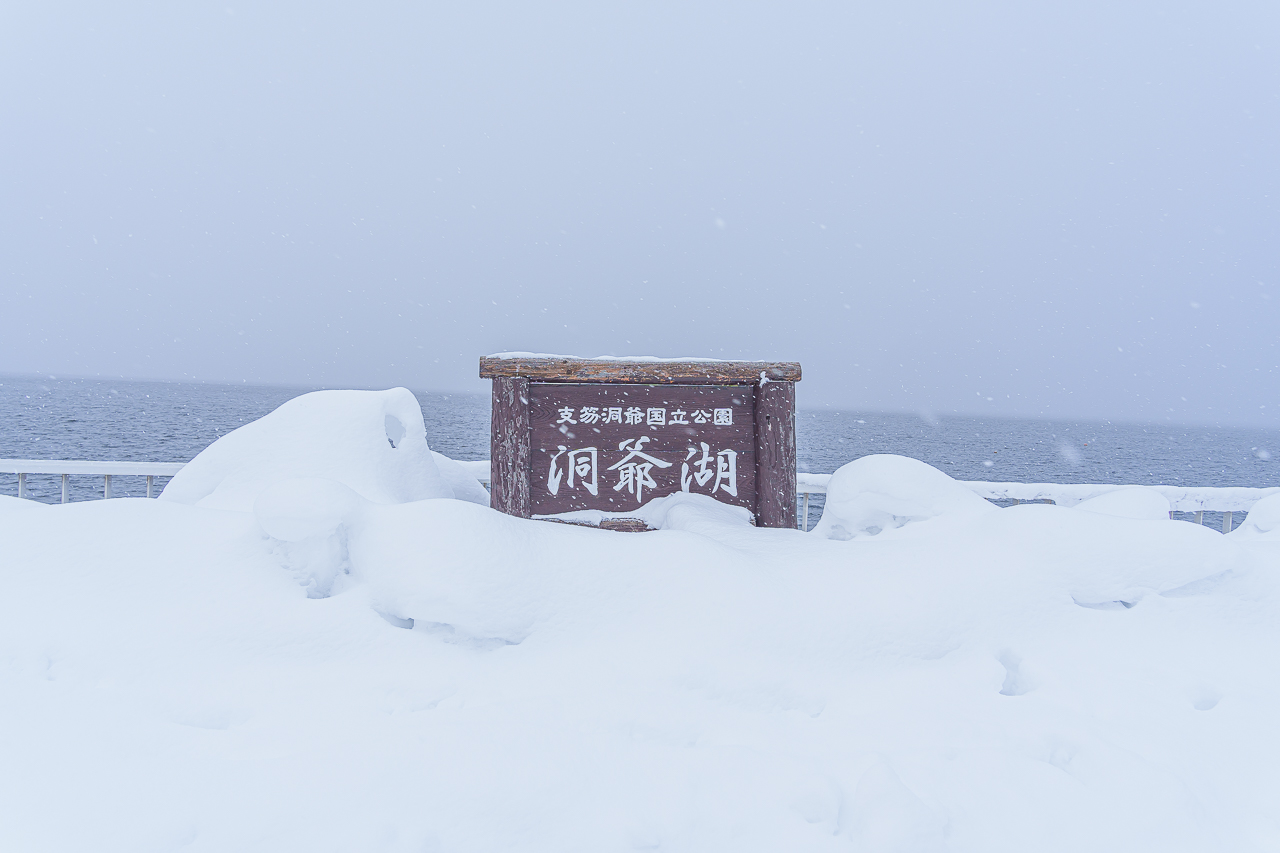
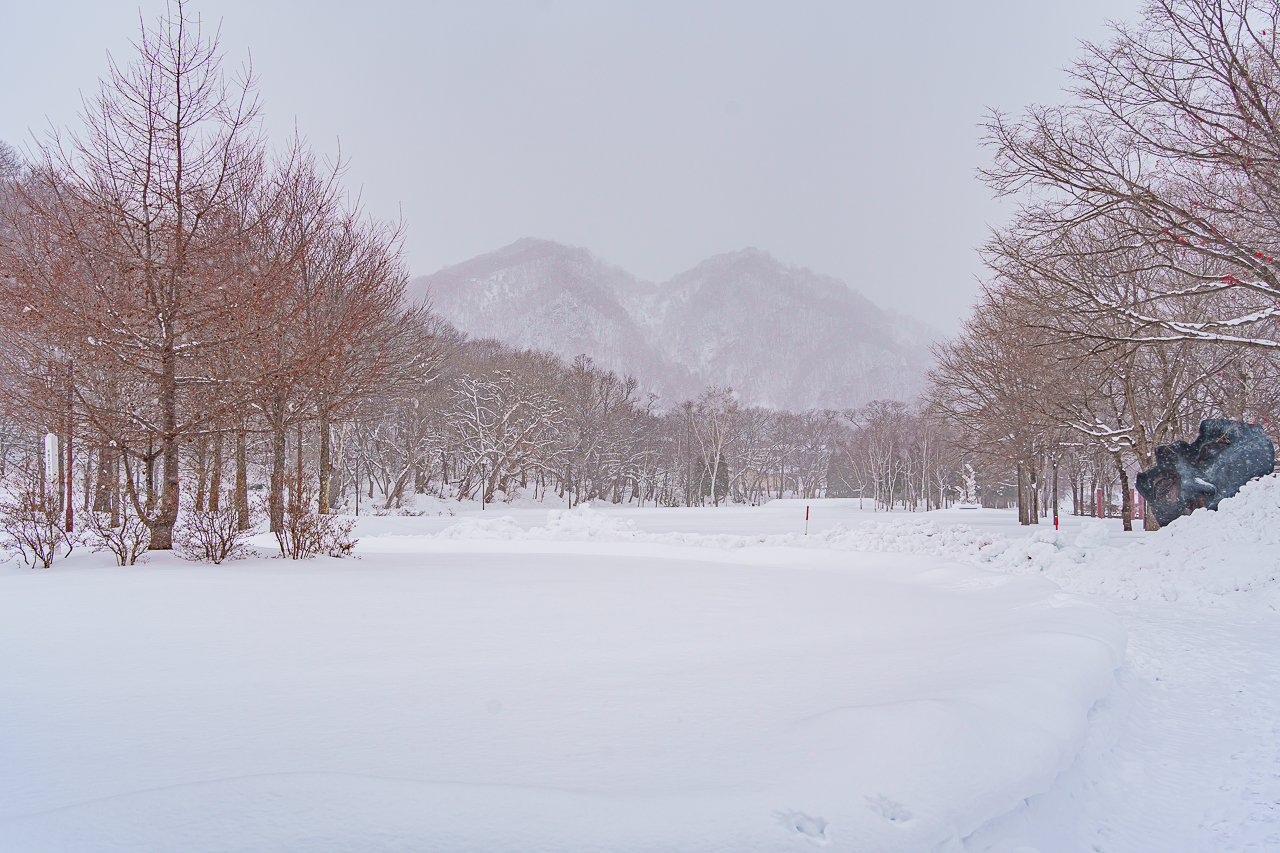
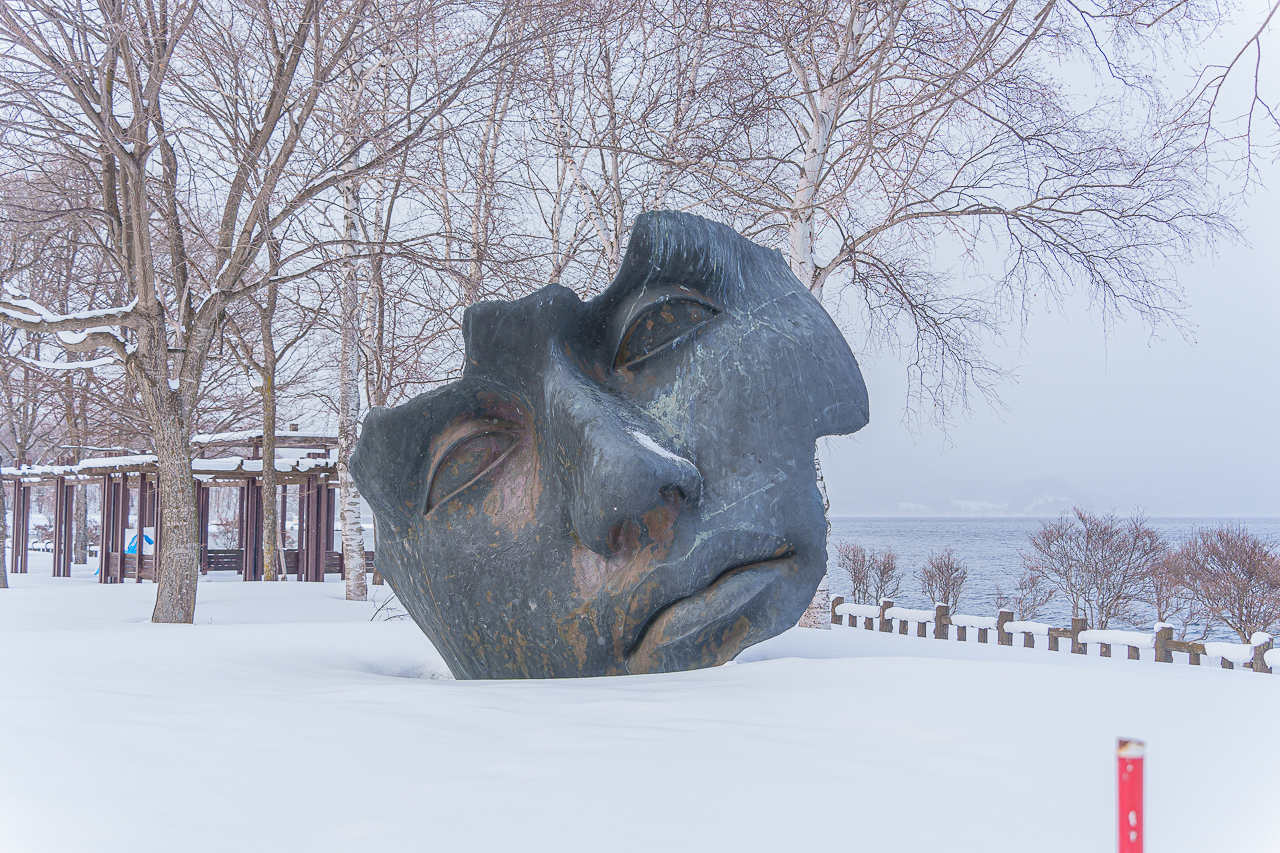
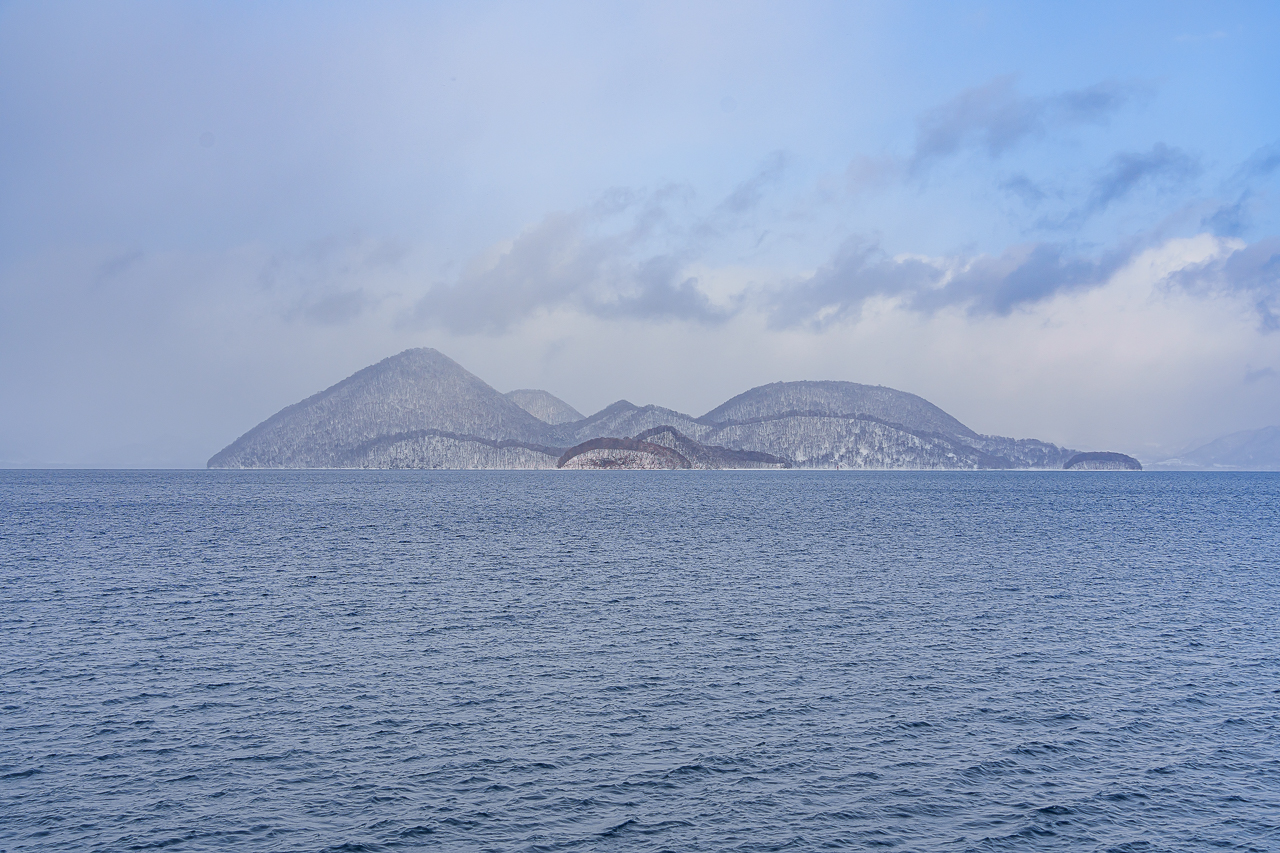
After these food stops, we reached Lake Toya, vast enough to be mistaken for the sea.
Nakajima (中島), the island group in the center, looked a little bare in winter.
We were told it was lush and beautiful in summer and autumn.
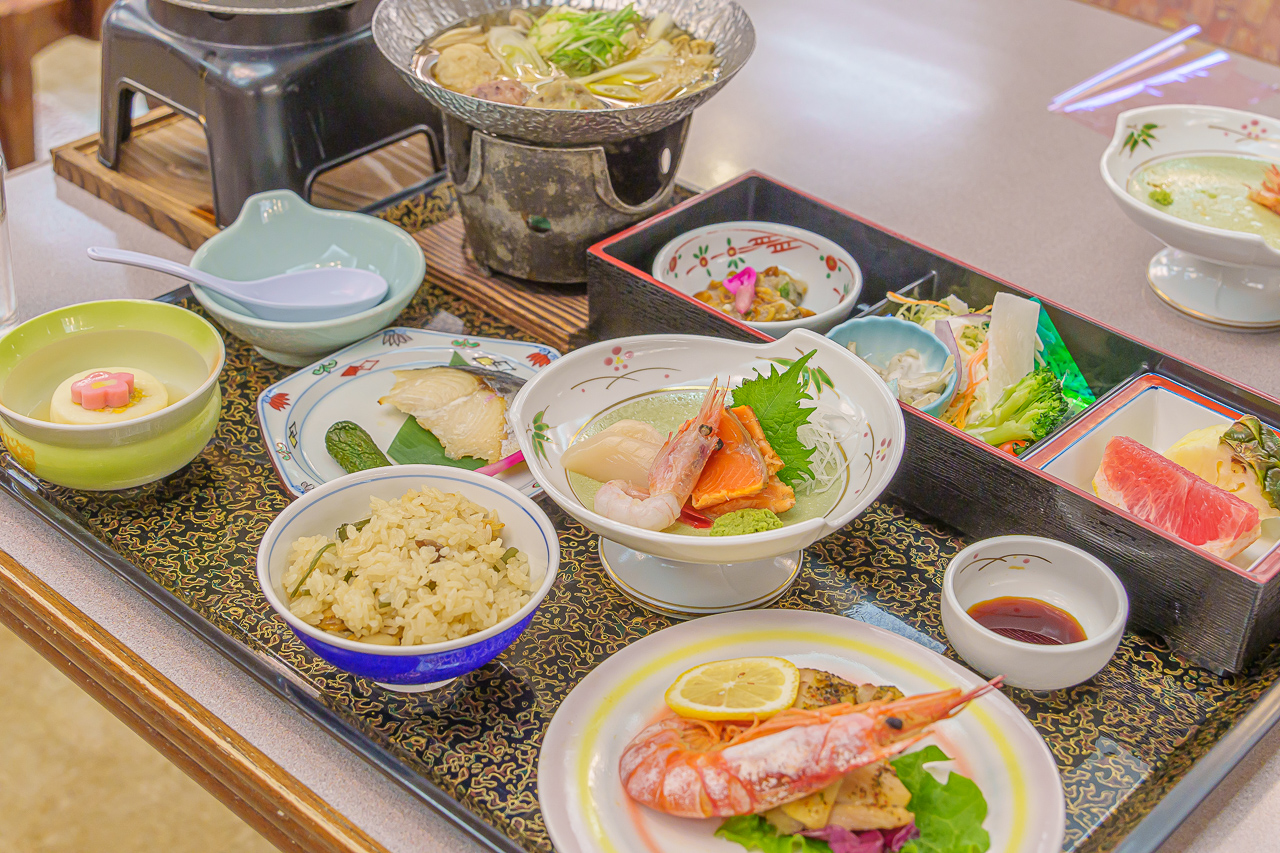
Dinner at this hotel was a neatly arranged Japanese set meal.
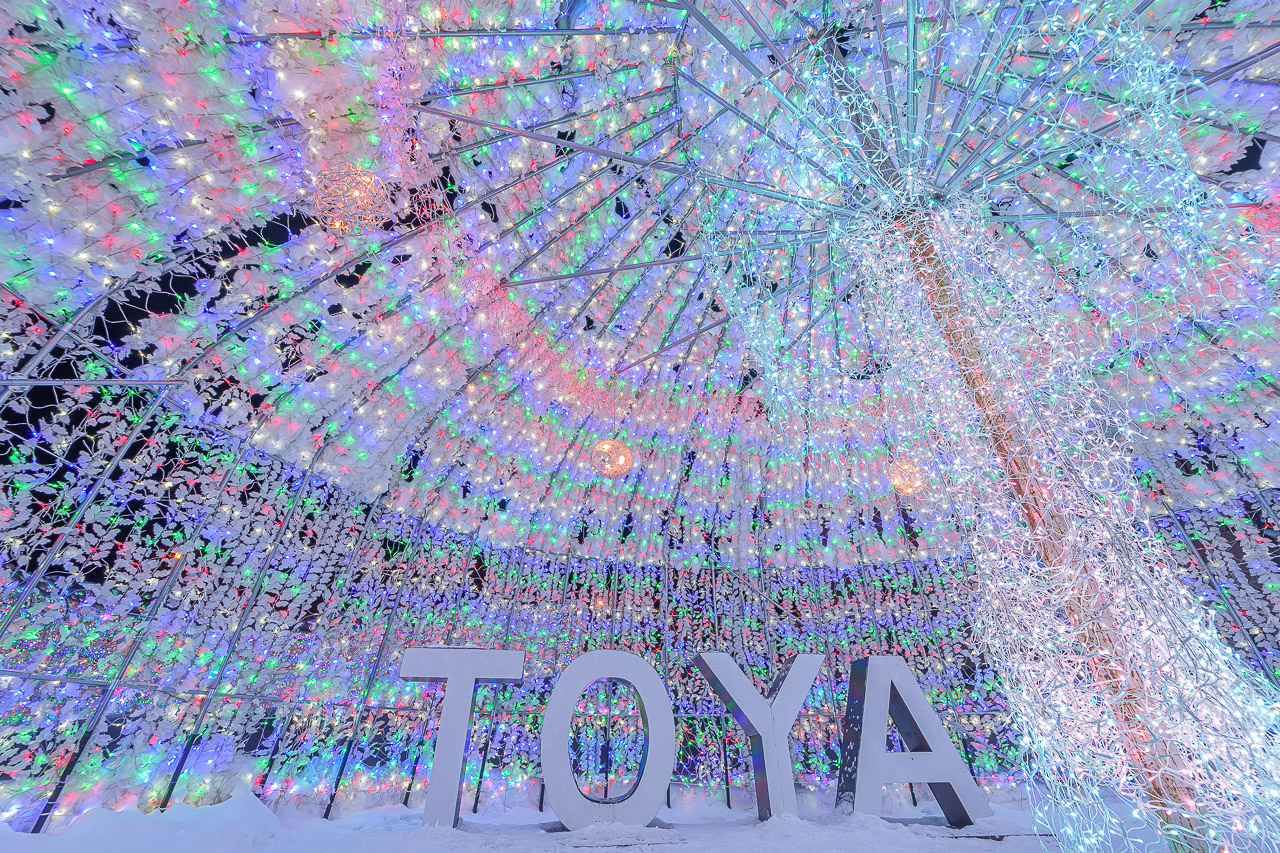
After eating, we went for a night walk.
Lake Toya also had illuminations, though I would keep expectations modest.
Besides illuminations, the original describes winter fireworks intended to attract visitors.
The source gives fireworks periods of April–October and early to mid-February. Had we stayed one more day, we could have seen the daily February event described there; missing it was disappointing.

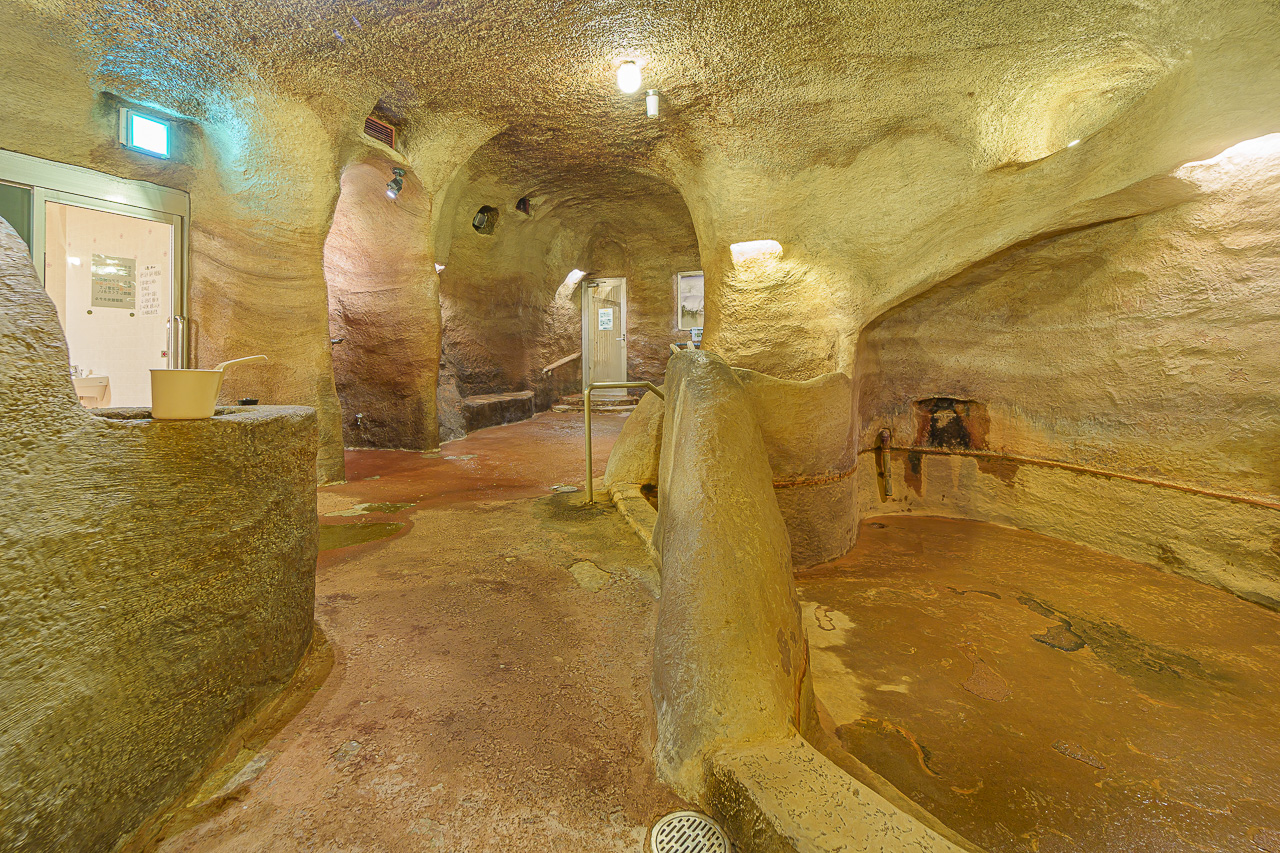
Back at the hotel, an outdoor bath and a cave bath brought the day to an end.
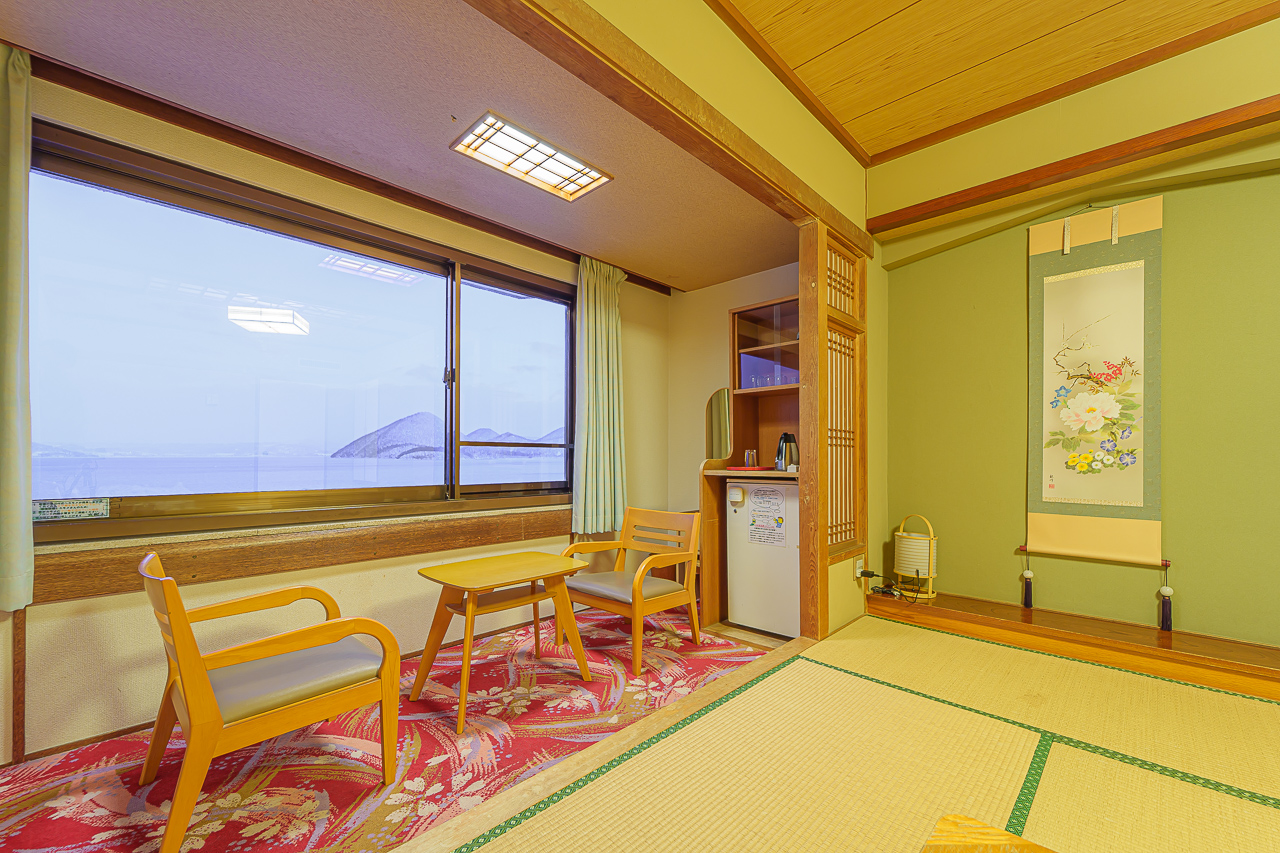
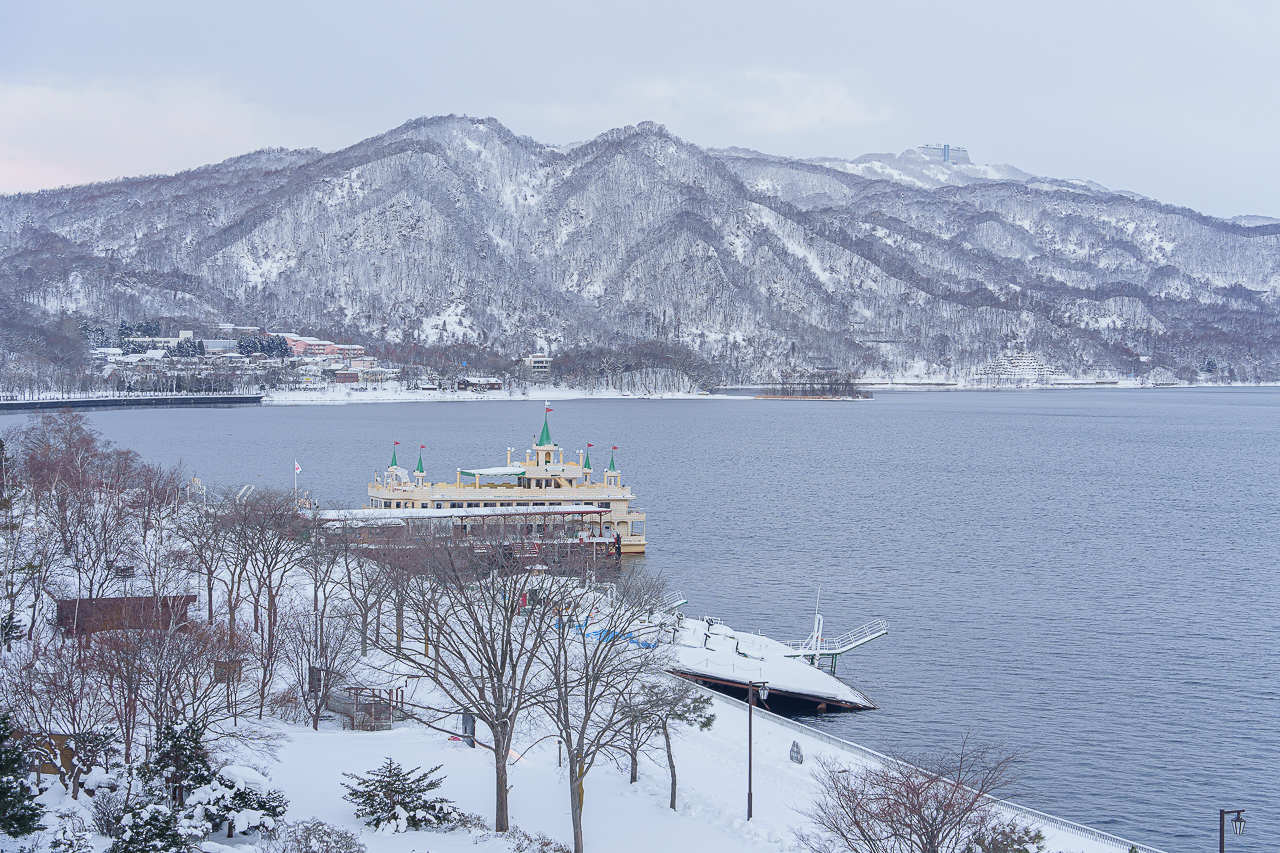
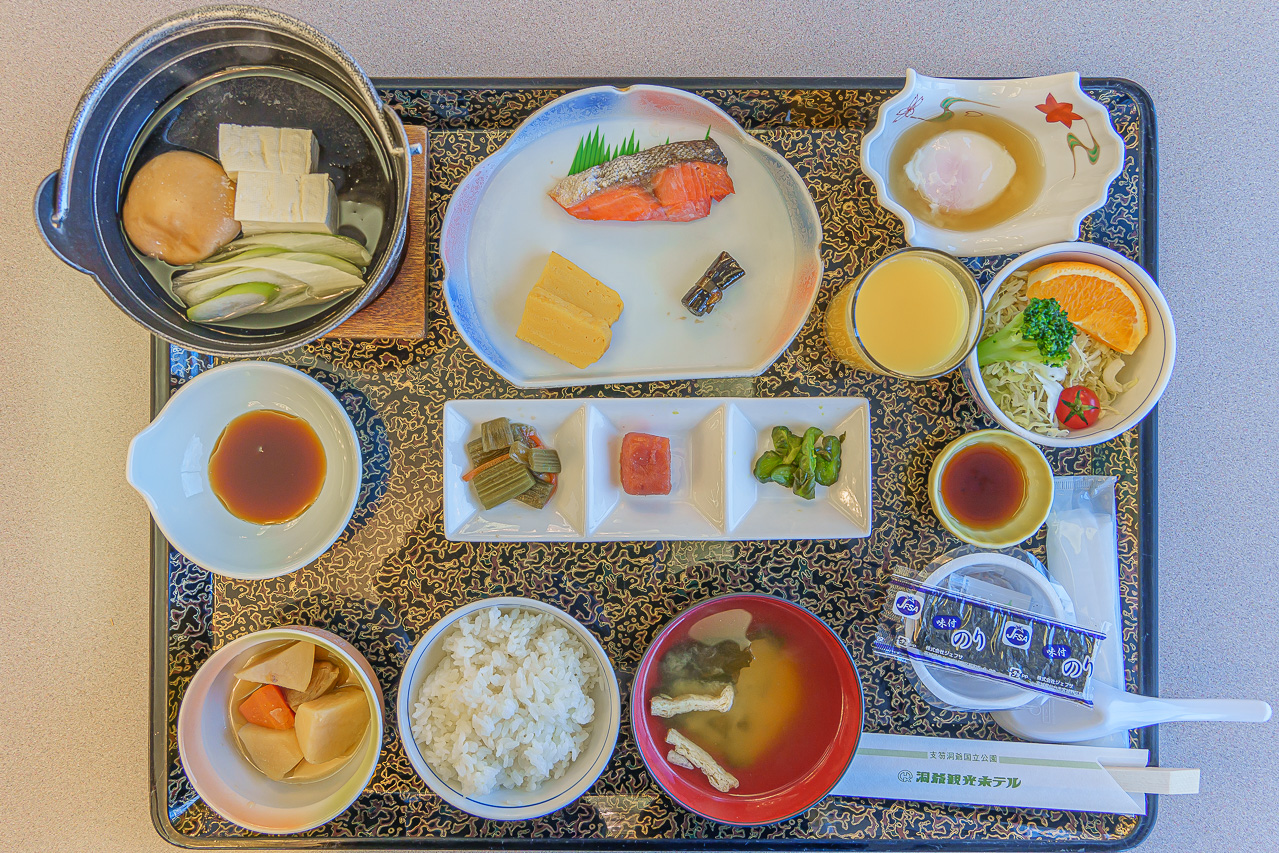
In the morning, Lake Toya’s beautiful landscape filled the window.
With more time, we might have seen clearer skies, but we had to check out at 8 a.m., so quickly ate breakfast and left.
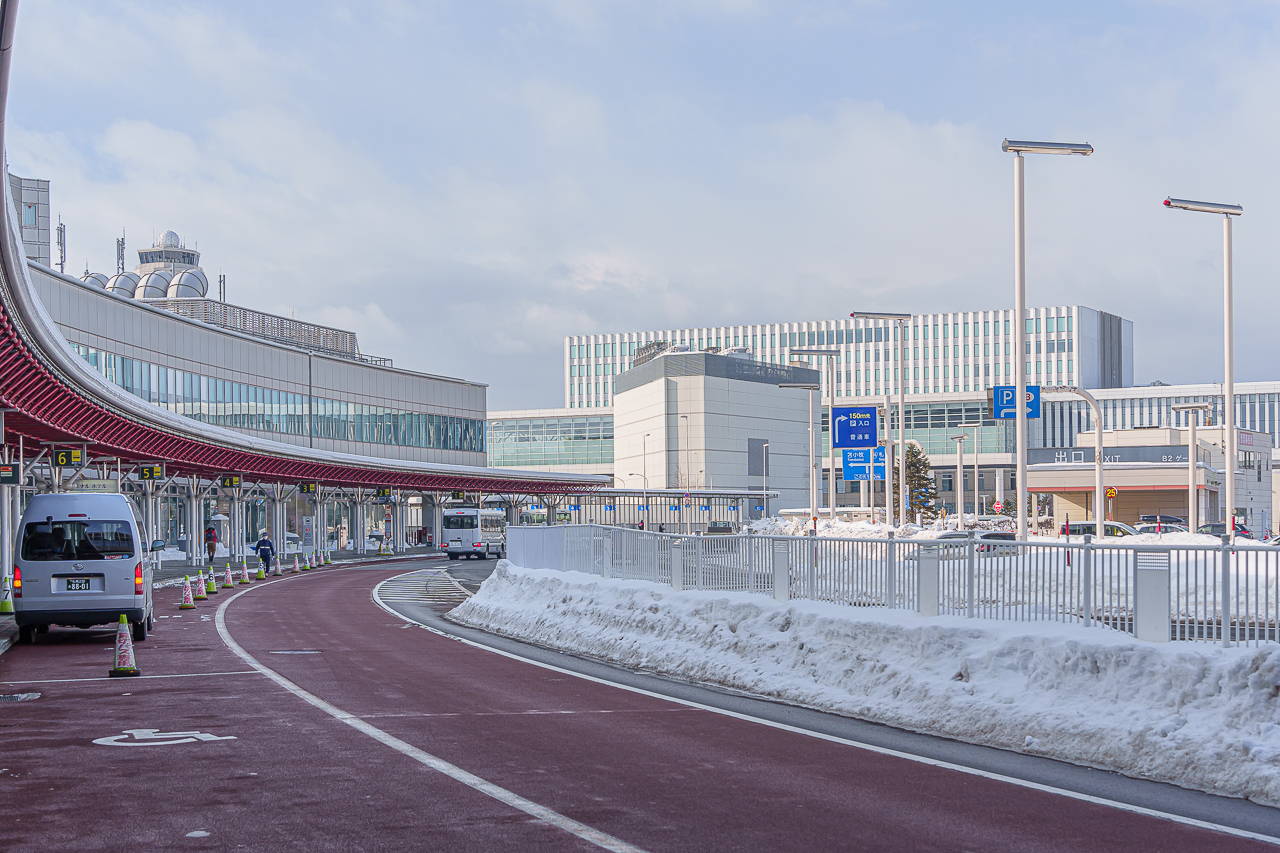
The drive from Lake Toya to New Chitose Airport took two hours, and we arrived just in time for the flight.
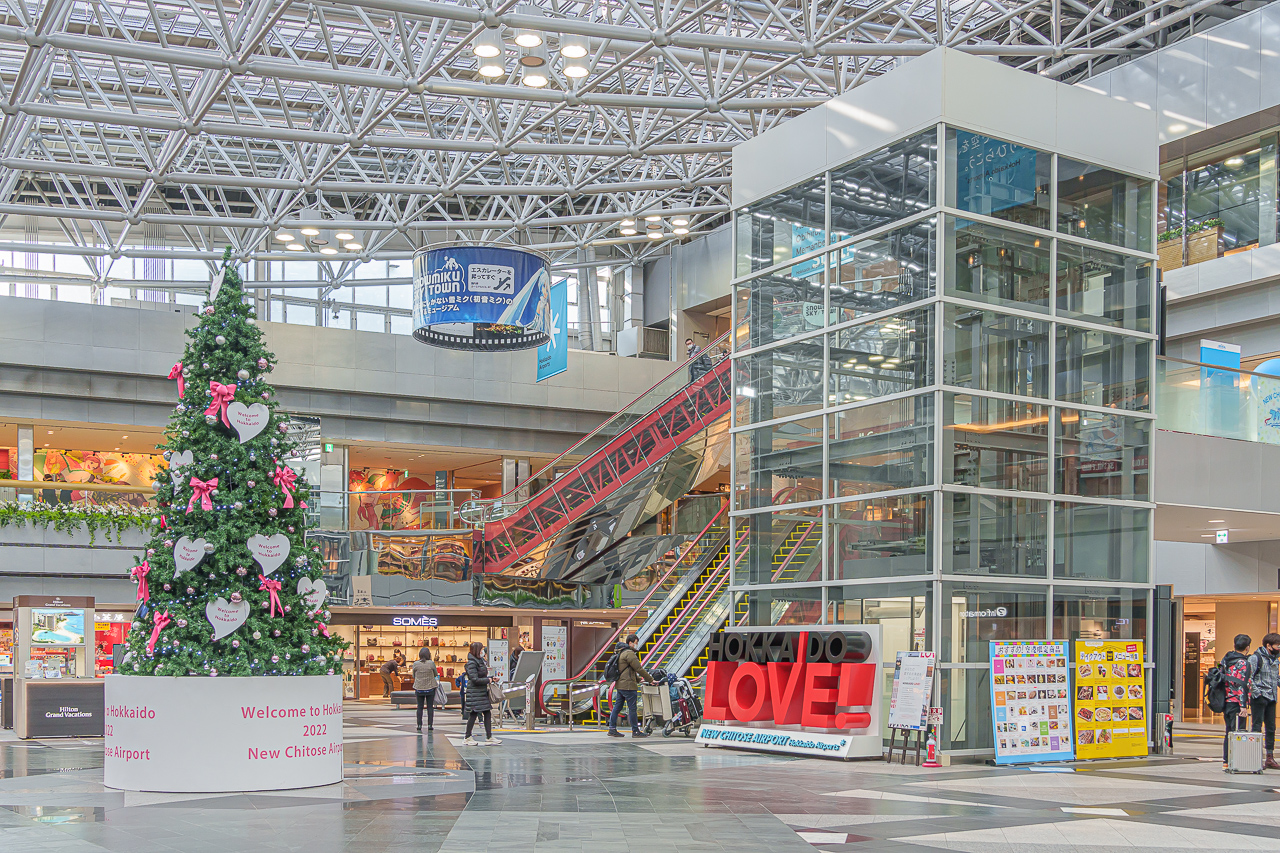
Love-themed displays at New Chitose Airport.
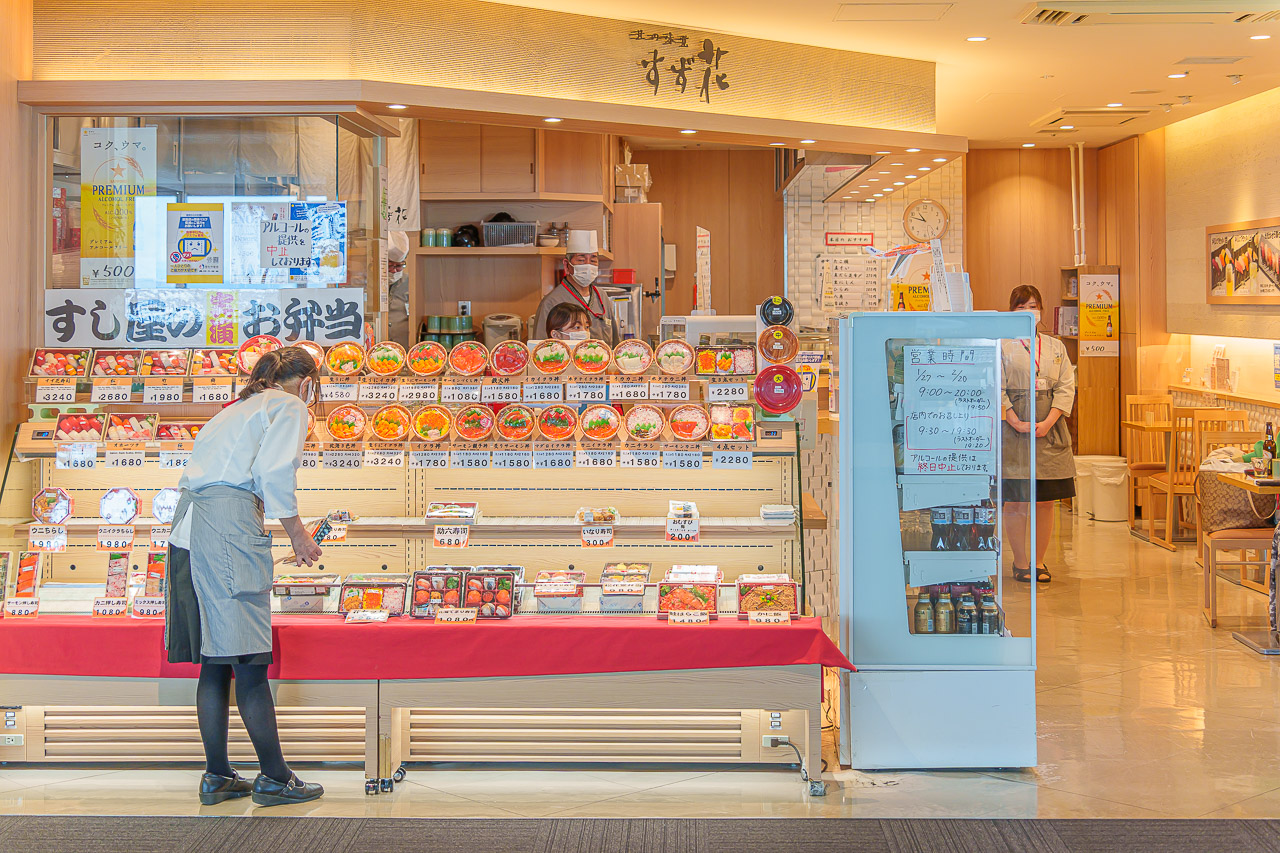
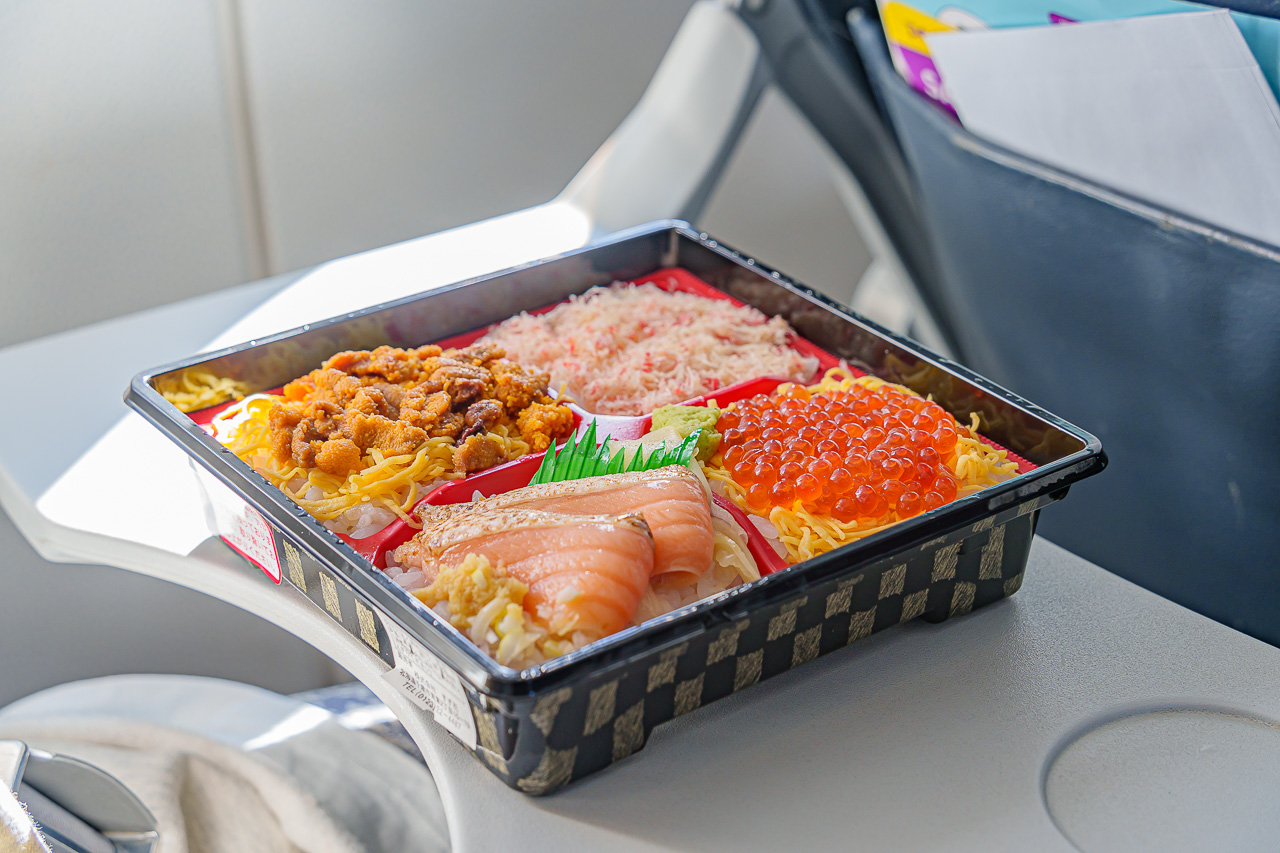

The boxed meals called “air bento” (エアー弁当) were another specialty to try.
I bought crab inari sushi expecting plenty of crab on top, but was surprised by how little there was.
Our three-night, four-day Hokkaido trip, which had felt like one night and two days, ended there.
With snow piled high, hidden shop signs, and unfamiliar roads, we had often struggled to find our way.
Still, after plenty of snow and a happy trip, we returned to the warm south.
The original account was followed by separate articles about individual stops.